

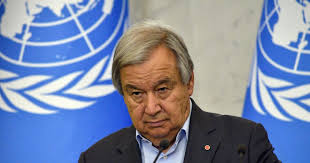

UN Secretary-General António Guterres has sounded an urgent alarm over the escalating crisis in the Middle East, warning that the region is being “pushed to breaking point” as a combination of shipping attacks, surging oil prices, and a deepening humanitarian catastrophe threatens both regional and global stability.
Speaking at a ceremony in Türkiye, where he accepted the Atatürk International Award for Peace, Guterres stressed the urgent need for ceasefire, diplomacy, and the protection of civilians, framing the ongoing conflicts as a profound threat not only to the affected populations but to international peace and security at large. The UN chief underscored that, while dialogue is frequently discussed on the global stage, meaningful action to halt hostilities has been insufficient, leaving ordinary people to bear the brunt of the consequences.
During his address, Guterres called on all combatants to immediately cease hostilities, uphold international law, protect civilians, and return to the negotiating table without delay. He stated, “Around the world, we hear much talk of peace, but we see far too little of it. International law continues to be trampled, power politics are gaining ground [and] inequalities are growing. New technologies, including artificial intelligence (AI), risk accelerating violence rather than preventing it. Military spending is skyrocketing, while lifesaving aid is in freefall.”
Highlighting the human toll, the UN chief warned that civilians continue to suffer the most, with death tolls rising and communities being shattered. “The massive military strikes launched by the United States and Israel and the subsequent attacks by Iran on so many countries constitute a grave threat to international peace and security and has caused immense suffering for civilians. The region is being pushed to the breaking point,” he said, emphasizing the urgent need for international attention and action.
Guterres also highlighted the cascading global consequences of the conflict, noting that disruptions in trade, surging energy and food prices, and widening insecurity are rippling far beyond the Middle East. “As always, the most vulnerable are being hurt first and worst,” he said, stressing the disproportionate impact of these crises on communities already facing hardship. The UN chief argued that, without swift de-escalation and renewed dialogue, these consequences will continue to spread, threatening stability worldwide. He emphasized that humanitarian responses are lagging, warning that the shortfall of aid and the rapid escalation of military expenditure are compounding the suffering of civilians.
The Secretary-General contextualized his visit to Türkiye as part of his annual solidarity trips to Muslim-majority nations during the holy month of Ramadan, describing the visits as a “powerful reminder, to me and to the world, of the true spirit of Islam: compassion, community and empathy.” He praised the Turkish people for their generosity, noting, “This Ramadan, I felt strongly that my solidarity visit must be here, in Türkiye. I came to shine a global spotlight on the extraordinary and generous spirit of the Turkish people.” Accepting the Atatürk International Award for Peace, Guterres dedicated it to UN staff worldwide, honoring their tireless efforts to provide humanitarian assistance, build peace, and protect vulnerable populations, while mourning the loss of aid workers who have died in the line of duty.
Concluding his remarks, Guterres issued a powerful appeal for an urgent global response to the crises, stating, “The region and the world desperately need an off-ramp. Together, let us give peace a chance.” He underscored that de-escalation and dialogue are the only viable pathways out of the spiraling conflict, calling on international actors to prioritize diplomacy over power politics, safeguard civilians, and restore stability. In a world where geopolitical tensions and technological advancements increasingly exacerbate violence, the UN chief’s warning serves as a stark reminder of the fragility of peace and the immediate need for collective action to prevent further suffering.