

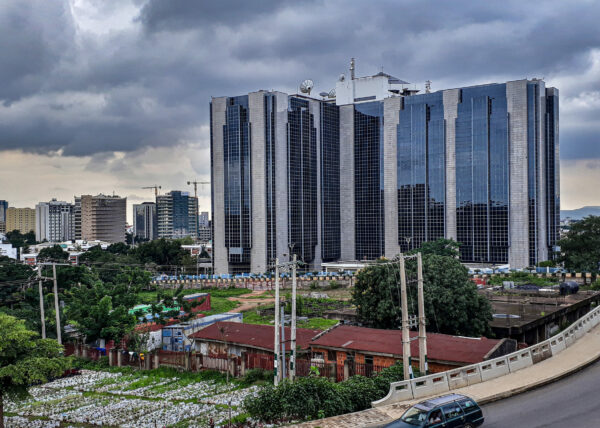

The Central Bank of Nigeria (CBN) has issued a strong directive to all deposit money banks, prohibiting large borrowers with non-performing loans from accessing additional credit facilities or other key banking services.
Released and dated, March 12th, 2026, the circular which was signed by Director of Banking Supervision Olubukola Akinwunmi focused on large-ticket obligors whose defaults pose systemic risks to the financial sector. Under the new policy, any borrower listed in the Credit Risk Management System (CRMS) or licensed private credit bureaus with non-performing facilities will be denied fresh loans, direct credit, bankers’ confirmations, letters of credit, performance bonds, and advance payment guarantees.
According to the CBN, large-ticket obligors are those whose exposure equals at least 10 percent of a bank’s shareholders’ funds unimpaired by losses, or whose combined debts across banks exceed the single-obligor limit, potentially eroding capital adequacy ratios.
To safeguard existing loans, banks must promptly secure additional realisable collateral from these high-risk borrowers. Non-compliance with this new implementation attracts severe penalties under the Banks and Other Financial Institutions Act (BOFIA) 2020.
This crackdown aligned with the CBN’s ongoing campaign to curb non-performing loans (NPLs) plaguing Nigeria’s banking industry. In 2025, entities like First HoldCo made massive provisions, N748 billion in one instance in a bid to align with stricter provisioning rules post-COVID forbearance.
This measure by the highest-ranking bank in Nigeria included prior bans on dividends and bonuses for banks with bad loans, aimed to foster credit discipline, protect depositors, and bolster overall financial stability amid economic pressures.
By leveraging CRMS and credit bureau data, banks can now effectively identify and isolate risky players, potentially reducing NPL ratios that have hovered above regulatory thresholds. This move is expected to restore investor confidence, encourage prudent lending, and mitigate contagion risks in an economy still recovering from global shocks.