

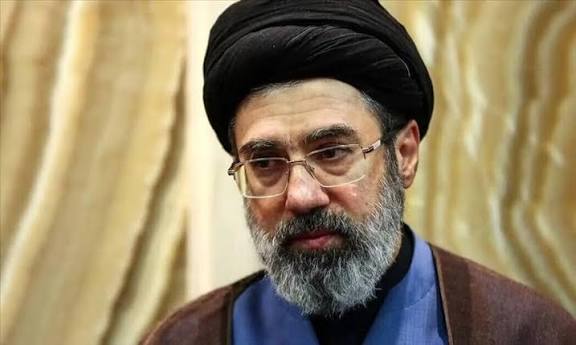

Mojtaba Khamenei is Iran’s new supreme leader, succeeding his father, Ali Khamenei, after the latter was assassinated during the first wave of joint US-Israel attacks on the Islamic Republic.
His appointment was confirmed on Sunday by Iran’s Assembly of Experts, the group responsible for selecting the country’s highest authority.
At 56, he became the Islamic Republic’s third supreme leader, following his father and Ruhollah Khomeini. It is also the first time in Iran’s history that a son has directly succeeded his father in the role.
Born on 8 September 1969, Mojtaba Khamenei has largely lived out of the public eye but wielded significant influence behind the scenes. Though he never held formal government office, he served as a key political and security aide in his father’s office and was widely regarded as a gatekeeper to the former leader.
Educated in religious seminaries in Qom, he is known as a conservative cleric with close ties to the Islamic Revolutionary Guard Corps (IRGC). He reportedly served in the Habib Battalion during the Iran–Iraq War.
In 2019, the United States sanctioned Mojtaba Khamenei for representing his father in an unofficial capacity and for alleged links to the IRGC’s external operations and the Basij militia.
Despite long being viewed as a potential successor, questions have been raised about his religious credentials, as he does not hold the senior clerical rank of ayatollah traditionally associated with the position. Nonetheless, Iran’s political system has previously adjusted requirements to accommodate consensus candidates.
He assumes leadership at a time when Iran faces military pressure from the United States and Israel, economic strain, and tense regional relations.