

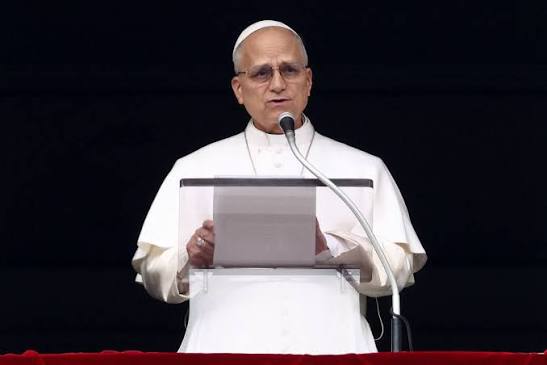

The head of the Catholic Church, Pope Leo XIV, on Sunday expressed deep concern over the escalating conflict involving Iran, warning that the violence could spread further across the Middle East and urging an immediate cessation of hostilities. Speaking during the traditional Angelus prayer at St. Peter’s Square, the pontiff said disturbing reports continued to emerge from Iran and the wider region as fighting entered its ninth day following coordinated United States–Israeli assaults on Iranian military and government targets.
Highlighting the human toll and geopolitical risks, the Pope cautioned that the ongoing conflict was fuelling fear and hatred while threatening to draw in additional countries, including Lebanon, which he said could once again face instability. “Alongside the episodes of violence and devastation and the widespread climate of hatred and fear, there is also growing concern that the conflict could spread and that other countries in the region, including dear Lebanon, could once again sink into instability,” Leo said.
The pontiff called for urgent efforts to end the violence and open channels for peaceful dialogue among all parties involved, emphasizing the need for humanity to find alternatives to the cycle of war and retaliation.
In his remarks, Pope Leo XIV underscored the importance of prayer and reflection as a means of seeking peace. “Let us raise our humble prayer to the Lord that the roar of bombs may cease, that weapons may fall silent, and that space may be opened for dialogue in which the voices of peoples can be heard,” he added.
His intervention comes amid intensifying international concern over the military campaign by the United States and Israel against Iran, a campaign that has drawn attention from global policymakers and religious leaders alike. Earlier in the week, the Vatican’s top diplomat also criticised the strikes, warning that such actions undermined international law and could exacerbate instability in an already volatile region.
The Pope’s comments reflect the Vatican’s longstanding stance on the protection of human life and the avoidance of armed conflict, especially in geopolitically sensitive areas such as the Middle East.
The current hostilities between Israel and Iran are rooted in decades of ideological, geopolitical, and security tensions. After the 1979 Iranian Revolution, Tehran shifted from a cooperative relationship with Israel to one defined by hostility, consistently condemning Israel’s existence and supporting armed groups opposed to it, including Hezbollah in Lebanon and Hamas in Gaza.
Israel, for its part, views Iran’s nuclear ambitions and expanding regional influence as existential threats and has employed a combination of military, covert, and cyber measures to counter them. The situation escalated dramatically when Israel and the United States conducted coordinated airstrikes on Iranian military and government targets, including the killing of Iran’s Supreme Leader, a move that plunged the region into broader conflict and provoked a rapid response from Tehran.
In retaliation, Iran launched missile and drone strikes targeting Israeli infrastructure and United States military bases in the region, while clashes have spread to neighbouring countries and drawn in allied groups on both sides. The intensification of hostilities has stoked fears of a wider regional war, with analysts warning that continued escalation could destabilize additional states in the Middle East.
Lebanon, in particular, has been cited as vulnerable due to its historical entanglement in regional conflicts and the presence of armed groups supported by Iran. The ongoing cycle of attacks and counterattacks has not only heightened geopolitical risks but also threatened the civilian population, with reports of casualties, displacement, and economic disruption emerging from multiple locations.
Observers say the current crisis highlights the fragile balance of power and the consequences of longstanding ideological rivalries in the Middle East. While Iran and Israel continue to pursue strategic objectives through military means, international actors, including the Vatican, have called for urgent measures to prevent further escalation and avert a humanitarian catastrophe.
Pope Leo XIV’s appeal reflects the broader global concern over the potential for this conflict to ignite wider instability. “The roar of bombs must cease, the weapons must fall silent, and dialogue must prevail,” the pontiff emphasized, urging leaders and communities alike to seek avenues for peace and reconciliation.