

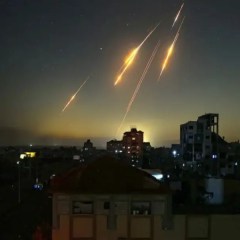

The conflict involving Iran, Israel, and the United States has intensified across the Middle East, with new attacks, maritime disruptions, and diplomatic tensions spreading throughout the region. What began as coordinated U.S. and Israeli strikes on Iran has rapidly expanded into a broader regional crisis affecting several countries and critical global shipping routes.
Escalation Between Iran, Israel, and the United States
The war has entered a new phase with sustained airstrikes and missile exchanges between Iran and Israel. Iranian forces have launched waves of missiles toward Israeli territory, while Israeli and U.S. forces have conducted airstrikes on targets inside Iran, including locations in Tehran.
Military officials say the conflict has continued for several days without signs of de-escalation, with both sides expanding their operations. The United States has also carried out direct strikes on Iranian military assets, including naval targets, indicating deeper involvement in the conflict.
Regional Spillover Across the Middle East
The fighting is no longer confined to Iran and Israel. Iranian missile and drone attacks have reportedly reached multiple parts of the Middle East and neighboring regions, contributing to rising instability across the Gulf and surrounding areas. Some strikes have affected locations including Turkey, Cyprus, and Azerbaijan, demonstrating how widely the conflict is spreading.
In addition, Iranian-linked strikes have targeted infrastructure and shipping around the Gulf region. Drone attacks have hit ports and oil tankers near Oman, including damage to facilities at Duqm and Salalah ports and attacks on vessels off the Omani coast. These incidents have injured crew members and further raised tensions in the region.
Authorities in several Gulf states, including the United Arab Emirates, have heightened security as fears grow that the conflict could spread further into key economic hubs such as Dubai.
Crisis in the Strait of Hormuz
One of the most significant consequences of the conflict has been the disruption of shipping through the Strait of Hormuz, a narrow waterway that carries about one-fifth of the world’s oil supply.
Following the U.S.–Israeli strikes on Iran, Iran’s Revolutionary Guard warned that ships should not pass through the strait and launched attacks on several vessels. The threats and attacks caused maritime traffic to collapse, with many tankers anchoring outside the strait and shipping companies suspending operations due to safety concerns.
The disruption has already pushed global oil prices higher and raised fears of a broader energy crisis if the situation continues.
Trump Orders Naval Escorts and Insurance for Ships
In response to the maritime crisis, U.S. President Donald Trump announced that the United States would guarantee insurance for commercial vessels operating in the Gulf and could deploy the U.S. Navy to escort tankers through the Strait of Hormuz.
The plan involves the U.S. government providing political risk insurance to shipping companies and deploying naval forces to ensure the safe passage of oil tankers and other vessels through the waterway.
Trump said the measure is aimed at protecting the global energy supply and ensuring what he described as the “free flow of energy” through one of the world’s most important maritime routes.
Global Economic and Security Concerns
The escalating conflict has already begun affecting global trade and energy markets. Hundreds of ships have reportedly remained anchored near the Strait of Hormuz, and international shipping unions have warned seafarers that they may refuse to sail through the region due to the extreme risk.
Major powers, including China and several European countries, are now exploring diplomatic efforts and security arrangements to keep maritime routes open and prevent further escalation.
Outlook
With missile attacks continuing, shipping lanes disrupted, and multiple countries becoming involved, analysts warn that the conflict risks evolving into a wider Middle Eastern war. The coming weeks will likely determine whether diplomatic efforts can stabilize the region or whether the crisis expands further across the Gulf and beyond.