

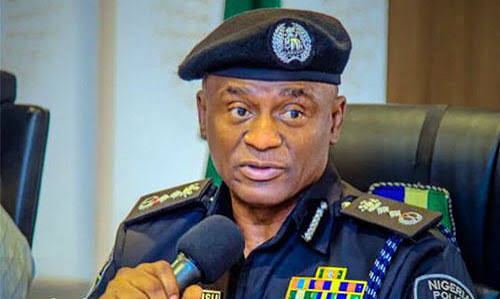

The Inspector-General of Police, Tunji Disu, on Wednesday inaugurated an eight-member committee to oversee the implementation of state police and drive the rollout of his broader policing vision, marking one of his first major policy steps following his confirmation as the 23rd indigenous IGP.
Disu announced the constitution of the committee during his inaugural conference with senior police officers at the Peacekeeping Conference Centre, Force Headquarters, Abuja, in a development contained in a statement issued by the Force Public Relations Officer, Benjamin Hundeyin.
The conference convened strategic managers of the Nigeria Police Force to deliberate on institutional priorities and pressing national security issues, setting the tone for what the new police chief described as a reform-oriented leadership anchored on responsibility, professionalism and accountability across all commands nationwide.
At the heart of the reform agenda is the eight-member committee tasked specifically with overseeing the implementation of state policing, an initiative that has generated national debate as part of broader security sector reforms.
Disu appointed Professor Olu Ogunsakin, Director-General of the National Institute for Police Studies, to chair the committee, while Commissioner of Police Bode Ojajuni was named secretary. Other members include Deputy Commissioner of Police Okebechi Agora, Deputy Commissioner of Police Suleyman Gulma, Assistant Commissioner of Police Ikechukwu Okafor, Chief Superintendent of Police Tolulope Ipinmisho, and retired Commissioner of Police Emmanuel Ojukwu, who currently serves as Provost of the Police Public Relations School.
The composition of the committee reflects a blend of serving senior officers and experienced administrators, a structure observers say is intended to balance operational expertise with institutional knowledge as the force navigates the complexities of decentralising aspects of policing within a coordinated national framework.
Addressing the top hierarchy of the force during the conference, Disu underscored his leadership philosophy, declaring that leadership is “not about position but responsibility,” while stressing that professionalism and accountability must guide conduct and operations across commands nationwide.
According to the statement issued by Hundeyin, the IGP also clarified the conceptual framework underpinning the state policing initiative, noting that “State Policing is not intended to replace or diminish the Nigeria Police Force, but rather to function as a complementary structure within a coordinated national security framework that strengthens national cohesion and institutional effectiveness.”
The clarification appeared aimed at addressing concerns that decentralisation could weaken federal command structures or create jurisdictional conflicts, as debates continue over how state police formations would interact with existing federal policing mechanisms.
Disu further emphasised that authority within the force must be exercised with restraint, insisting that respect for human rights remain fundamental to policing operations. He stated that every Nigerian should be treated with dignity, fairness and justice, regardless of status or background, a position that comes amid ongoing public scrutiny of police conduct in various parts of the country.
As part of efforts to reinforce accountability, the IGP announced plans to strengthen internal oversight mechanisms, directing that the Public Complaint Unit and X-Squad be empowered to operate independently to enhance transparency and discipline within the ranks.
On decentralisation, he maintained that the initiative would allow different levels of government to play an active role in security management, thereby improving responsiveness to local threats and fostering collaborative approaches to crime prevention and community safety.
The inauguration of the state police implementation committee comes at a critical juncture for the Nigeria Police Force following a leadership transition at the top. President Bola Tinubu appointed Disu as Acting Inspector-General of Police on February 24, 2026, after the resignation of his predecessor, Kayode Egbetokun.
Disu’s elevation followed a meeting between the outgoing IGP and the President at the Presidential Villa in Abuja, after which his appointment was unanimously endorsed by the Nigeria Police Council. He is expected to be formally sworn in as substantive IGP during the Federal Executive Council meeting on Wednesday, further consolidating his mandate to pursue reforms within the force.
Disu’s appointment and swift move to constitute the state police implementation committee come amid heightened national concern over persistent security challenges, including rising cases of kidnappings, banditry and community attacks across various regions of the country.
The state police initiative championed by the current administration forms part of broader security sector reforms aimed at decentralising policing powers to enhance responsiveness at local levels while maintaining a unified national security architecture.
As the committee begins its work, attention is expected to focus on how effectively the proposed framework balances federal authority with state-level operational autonomy, and whether the reforms can address longstanding concerns about capacity, coordination and accountability within Nigeria’s evolving security landscape.