

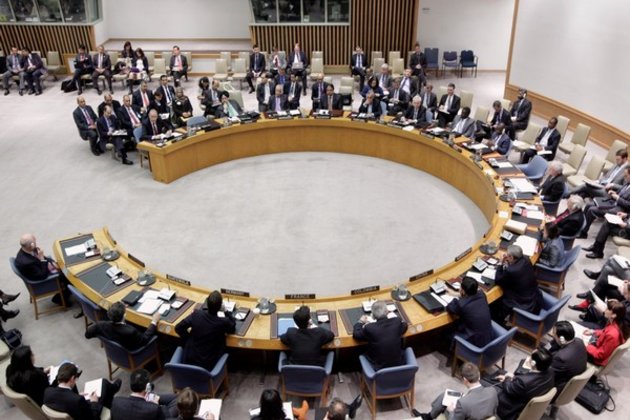

The United Nations has convened an emergency session in response to the escalating military conflict between the United States, Israel, and Iran. The gathering follows a wave of attacks targeting Iranian cities, with multiple reports indicating heavy casualties and widespread destruction. In his opening remarks, UN Secretary-General António Guterres cautioned against the rapid escalation of violence. “Military action carries the risk of igniting a chain of events that no one can control in the most volatile region of the world,” he said, highlighting the precarious nature of the ongoing confrontation. Guterres noted that at least 20 cities in Iran had been affected by the attacks, underscoring the scale of the crisis, though he added that reports regarding the deaths of Iranian leaders could not yet be independently verified.
The Secretary-General’s warning reflects growing concern within the international community about the broader implications of the strikes. Officials have emphasized the need for restraint and dialogue, noting that the potential for regional destabilization could have consequences far beyond Iran’s borders. Guterres’ statement also drew attention to the delicate humanitarian situation, with millions of civilians potentially affected by the conflict. The UN’s emergency meeting aims to coordinate responses, gather verified information, and explore avenues for immediate de-escalation, although no formal resolutions were announced during the opening session.
European Union Calls for Extraordinary Talks
In parallel, European leaders have been mobilizing diplomatic efforts to address the unfolding crisis. Kaja Kallas, the European Union Foreign Policy Chief, confirmed that the bloc’s foreign ministers would hold “extraordinary” talks on Iran later in the day. She expressed grave concern over the impact of Iranian military actions on regional stability. “The Iranian regime’s indiscriminate attacks against its neighbours carry the risk of dragging the region into a broader war, and we condemn this,” Kallas said, framing the EU’s position as one of both accountability and urgent preventive diplomacy.
Kallas further emphasized the need for a coordinated international approach to avoid escalation. The EU’s response signals that European nations are closely monitoring developments, with the aim of mediating tensions and safeguarding the safety of civilians across the Middle East. Analysts suggest that the EU’s extraordinary session could set the stage for sanctions, diplomatic engagement, or calls for restraint, although the precise outcomes remain uncertain. The European bloc’s involvement highlights the global concern over the potential for the conflict to spread, especially given Iran’s strategic position and military capabilities.
Iran Demands UN Nuclear Oversight Meeting
Iran, for its part, has called on the International Atomic Energy Agency (IAEA) to convene an emergency meeting to address what Tehran describes as “baseless” US and Israeli claims regarding its nuclear program. Iranian officials contend that allegations linking their atomic activities to military aggression are unfounded and politically motivated. This request to the nuclear watchdog underscores Tehran’s insistence on maintaining the legitimacy of its nuclear program and resisting external justifications for attacks.
Iranian authorities argue that such claims are being used to rationalize foreign strikes that they view as violations of international law. By seeking a formal IAEA session, Tehran aims to present its position on the nuclear program, clarify compliance measures, and challenge the narrative promoted by the US and Israel. Observers note that the move may also serve a dual purpose: to rally domestic support and to pressure the international community into recognizing Iran’s grievances, potentially shaping future diplomatic negotiations.
Global Oil Markets Brace for Impact
The escalating tension has immediate economic implications, particularly in global energy markets. Analysts predict that oil prices will rise sharply when trading resumes, as Tehran has repeatedly threatened to block the Strait of Hormuz, a vital corridor for international oil shipments. The potential disruption to maritime traffic raises concerns about supply shortages and the consequent upward pressure on crude prices.
The Strait of Hormuz is a critical chokepoint, handling a substantial proportion of the world’s oil exports. In 2024 alone, nearly 20 million barrels of crude oil passed through the strait daily, accounting for approximately 20 percent of global liquid oil consumption, according to the US Energy Information Administration (EIA). Any disruption to this flow could trigger a spike in global energy prices, further destabilizing international markets already sensitive to geopolitical risks.
Implications for Nigeria’s Economy
For Nigeria, a major oil-producing nation, rising crude prices could have mixed consequences. The country’s 2026 budget is premised on a production benchmark of 1.84 million barrels per day and an oil price range of $60 to $64.85 per barrel. Higher international prices could boost revenue, potentially enhancing fiscal capacity, while also influencing domestic energy policy and inflationary pressures.
However, economic analysts caution that geopolitical uncertainty could also create challenges for global supply chains, affecting trade and investment flows. Nigeria’s exposure to international oil markets makes it particularly sensitive to disruptions in the Persian Gulf region, emphasizing the interconnected nature of global energy security and regional conflicts.
Heightened Global Security Concerns
Beyond economic ramifications, the unfolding crisis has renewed fears of wider conflict in the Middle East. International observers have warned that continued military exchanges between Iran, the US, and Israel could trigger broader hostilities, drawing in neighboring states and potentially destabilizing already fragile regions. The UN emergency meeting and EU talks reflect an urgent recognition that the situation requires coordinated diplomacy to prevent uncontrolled escalation.
Military analysts note that the volatility stems not only from the intensity of the attacks but also from Iran’s strategic capabilities, including missile, drone, and naval assets. Combined with the possibility of attacks on key maritime routes such as the Strait of Hormuz, the conflict has the potential to affect energy security, trade flows, and regional political alignments.
Calls for Restraint and Diplomatic Engagement
UN officials and European diplomats alike have stressed the importance of restraint and dialogue. Guterres warned that, “Military action carries the risk of igniting a chain of events that no one can control in the most volatile region of the world,” highlighting the need for measured responses from all parties involved. Kallas echoed this sentiment, emphasizing that unchecked escalation could rapidly spiral into a broader regional war, with devastating consequences for civilians and international stability.
The UN and EU calls for diplomatic engagement underscore the urgent need to de-escalate tensions while maintaining a focus on humanitarian considerations. Civilians in Iran and neighboring countries are already experiencing the immediate effects of strikes, with loss of life, property destruction, and social disruption creating a precarious environment. The international community faces significant pressure to intervene through mediation, sanctions, or coordinated diplomatic measures to prevent further deterioration.