

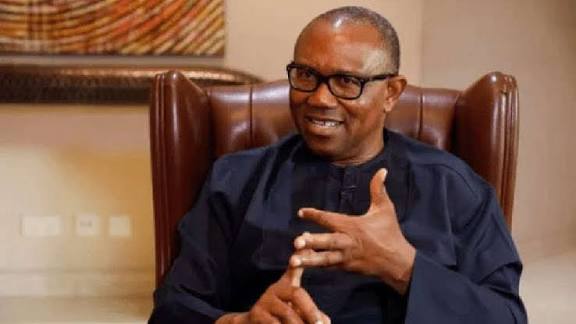

Former presidential candidate of the Labour Party, Peter Obi, has sharply criticised Nigeria’s political leadership for what he described as an unhealthy obsession with the 2027 general elections while the country continues to grapple with worsening insecurity and widespread loss of lives.
In a strongly worded statement shared on his official X handle on Sunday, Obi lamented that national attention had shifted prematurely to election permutations and power calculations at a time when citizens across the country were being killed or abducted in alarming numbers.
He revealed that within just the first two months of 2026, reports indicated that more than 1,000 Nigerians had been killed, with several thousand others abducted by armed groups operating across different regions of the country.
“It is profoundly disturbing that while we, the politicians, continue to obsess over the 2027 elections—spending our energy scheming about how to capture, grab, and run the next election—the first two months of 2026 have reportedly seen the killing of over 1,000 Nigerians and the abduction of several thousand others,” Obi stated.
He described the situation as a tragic and painful reflection of the country’s current reality, noting that violence had become so widespread that almost no region could claim immunity from attacks, kidnappings, and mass killings.
According to him, states across the federation had witnessed horrifying incidents that left families shattered and communities displaced, as criminal gangs and armed groups continued to operate with devastating consequences.
“From Zamfara State to Kwara, Ondo, Kebbi, Edo, Benue, Adamawa, Plateau, and many other states, families have buried loved ones, and communities have been emptied by gunshots and fear,” he said, underscoring the national spread of the crisis.
Obi further noted that in more than 25 states cutting across all six geopolitical zones, there had been repeated cases of violent attacks on innocent citizens, including kidnappings by armed bandits, mass shootings, village invasions, and deadly assaults on worshippers and travellers.
He stressed that the sheer scale of bloodshed recorded in such a short period should ordinarily trigger a national emergency response, yet political discourse appeared largely disconnected from the gravity of the crisis.
“The scale of bloodshed and the number of deaths in just two months in Nigeria are even worse than what we see in countries officially at war,” Obi said, drawing a stark comparison meant to highlight the severity of the situation.
He expressed deep concern that despite these realities, national conversations remained dominated by issues such as zoning arrangements, party leadership tussles, and campaign strategies ahead of the 2027 elections.
“Yet the urgency with which we discuss these tragedies does not match the urgency of our discussions surrounding zoning formulas, party structures, and campaign strategies,” he added.
In one of the most emotional parts of his statement, Obi criticised what he described as a moral disconnect between political leaders and the suffering of ordinary Nigerians.
“We debate power sharing while citizens are sharing funeral programs,” he said, lamenting how death had become a recurring feature of daily life for many communities.
He recounted his emotional reaction to recent events in Plateau State, saying, “I watched in tears yesterday as families in the Doruwa Babuje community in Plateau State buried their dead after attacks by armed terrorists, but our media and leaders were focused on discussions about party issues and the 2027 elections.”
Obi questioned the logic of aggressive election planning in the face of such loss of life, warning that the future many politicians were strategising for was increasingly uncertain for ordinary Nigerians.
“We strategise about 2027 while Nigerians struggle to survive 2026. This is inhumane,” he said, describing the current political priorities as detached from the realities on ground.
The former governor of Anambra State argued that true leadership must be anchored on the protection of lives and the preservation of human dignity, not the pursuit of electoral victory.
“We must elevate human life to a sacred status in our national priorities. Leadership is not about winning elections; it is about saving lives,” Obi declared.
He maintained that Nigeria still had the capacity to reverse the current trend of violence if leaders demonstrated genuine commitment and urgency in addressing insecurity.
“We can, and we must, aspire to a Nigeria devoid of bloodshed—a Nigeria where governance is measured not by political dominance but by the safety and dignity of its people,” he said.
Obi also warned that history would ultimately pass judgment on today’s leaders, not based on their political manoeuvres, but on how they responded to the nation’s security crisis.
“History will not remember how many strategies we perfected for 2027; it will remember whether we acted when Nigerians were dying,” he stated.
He concluded with a direct call for a shift in national priorities, urging leaders to place the value of human life above political ambition.
“We must choose Nigerian lives over politics. We must put Nigerians first,” Obi added.
His statement comes amid persistent security challenges across Nigeria, particularly in the northwest and north-central regions, where armed bandits, kidnappers, and terrorist groups continue to carry out deadly raids on rural and semi-urban communities.
Recent incidents have included a February attack on Tungan Dutse village in Zamfara State, where gunmen reportedly arrived on motorcycles, killing dozens of residents and abducting women and children, according to local authorities and media accounts.
Similar patterns of violence have been recorded in Plateau and other states, resulting in mass displacement, deepening humanitarian concerns, and growing public anxiety about the state’s capacity to protect its citizens.