

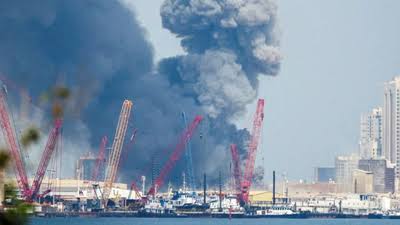

Above the sun-baked landscapes of Abu Dhabi, streaks of white contrails cut across the cloudless sky, tracing paths that are anything but ordinary. These trails do not belong to incoming commercial aircraft bringing tourists or expatriate workers into the emirate. Instead, they are the unmistakable arcs of ballistic missiles launched by Iran, the powerful regional neighbor across the Persian Gulf. The region, accustomed to luxury hotels, sprawling gardens, and state-of-the-art infrastructure, now finds itself under siege.
By Sunday afternoon, the United Arab Emirates’ defence ministry reported that its forces had “dealt with” 165 incoming ballistic missiles, two cruise missiles, and 541 Iranian drones, demonstrating both the intensity of the attack and the scale of its defensive efforts. In Bahrain, residents described the chaos firsthand. “Woken by huge bangs and wailing sirens,” one friend texted from Manama, recounting “maybe around 20 booms and bangs. At least two hits.” These scenes of fear and uncertainty are unprecedented for a region that has long enjoyed relative stability despite its complex geopolitics.
Expansion Beyond Military Targets
Initially, the conflict’s strikes appeared to focus on military objectives, such as the US Navy’s 5th Fleet headquarters in Bahrain. But as the days progressed, Iran’s targeting scope widened. Airports, high-rise apartments, luxury hotels, and shopping malls have increasingly come under threat, highlighting vulnerabilities in the Gulf states’ air defense systems. “We are not attacking our neighbours in the Persian Gulf countries,” Iranian Foreign Minister Abbas Aragchi told Al Jazeera. “We are targeting the presence of the US in these countries. Neighbours should direct their grievances to the decision-makers of this war.”
While some damage to civilian infrastructure may be accidental caused by debris from intercepted missiles other incidents suggest deliberate targeting. The strikes on airports in both Bahrain and the UAE, for example, indicate a strategic choice. Iran has made clear repeatedly that any attack on its territory will trigger retaliation against countries it perceives as complicit, whether directly or indirectly, especially those hosting US forces.
Historical Context: Iran’s Gulf Ambitions
Iran’s ambitions in the Gulf stretch back decades. Before the Islamic Revolution, during the reign of the Shah, Iran was considered “the policeman of the Gulf.” Since the revolution, Tehran has tried repeatedly to assert itself as the region’s security guarantor, seeking to expel US forces and establish dominance in what it calls the Khaleej-e-Fars—the Persian Gulf. Yet for the conservative, dynastic monarchies of the Gulf Arab states, Tehran’s revolutionary ideology remains a nonstarter. The recent escalation appears to have crossed a line from which relations may not easily recover, particularly if the current Iranian leadership survives the conflict.
Saudi Arabia and Oman have largely avoided the brunt of Iran’s attacks. Oman, which has maintained good relations with Tehran and acted as a mediator in nuclear negotiations with the US, saw its commercial port of Duqm hit by two drones, injuring a foreign worker. Meanwhile, Saudi Arabia’s capital, Riyadh, came under direct attack on Saturday, prompting the Saudi government to release a forceful statement: “The Kingdom of Saudi Arabia expresses its rejection and condemnation in the strongest terms of the blatant and cowardly Iranian attacks that targeted the Riyadh Region and the Eastern Province, which were successfully intercepted. These attacks cannot be justified under any pretext.”
A New Scale of Attacks
Although Iran has previously engaged in regional hostilities—such as the 2019 drone attacks on Saudi Aramco’s facilities at Abqaiq and Khurais or the 2025 missile strike on Al-Udaid airbase in Qatar—this current wave represents an unprecedented escalation. The 2019 attacks temporarily disrupted half of Saudi Arabia’s daily oil export capacity, while the 2025 Qatar strikes were largely performative and preceded by Tehran’s advance warnings. Today, the scale, spread, and intensity of attacks on civilian infrastructure mark a notable shift in Iran’s operational strategy.
Bahrain, with its significant Shia population, has long accused Tehran of funding and arming insurgents, but the present attacks surpass previous tensions in both scope and audacity. Airports, commercial centers, and densely populated urban districts are now included in Iran’s operational map, creating widespread fear among Gulf civilians and prompting emergency defense responses from multiple states.
Strategic Calculus: Survival or Escalation?
For Washington, Tel Aviv, and their allies, the immediate objective is to neutralize Iran’s ability to launch missiles and drones before further strikes can occur. The United States maintains two carrier strike groups in the region, backed by over 200 warplanes and full air superiority, while Israel’s military capabilities add to the technological dominance over Tehran. Iran, however, retains the advantage of asymmetric persistence. The Islamic Republic, with its cult of martyrdom and revolutionary resilience, may endure far longer than its adversaries are willing to tolerate.
Iran’s Revolutionary Guards Corps faces a critical decision: whether to launch a decisive strike against a high-value target, such as a US warship, in a gamble to overcome defensive systems, or to conserve much of its concealed missile and drone arsenal in hopes of outlasting President Trump’s political patience. Each side is constrained by finite resources, meaning that the duration and intensity of the conflict will shape not only regional stability but also global security dynamics.
Diplomatic Backchannels and Prospects for Peace
While military operations dominate headlines, backchannel diplomacy continues behind the scenes. Oman, long a neutral mediator, has facilitated discussions in Geneva on Iran’s nuclear program. Tehran, however, has ruled out discussing other contentious issues, including its ballistic missile program and regional support for proxy groups like Hezbollah, Hamas, and the Houthis. President Trump has expressed frustration with the slow pace of negotiations, stating publicly that he is “not happy with the way the talks are going.”
The potential for a ceasefire exists, but only if both parties’ bargaining positions shift sufficiently. If not, military action could easily resume, prolonging the cycle of attacks, counterattacks, and civilian risk. For Iran, survival is tantamount to victory; for the US and its allies, halting missile and drone launches remains the primary objective, creating a tense balance of risk and strategy that could tip in either direction.
Regional Consequences and Civilian Risk
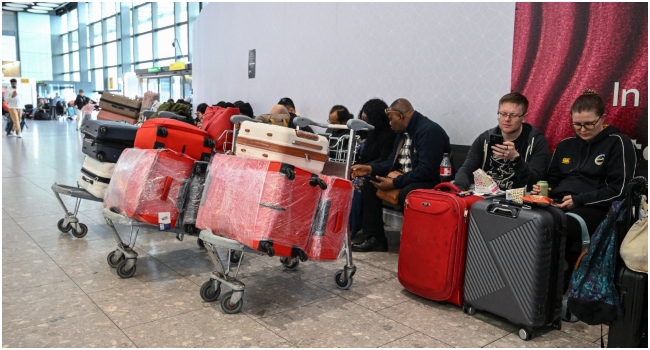
The conflict has already disrupted life across the Gulf. Airports operate under heightened alert, luxury hotels have suspended services, and civilians are being urged to take protective measures. Even if most missiles are intercepted, the debris alone has inflicted injuries and damage. Urban centers like Abu Dhabi and Manama, never designed for modern warfare, now face a persistent threat that tests both infrastructure resilience and emergency response capabilities.
The psychological impact is equally severe. Residents accustomed to the relative tranquility of Gulf cities are now waking to sirens, explosions, and uncertainty. Social media posts from local witnesses convey fear, disbelief, and a sense of vulnerability unprecedented in recent decades. The human toll, while not yet fully quantified, is already substantial and likely to increase as the conflict persists.
Long-Term Geopolitical Implications
The unfolding crisis threatens to reshape Gulf politics and security. Conservative Gulf monarchies may permanently recalibrate their relationships with Tehran, viewing the Islamic Republic as a direct and enduring threat. Meanwhile, regional powers like Saudi Arabia, the UAE, and Bahrain must evaluate defense readiness, strategic alliances, and domestic stability amid ongoing attacks. Iran’s attempts to project influence, assert regional guardianship, and challenge US presence have brought these historical ambitions into direct confrontation with contemporary realities.
The Balance of Power
Despite Tehran’s aggressive maneuvers, the military balance remains heavily skewed. The US and Israel possess technological superiority, extensive air defenses, and the capacity to project force across the region. Iran relies on asymmetric strategies, missile technology, and the ideological resilience of its leadership. Its success depends on endurance, tactical patience, and exploiting gaps in the defenses of its adversaries. The longer the conflict endures, the more pressure grows on the US to negotiate an off-ramp while Iran seeks to claim strategic victory.
Potential Outcomes
If Iran’s regime collapses under sustained military pressure, the conflict could end abruptly, potentially paving the way for a transition toward more conventional governance and normalized relations with the global community. Should the Islamic Republic survive, the US’s “triple demands” will likely return to the negotiating table: a curb on nuclear activities, a halt to ballistic missile development, and cessation of support for regional proxy militias. Each of these demands carries significant political, strategic, and domestic implications for Tehran.
Enduring Uncertainty
For now, the Gulf region remains on edge, balancing the threat of ongoing strikes with the hope of diplomatic resolution. The scale, scope, and sophistication of attacks underscore the dangers inherent in this conflict, particularly as civilian infrastructure, urban populations, and critical economic sites are directly impacted. Military capabilities, political will, and strategic patience will collectively determine whether the crisis escalates, de-escalates, or enters a prolonged stalemate.
The conflict, in all its complexity, is far from concluded. With missile and drone capabilities still operational, civilian populations under threat, and multiple regional and global actors involved, the next moves by both Tehran and its adversaries will define the trajectory of security, diplomacy, and stability in the Gulf for years to come.