

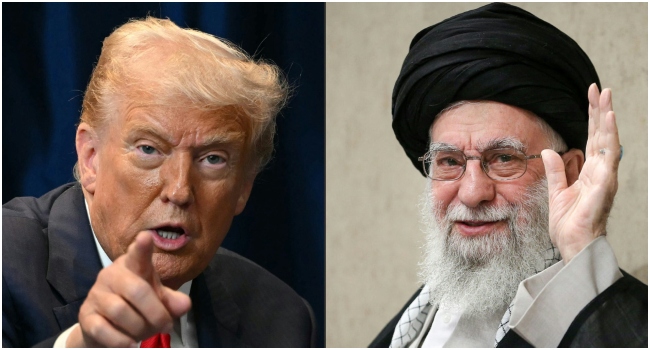

Iranian top officials on Sunday issued stern warnings of retribution following the assassination of their supreme leader, Ayatollah Ali Khamenei, declaring a renewed series of military strikes targeting US bases in the Gulf. The announcements came despite a sharp threat from US President Donald Trump, who promised an unprecedented escalation of force if Iran acted further. Tehran was engulfed in heightened tension as explosions reverberated across the city, and reports emerged of military actions in multiple Middle Eastern capitals.
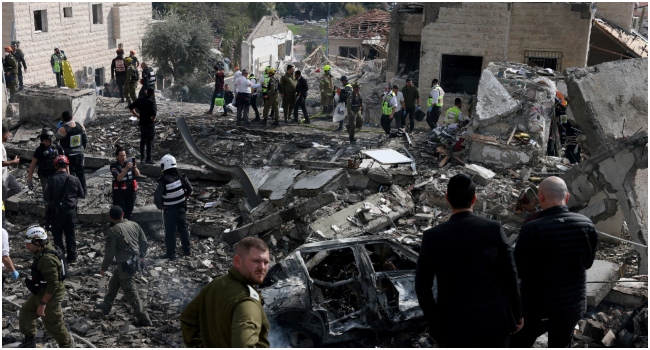
As massive crowds converged on public squares in Tehran, the city was shaken by a series of detonations. Residents described hearing multiple explosions in the heart of the capital, while the Israeli military also announced strikes targeting locations within Tehran. Additional blasts were reported in Jerusalem, Riyadh, Dubai, Doha, and Manama, signaling that the unrest and military escalation were spilling across the region. Amid this turmoil, Iran’s leaders framed their response as a sacred and national duty.
President Masoud Pezeshkian described the killing of Khamenei as a provocation that transcended national boundaries. Addressing the nation, he declared: “Iran considers it its legitimate duty and right to avenge the perpetrators and masterminds of this historic crime.” His statement positioned the assassination not merely as a domestic loss, but as an assault on the broader Muslim world, effectively casting Iran’s response in ideological as well as military terms.
The powerful head of Iran’s Supreme National Security Council, Ali Larijani, reinforced this position, emphasizing the strength and resolve of both Iran’s armed forces and its citizenry. “The brave soldiers and the great nation of Iran will teach an unforgettable lesson to the international oppressors,” he said, conveying a message of deterrence while underscoring the nation’s readiness for conflict.
Larijani also adopted a strikingly confrontational tone on social media, mirroring the rhetorical style of President Trump. In a post written in capital letters, he warned: “YESTERDAY IRAN FIRED MISSILES AT THE UNITED STATES AND ISRAEL, AND THEY DID HURT. TODAY WE WILL HIT THEM WITH A FORCE THAT THEY HAVE NEVER EXPERIENCED BEFORE.” The statement was widely interpreted as a direct threat of unprecedented military retaliation.
Meanwhile, reporters in northern Tehran documented fresh explosions and rising smoke from several buildings, though it remained unclear what specific targets had been hit. The images of smoke plumes rising over densely populated neighborhoods further illustrated the immediate physical and psychological impact of the unfolding crisis.
Unprecedented Force Threat
Earlier in the day, celebrations erupted among some Iranians upon hearing early reports of the death of Khamenei, although these cheers were quickly overshadowed by official confirmation of the leader’s assassination. Following state media reports, pro-government demonstrations took shape, with crowds chanting “Death to America!” as calls for revenge resonated through the streets.
Amid these public demonstrations, Iran’s army confirmed that military strikes were targeting US bases in the Gulf and areas of Iraqi Kurdistan. President Trump, responding to the situation, reiterated threats of an unprecedented military response, while simultaneously urging the Iranian people to rise up against their government.
Iran’s first retaliatory strikes, carried out on Saturday, reportedly impacted all Gulf states except Oman, which had sought to mediate US-Iran dialogue. However, on Sunday, the country’s commercial port of Duqm in Oman was struck by two drones, injuring a foreign worker, according to the Oman News Agency. In addition, a tanker off the sultanate’s coast was reportedly targeted in the same wave of attacks, raising concerns about maritime security in the strategic Gulf shipping lanes.
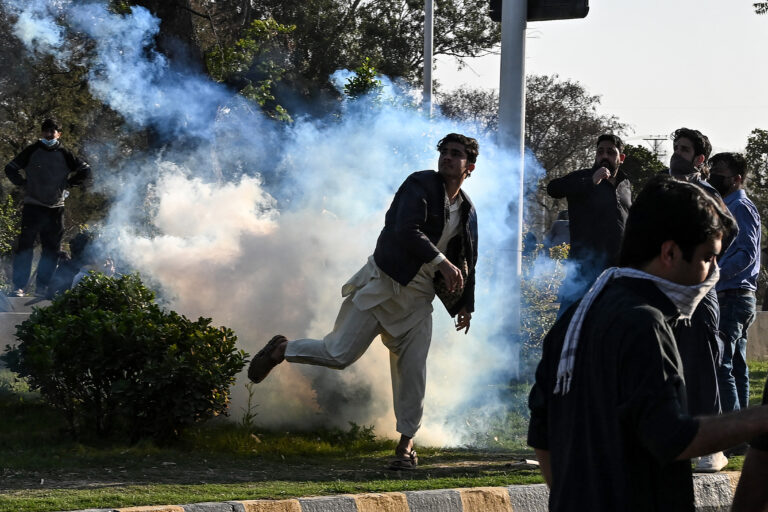
The fallout from the initial US and Israeli strikes, which killed Khamenei and other senior Iranian officials, quickly spread beyond Iran. In Iraq and Pakistan, large crowds protested against the attacks, with some attempting to storm US diplomatic missions. In the Pakistani megacity of Karachi, at least eight people were reportedly killed during pro-Iran demonstrations outside the US consulate, according to Muhammad Amin of the Edhi Foundation rescue service, who noted that most casualties suffered gunshot wounds.
Within Iran itself, the Red Crescent reported that the strikes had left at least 201 people dead and hundreds more injured. Confirmed casualties included Ali Shamkhani, a top adviser to Khamenei, and General Mohammad Pakpour, head of the Revolutionary Guards, underscoring the high-level nature of the targeted attacks.
Iran responded to these losses with a series of missile and drone strikes across the region, reportedly killing at least two people in Abu Dhabi and another in Tel Aviv. Following confirmation of Khamenei’s death by state media, a new wave of strikes was announced, intensifying regional military tensions.
Questions of Succession
Prior to Khamenei’s death, there had been ongoing speculation about his successor due to his advanced age. Analysts had predicted that the Revolutionary Guards, who wield substantial influence in Iran’s military and economic sectors, would gain even greater power following the supreme leader’s death.
State television confirmed that President Pezeshkian and two other top officials would assume leadership responsibilities during the transitional period, highlighting the continuity plan within Iran’s governance structure.
Reza Pahlavi, son of the former pro-Western Shah deposed in the 1979 Islamic revolution, denounced any successor within the current political framework as illegitimate. Hailing Khamenei’s death, Pahlavi declared: “With his death, the Islamic Republic has effectively come to an end and will soon be consigned to the dustbin of history.”
Pahlavi, who has spent much of his life in exile near Washington, has positioned himself as a transitional figure advocating for a secular democracy in Iran. Nevertheless, his support remains limited, and he does not command consensus across the broader opposition movement.
The Iranian judiciary reported that one strike hitting a school in the south on Saturday resulted in at least 108 fatalities. AFP was unable to independently verify the casualty figures or the circumstances surrounding the attack, highlighting the difficulty of accurate reporting amid ongoing hostilities.