

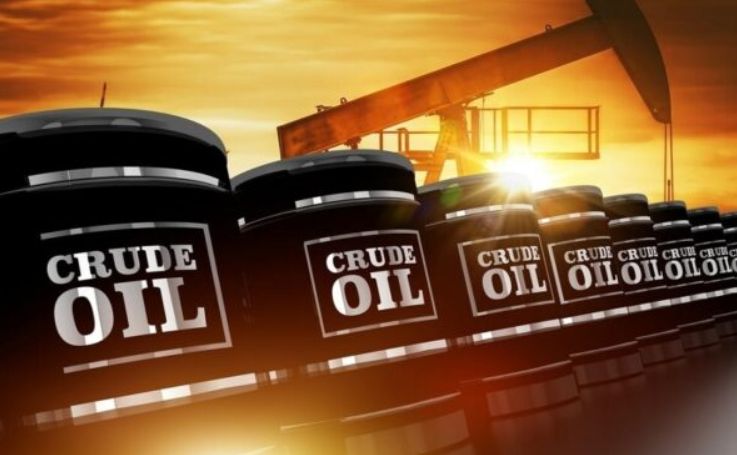

Global crude oil prices rose to approximately $72 per barrel on Friday, reaching their highest level in about seven months as escalating geopolitical tensions in the Middle East heightened fears of supply disruptions and injected renewed volatility into international energy markets. The development has strengthened expectations that oil prices could approach $80 per barrel if hostilities involving Iran, the United States, and Israel continue, placing oil-dependent economies such as Nigeria in a potentially advantageous fiscal position.
Market data showed that Brent crude, the global benchmark for oil pricing, settled around $ 72.87 per barrel, while the United States’ West Texas Intermediate traded near $67 per barrel. The surge follows weeks of rising uncertainty linked to growing confrontation in the Middle East, a region responsible for a significant share of global crude supply.
Energy analysts attribute the rally primarily to fears that ongoing military tensions involving Iran could threaten shipping routes, particularly the Strait of Hormuz, a strategic passage through which nearly one-fifth of the world’s oil supply moves daily. Any disruption to flows through the corridor is widely regarded as capable of triggering immediate supply shortages and sharp price spikes.
Financial institutions monitoring global commodities markets have projected further upside risks. Analysts at Barclays indicated that Brent crude could rise toward $80 per barrel if tensions escalate or sanctions intensify against Iranian exports.
For Nigeria, the price surge carries major fiscal implications. The Federal Government based the 2026 national budget on a crude oil benchmark of $64.85 per barrel and an average production target of 1.84 million barrels per day under the Medium Term Expenditure Framework guiding federal spending projections.
With global prices already trading more than seven dollars above the benchmark, Nigeria stands to generate substantial additional revenue if the current trend persists. Based on the government’s production assumption, the country is projected to produce approximately 671.6 million barrels of crude oil annually.
At the benchmark price, expected revenues align with fiscal projections embedded in the budget. However, maintaining an average price of about $72 per barrel would yield roughly $7.15 in additional revenue per barrel. When applied across projected annual production, analysts estimate that Nigeria could realise more than $4.8 billion in extra gross oil earnings within the fiscal year.
Should prices rise to the $80 level now being discussed by global market analysts, Nigeria’s additional earnings could approach $10 Billion above budget expectations. Such a development could significantly improve government revenues, strengthen foreign exchange reserves, and reduce pressure on public borrowing.
Despite the optimism, experts warn that Nigeria’s ability to fully benefit from rising prices depends heavily on production performance. Oil output has frequently fallen below official targets due to crude theft, pipeline vandalism, operational shutdowns, and infrastructure limitations. Industry observers note that without sustained improvements in security and investment, elevated prices alone may not translate into proportional fiscal gains.
Samuel Aina