


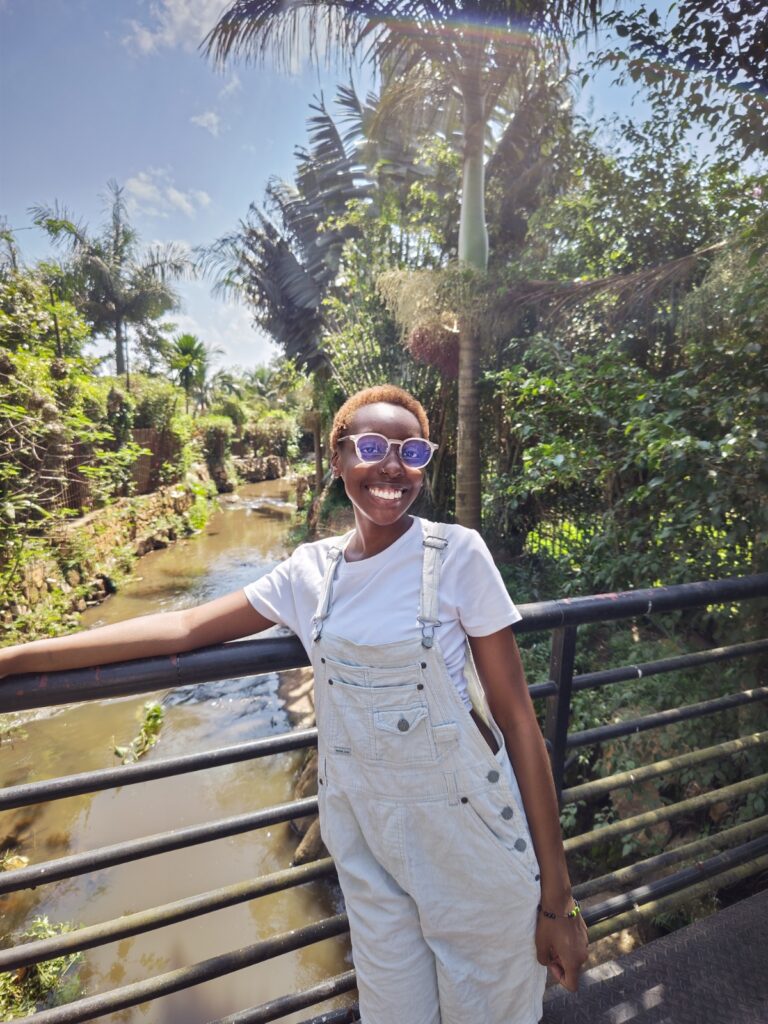
For many, premenstrual symptoms are an occasional inconvenience. But for Danielle Mulungi Wandera, a 25-year-old Ugandan storyteller and journalism student, the monthly cycle has long been a rollercoaster of intense emotions, physical pain, and mental health struggles caused by Premenstrual Dysphoric Disorder (PMDD). In an exclusive interview, Danielle opened up about her journey with the condition, shedding light on a disorder often misunderstood, stigmatized, and underdiagnosed.
“My name is Danielle Mulungi Wandera. I’m 25 and Ugandan. I am a storyteller, currently a student of Journalism and Media Studies. I live with Premenstrual Dysphoric Disorder (PMDD), a hormone-based mood disorder that affects about 1 in 20 people in the world,” she said. Danielle’s story illustrates the difference between the common perception of menstrual mood swings and the severe, debilitating reality of PMDD.
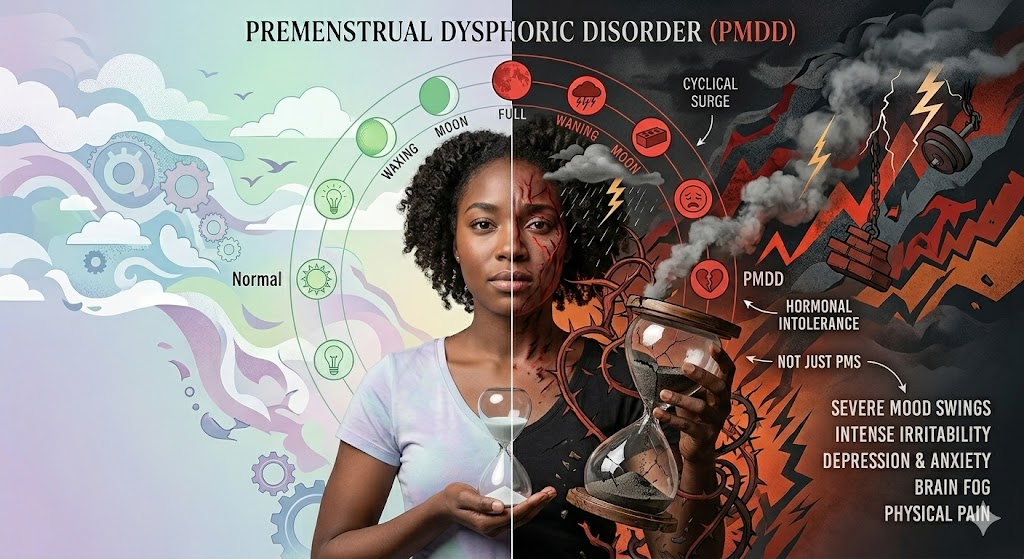
PMDD is a hormone-triggered mood disorder affecting about 3-8% of women globally. Unlike PMS, which is generally mild, PMDD can cause severe sadness, irritability, anxiety, suicidal thoughts, extreme fatigue, and physical pain in the one to two weeks before menstruation.
Early Signs and Realizations
Danielle first began noticing something unusual about her menstrual cycle in high school. “I can distinctly point out instances in high school where I would be very irritable and more sensitive to rejection and anything in general. One day, my friend, concerned, pulled me aside and asked me if I was on my period, and it turns out I had just started it,” she recounted. “For a long time afterward, I would notice that I was more likely to start arguments and have outbursts unlike my usual rational demeanour, around my period. I had also lived with depression for a long time but when my menstrual cycle began, it became frequent and even cyclical. However, mood swings are already stigmatised around our period, so I never really thought much of it.”
From the post-period phase of energy and motivation to the painful descent after ovulation, Danielle described her monthly cycle in vivid detail: “My period exhausts me, but by the time it ends, I have a zeal for life, I am excited to wake up. Even if I do not have energy, it is the time I am more likely to say yes to plans or initiate hanging out with my loved ones. This trend continues for the days leading into ovulation. I can always tell when I am ovulating because I initiate sexual relations more with my boyfriend and I’m more in touch with my sexuality. After ovulation is when things start to go downhill. Before we (my psychiatrist and I) finally found medication that works we tried several antidepressants, the time after ovulation would be characterised by several symptoms at once, most obviously a lack of interest in waking up, depression, anxiety, oversleeping and so on.”
The Luteal Phase: Struggles With Emotions and Isolation
Danielle’s most challenging period occurs in the days before menstruation, known as the luteal phase. “I am easily overstimulated and very irritable. I used to joke that I am a peacemaker unless it is before or on my period, in which case I ‘want problems always.’ I experience mood swings and sometimes, depending on the circumstances, suicidal thoughts and even ideation. I also experience physical symptoms, most commonly fatigue and pain in my pelvis and lower back,” she said.
These symptoms profoundly affect her emotions, thoughts, and behavior. “I don’t like fighting with my loved ones or even risking outbursts so I isolate a lot and I’m more likely to cancel plans during my luteal phase. The stigma around discussing hormonal mood swings also affects me, in that I’m not comfortable talking about my condition in some spaces or to some people because I’m scared of how I may be perceived, especially by men, or in the workplace. I also keep quiet and try to reduce any stimulus so they may not easily overwhelm my senses, causing me to become even more irritable.”
Daily life, relationships, and professional activities are all influenced by PMDD. Danielle explained: “It affects it a lot because I experienced burnout and that exacerbated my symptoms to the point of debilitating me. I rest a lot. I am also upfront with potential friends so they understand that I may become another person during my luteal phase. I am more weary forming new bonds because of shaming and stigma.
My school is, thankfully, integrated so I can attend classes online. My current work is also mostly remote, which is the ideal situation for me. So right now, PMDD is mostly coming to play in my personal relationships and my friends are very understanding, supportive and considerate and go out of their way to accommodate me in things like texting over calling, coming home to visit instead of us going out and things like that.”
Finding Answers and Receiving a Diagnosis
Understanding her condition was a long and uncertain process. Danielle shared: “I was surprised there was a name and language for what I had started to feel was affecting my life significantly but could not speak up about because I was not even a pregnant woman; I would just be making much ado about nothing. Coincidentally, I have a friend who lives with the disorder and is very vocal about it, so I went to the iampmd.org website and read about it, and felt like it didn’t fit.
Then I downloaded the period tracker because it is the only diagnostic tool/procedure, plus I understood that in Uganda, the likelihood of receiving a diagnosis without evidence would increase my chances of being dismissed or misdiagnosed. So the tracker was mostly for me to eliminate the possibility.”
Ultimately, a psychiatrist provided the clarity Danielle had been seeking: “When I was ready, I went to see a psychiatrist. This was my second attempt at seeing one, as I had made appointments in the years before and never followed through or had issues with insurance. My doctor listened to me describe my symptoms before asking me some questions, then he asked me if I had ever heard of PMDD and I said I had but wasn’t sure it described my symptoms. He told me that it was possibly because I had not tracked my cycle but it was the most likely reason for my then-constant anxiety and depression. He gave me a double diagnosis of Generalised Anxiety Disorder, which I had developed over my late teens and early twenties, and PMDD, which, if true, would explain my changes after I started my period at 13.
He understood my hesitance at accepting the PMDD diagnosis and told me to go study it and myself and then we would talk after. After 3 months and three sessions, we agreed that he was correct. His affirmation before I even knew I needed one was the validation I desperately needed, and I remain grateful for to this day. I had thought all this was in my head and had started to hate myself over something I had no control over. The diagnosis gave me language and an affirmation to know that nothing was ‘wrong’ with me, my brain was just sensitive to the hormonal shift at ovulation.”
Coping, Support, and Hope
With the right combination of medication, therapy, and lifestyle adjustments, Danielle has learned to manage PMDD effectively: “We have tried antidepressants and supplements, with lifestyle changes. I try to have things to look forward to so I remember that the future can be good, even if I can’t bear the present. For mental wellness, I try to take walks and do things that I love to do. My friends and my sister are also very supportive even when I isolate. After trying about 4 antidepressant medications, we finally found one that has minimal side effects and also eases my mental symptoms. It has been almost two years since I received the diagnosis and I can confidently say my life is better for knowing and learning to live with PMDD.”
Danielle’s message to the public is clear: “I would want them to know that PMDD is not PMS. We must never confuse them because one can lead to death and the other is simply an inconvenience. And that people with PMDD are not being dramatic. PMDD, when untreated or misunderstood, can cause suicide. PMDD is real and severely affects the lives of its sufferers; we should know and learn more about it.”
Expert Insights: Understanding PMDD
To provide a medical perspective, Dr. Loretta Oduware Ogboro-Okor, an obstetrician and gynaecology surgeon, explained: “Premenstrual Dysphoric Disorder (PMDD) is no joke. It is a severe, clinical mood disorder linked to the menstrual cycle. It goes far beyond the discomfort of ordinary PMS and can seriously affect emotions, relationships, work, and even personal safety.”
According to Dr. Ogboro-Okor, prevalence varies globally. “A large systematic review found that about 1.6% of women and girls worldwide meet strict diagnostic criteria for PMDD, equivalent to roughly 31 million females globally. When using broader diagnostic approaches across studies, 3.2% of women globally may meet criteria for PMDD. These figures are consistent with traditional psychiatric research estimating PMDD affects about 3-8% of reproductive-aged women worldwide.” African studies indicate potentially higher rates, with Ethiopia, Morocco, and Nigeria reporting prevalence as high as 50% in certain populations.
Symptoms include severe sadness, irritability, anxiety, depression, suicidal thoughts, extreme fatigue, sleep problems, and physical discomfort such as pelvic pain, bloating, and headaches. Management often requires a combination of medical treatment, psychological support, and lifestyle adjustments: “Best results usually come from combining medication, therapy, and lifestyle support.”
Dr. Ogboro-Okor emphasized the cultural challenges in Nigeria: “PMDD is massively under-recognised due to cultural beliefs about menstruation and mental health. Severe emotional symptoms are often dismissed, mental health is spiritualised, and women rarely report mood symptoms. Many suffer silently.”
Raising Awareness and Breaking Stigma
Danielle’s story and expert insights highlight the critical need for awareness: PMDD is not merely mood swings or drama it is a serious, treatable mental health condition that deserves recognition, understanding, and proper care. “Severe emotional suffering before menstruation is NOT normal. It is a medical condition and it is treatable,” Dr. Ogboro-Okor concluded.
By sharing her journey, Danielle hopes to empower others living with PMDD and break the stigma surrounding menstrual mental health: “Nothing was ‘wrong’ with me. My brain was just sensitive to the hormonal shift at ovulation. Knowing that changed my life.”