

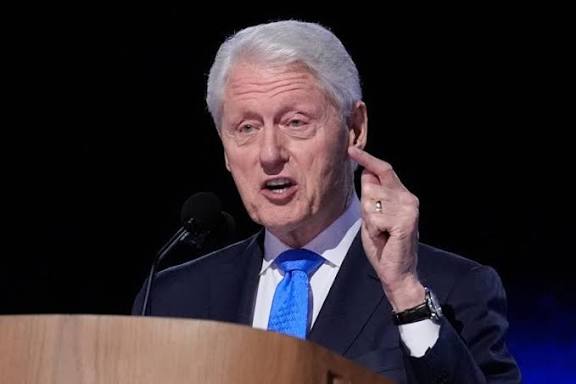

WASHINGTON — In a highly unusual and historically significant appearance, Bill Clinton, the 42nd President of the United States, testified before a Republican-led congressional committee on Friday, February 27, 2026, denying he had any knowledge of the criminal activities of the late financier Jeffrey Epstein. The closed-door deposition marked the first time in modern history that a former U.S. president has been compelled to testify under subpoena before Congress.
Clinton’s testimony came as part of a broader investigation by the House Oversight and Government Reform Committee into Epstein’s network, how his crimes went undetected for years, and the involvement of high-profile individuals whose names and photographs appeared in documents released by the Department of Justice.
Denial of Knowledge and Opening Statement
In his opening remarks — shared publicly on social media — Clinton stated that he had “no idea of the crimes Epstein was committing” and insisted he “did nothing wrong” in his interactions with the disgraced financier. He said he cut ties with Epstein long before the latter’s 2008 guilty plea in Florida for solicitation of a minor and denied ever witnessing any misconduct during their interactions.
Clinton also addressed the release of historical photographs showing him with Epstein and others, saying that regardless of what those images depict, he “saw nothing that gave me pause” and that he had no reason to believe Epstein was engaged in criminal behaviour at the time.
Scope of the Deposition
The deposition, which lasted more than six hours, took place in Chappaqua, New York, near the Clintons’ home. Committee members questioned Clinton about the extent of his relationship with Epstein, including travel on Epstein’s private aircraft — a detail acknowledged by Clinton but framed as related to philanthropic work rather than personal friendship.
Republican lawmakers, led by Oversight Committee Chairman Rep. James Comer, say the hearing is part of an effort to understand how Epstein built and maintained influence while evading full legal accountability for years, and whether powerful individuals played a role in that dynamic.
No criminal charges have been brought against Clinton in connection with Epstein, and he reiterated that he would have reported Epstein’s actions had he had knowledge of them.
Context: Hillary Clinton’s Testimony
Clinton’s appearance followed a separate deposition by his wife, former Secretary of State Hillary Clinton, who testified before the same committee on Thursday, stating she had no personal knowledge of Epstein’s crimes and did not recall ever meeting him. Hillary Clinton also pushed back against what she called partisan motives in the inquiry, though Republicans defended the investigation’s legitimacy.
Partisan Framing and Calls for Further Testimonies
The proceedings have drawn sharp partisan lines. Republicans insist the committee’s work is part of a necessary oversight effort, while Democrats have accused the panel of using the investigation to score political points and shield current officials, including President Donald Trump, whom some Democrats believe should also be questioned.
Clinton himself criticised the decision to require his wife to testify, describing it as “not right” and unnecessary given her lack of relevant knowledge.
Historic Implications
Clinton’s deposition represents a rare moment in U.S. political history — a former president testifying under oath before Congress. Observers note that the investigation, while focused on Epstein’s network and the government’s handling of his case, also raises broader questions about accountability for powerful figures and the mechanisms through which oversight is conducted.
As of now, the committee has not released the full transcript or video of the deposition, and further testimony from other individuals with connections to Epstein remains possible as the inquiry continues.