


The United Nations Security Council has imposed new sanctions on four senior leaders of Sudan’s paramilitary Rapid Support Forces over alleged atrocities committed during the capture of the western Sudanese city of el-Fasher, a move that underscores growing international concern over the conduct of the war now approaching its third year.
The sanctions target Abdul Rahim Hamdan Dagalo, a deputy commander of the RSF; Brigadier General Al-Fateh Abdullah Idris, widely known as “Abu Lulu”; RSF deputy commander Gedo Hamdan Ahmed; and field commander Tijani Ibrahim.
The decision comes amid mounting evidence of large-scale abuses during the RSF’s violent takeover of el-Fasher in October, one of the most consequential and brutal episodes of Sudan’s conflict, which the United Nations has described as a “war of atrocities” that has devastated civilian populations and destabilised the country.
According to the UN, Abdul Rahim Hamdan Dagalo, the brother of RSF leader Mohamed Hamdan Daglo, also known as “Hemedti,” oversaw operations on the day el-Fasher fell to RSF forces, with the organisation citing allegations that his troops carried out mass killings and ethnically targeted executions.
This latest action marks the fourth time Dagalo has been sanctioned internationally, following earlier measures imposed by the United States, the United Kingdom, and the European Union. Brigadier General Al-Fateh Abdullah Idris earned the moniker “the Butcher of el-Fasher” after graphic videos circulated online showing him during the city’s capture, footage that UN investigators say depicts him “giving orders to his men to kill innocent people.”
The UN added that video evidence shows Abu Lulu executing civilians and boasting about killing more than 2,000 people, claims that have become central to international outrage over the RSF’s conduct in Darfur. The other two sanctioned commanders, Gedo Hamdan Ahmed and Tijani Ibrahim, are accused of playing key operational roles during the assault and its aftermath.
The sanctions follow the release of findings by a UN fact-finding mission, which concluded that the RSF’s takeover of el-Fasher bore the hallmarks of genocide. Investigators described the operation as “three days of horror,” characterised by summary executions, systematic sexual violence, mass detention, and the deliberate targeting of civilians, particularly members of the ethnic Zaghawa community.
The mission said the violence appeared coordinated and sustained, rather than spontaneous, and warned that the scale and nature of the abuses raised serious concerns under international law.
These findings have intensified calls for accountability as Sudan’s conflict continues to generate what the UN says is the world’s worst hunger and displacement crisis.
The RSF has pushed back strongly against the allegations through Tasis, a coalition of civilian and armed groups led by the paramilitary force. A spokesman for Tasis told the BBC that the sanctions were “unfair,” arguing they were based on what he described as “partial” and “unneutral” reports. In a written response, Tasis rejected accusations that its forces deliberately targeted civilians or prevented them from leaving el-Fasher, calling such claims “misleading.”
The group said its fighters had evacuated more than 800,000 civilians from the city during military operations and had “provided them with food and medicine.” “All these facts showed that the sanctions imposed by UNSC are unjust,” the statement said.
Tasis also claimed that Abu Lulu had already been imprisoned by RSF authorities, arguing that this demonstrated the group’s lack of tolerance for abuses against civilians and insisting that what occurred were “individual incidents,” not official doctrine.
While the RSF has acknowledged that “violations” were committed in el-Fasher, it maintains that the scale of the atrocities has been exaggerated by its enemies and says internal investigations are under way.
Sudan has been engulfed in conflict since April 2023, when fighting between the RSF and the national army erupted into full-scale war, rapidly spreading across the country. For 18 months, RSF forces besieged el-Fasher, the capital of North Darfur and the last major city in the western Darfur region not under their control, before finally capturing it on 26 October.
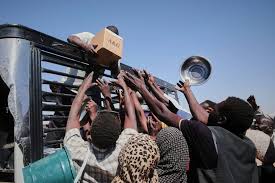
The fall of the city triggered a new wave of displacement, with the UN’s refugee agency reporting that more than 70,000 people have fled since the takeover, while many civilians remain trapped, missing, or detained inside the city by RSF forces. The humanitarian toll has continued to mount, with tens of thousands killed nationwide and millions forced from their homes.
International observers say the UN sanctions represent an important step but warn that far more robust measures are needed to curb abuses and disrupt the financial networks sustaining the RSF.
The Sentry, an investigative American non-profit organisation that focuses on dismantling economic systems that fuel violent conflict, said it was encouraging to see growing alignment among international actors in targeting RSF officials, but stressed that real accountability would require stronger financial consequences.
The United States imposed sanctions on Dagalo in September 2023 and on the three other commanders last week over their alleged roles in “ethnic killings, torture, starvation and sexual violence” in el-Fasher, while Britain sanctioned all four in December.
While the UN has not publicly detailed the specific measures attached to its latest designations, the Security Council has the authority to impose penalties such as asset freezes and travel bans on individuals deemed responsible for serious violations of international law.
Diplomats say the move signals an escalation in international efforts by the UN, the US, and the UK to hold perpetrators accountable as Sudan’s conflict grinds on. Even so, analysts caution that without enforcement and sustained political pressure, sanctions alone may do little to halt the violence or alleviate the suffering of civilians caught in one of the world’s most devastating humanitarian crises.