

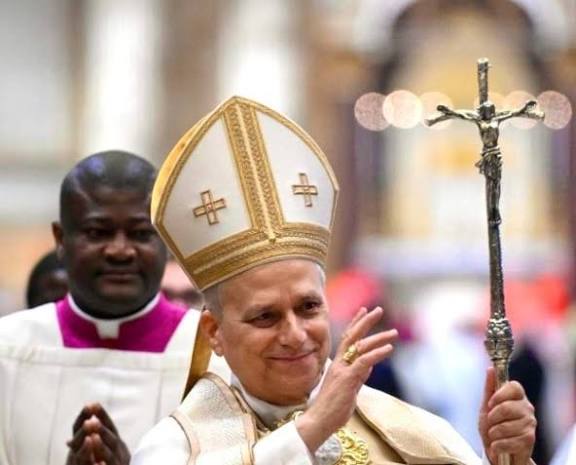

Pope Leo XIV is set to embark on a landmark 10-day visit to Africa beginning 13 April, marking his first pastoral trip to the continent since assuming leadership of the Catholic Church, the Vatican announced.
The pontiff will travel to Algeria, Cameroon, Angola, and Equatorial Guinea, highlighting the growing importance of Africa to the global Catholic community, which is home to approximately 20 percent of the world’s faithful.
In Cameroon, the Pope is scheduled to visit the capital city Yaoundé, the economic hub Douala, and the Anglophone city of Bamenda, located in the Northwest region where an armed conflict has been ongoing for nearly a decade, underscoring the humanitarian and political significance of his visit.
Algeria will host a papal visit for the first time, a country that is predominantly Muslim, with Pope Leo XIV’s itinerary symbolically linked to St Augustine of Hippo, the influential early Christian theologian, and a nod to the Pope’s own Augustinian religious order.
In December, the pontiff expressed a desire to visit Africa, citing Algeria as a potential destination and reiterating his commitment to interfaith dialogue in the North African nation.
Although this will be Pope Leo XIV’s first pastoral visit to Africa as pope, he is not unfamiliar with the continent. During his tenure as Cardinal Robert Prevost, he visited several African nations, including Kenya and Tanzania, and developed personal and institutional ties with the region.
The pontiff’s decision to undertake the visit reflects both the spiritual weight of Africa in the Catholic Church and the challenges facing the continent, including protracted conflicts, humanitarian crises, and socio-political instability.
Cardinal Fridolin Ambongo, Archbishop of Kinshasa and President of the Symposium of Episcopal Conferences of Africa and Madagascar, noted the symbolic importance of the papal visit, saying, “When the Pope visits a country, especially countries in crisis like ours, it is also to give hope to the people, especially people who are suffering,” emphasizing the pastoral and diplomatic dimensions of the journey.
The timing and scope of the visit come in the wake of Pope Leo XIV’s first foreign trip to Turkey and Lebanon in late 2025, during which he called for peace and reconciliation in the Middle East, demonstrating his broader commitment to dialogue in regions marked by conflict.
Africa, with its large Catholic population and complex political and humanitarian landscape, represents both an opportunity and a challenge for the pontiff’s ministry. The last papal trip to Africa was in February 2023 when Pope Francis visited the Democratic Republic of Congo and South Sudan, focusing on reconciliation and peacebuilding efforts amid ongoing conflicts.
While the Vatican has yet to release the official programme for Pope Leo XIV’s activities during the April tour, the trip is widely anticipated to combine religious ceremonies, pastoral visits, and engagements aimed at fostering peace, interfaith understanding, and hope in communities affected by violence and displacement.
Observers note that the Pope’s engagement with countries such as Cameroon, particularly in the conflict-ridden Northwest region, and Algeria, with its predominantly Muslim population, highlights the multifaceted significance of the visit, blending spiritual leadership with humanitarian awareness and interreligious dialogue.
The pontiff’s African tour also signals the Church’s recognition of the continent’s demographic and cultural influence, as well as the urgent need for moral and pastoral support in areas experiencing protracted crises.
Church officials and local leaders have described the visit as a moment to reinforce solidarity with communities enduring hardship, providing spiritual guidance and highlighting the Church’s commitment to human dignity and reconciliation.
As preparations continue, attention is focused on the potential outcomes of the visit in terms of fostering dialogue, reinforcing interfaith cooperation, and bringing international awareness to the challenges and aspirations of African nations.