

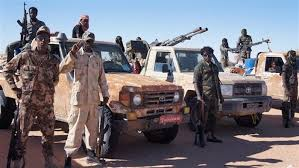

Chad on Monday announced the immediate closure of its eastern border with Sudan “until further notice”, a decisive move officials said was necessary to halt repeated incursions by combatants from the neighbouring country’s devastating civil war. The government described the closure as a measure to protect Chad’s citizens and refugee communities, as well as to safeguard the territorial integrity of a country that has increasingly felt the spillover effects of conflict just across its frontier.
The move was formally announced by Communications Minister Mahamat Gassim Cherif, who explained that all movement of people and goods along the Sudan–Chad border had been suspended effective Monday. In a statement, Cherif said the decision was taken in response to “repeated incursions and violations committed by the warring parties in Sudan on Chadian territory,” warning that the government “reserves the right to retaliate against any aggression or violation.” He added that “exceptional exemptions, strictly justified by humanitarian reasons” might be granted with proper authorisation.
The border closure follows heavy fighting over the weekend in the Sudanese border town of Tine (also spelled al‑Tina), where clashes between the paramilitary Rapid Support Forces (RSF) and militia fighters aligned with the Sudanese Armed Forces (SAF) resulted in casualties on both sides of the frontier. Chad’s authorities reported that at least five Chadian soldiers and three civilians were killed, and 12 others wounded when violence from the Sudanese conflict spilled into territory close to or inside Chad’s sovereign border.
The violence underscores the increasingly porous nature of the long, unsettled border shared by the two Sahelian neighbours. Officials said the closure is a direct response to the escalation of fighting in the border region and the growing presence of armed elements near Chadian territory. The government’s statement stressed that the measure aims “to prevent any risk of the conflict spreading to our soil, to protect our fellow citizens and refugee populations, and to guarantee the stability and territorial integrity of our country.”
Chad’s decision to shut one of Africa’s most frequently crossed international boundaries comes against the backdrop of a civil war in Sudan that has now entered its fourth year. The conflict began in April 2023, when tensions between the Sudanese Armed Forces, led by Gen. Abdel Fattah al‑Burhan, and the paramilitary RSF, commanded by Gen. Mohamed Hamdan Dagalo (“Hemedti”), escalated into full‑scale fighting after disagreements over integrating the RSF into the national army.
The RSF traces its roots back to the Janjaweed militias that fought in Darfur in the 2000s. What started as a power struggle between two former allies soon engulfed much of Sudan, spreading far beyond the capital, Khartoum, and ravaging regions such as Darfur, Kordofan, and Gezira. By late 2025, Sudan’s war had killed tens of thousands of people and displaced millions, creating one of the world’s largest humanitarian crises, according to United Nations and independent sources.
The fighting has not only produced a staggering humanitarian toll but also destabilised neighbouring states, particularly Chad. The border closure comes as nearly one million Sudanese refugees are believed to be in Chad, with earlier reports noting sizeable populations in eastern provinces such as Ouaddai, Ennedi Est, Wadi Fira, and Sila. These refugee inflows have placed pressure on local resources and contributed to complex security dynamics along the frontier.
Humanitarian agencies have underscored the importance of the Chad–Sudan border as a corridor for relief operations. Prior to the closure, the frontier had served as a vital entry point for aid convoys and humanitarian workers bringing food, medical supplies, shelter materials and protection services to vulnerable populations both within Sudan and in refugee settlements inside Chad. The closure, while aimed at improving security, is expected to complicate logistics for agencies operating in the region.
Chadian authorities stressed that exceptions to the closure could be granted on strictly humanitarian grounds, but only with prior authorisation from the relevant government bodies. The official policy reflects a balancing act between security concerns and the recognition of Chad’s role as a host nation for refugees fleeing violence in Sudan.
The border closure is not the first time Chad has taken drastic measures in response to the Sudanese conflict. Shortly after the war broke out in 2023, Chad temporarily closed its frontier as fighting intensified and displaced populations began crossing en masse. That brief closure was intended to stem the immediate spillover of gunfire and incursions, but the reopening reflected earlier assessments that the conflict remained at a distance. The latest shutdown suggests those fears have since materialised.
Clashes this weekend near Tine were reportedly among the most intense in recent months, with Chadian troops drawn into violence they had hoped to avoid. According to security sources, additional Chadian forces are being deployed to reinforce border positions, and the government has urged residents of affected areas to “remain calm, stay alert and comply with the new restrictions” to minimise civilian casualties and chaos.
International analysts have warned that such spillover incidents could further entangle Chad in a conflict it has sought to manage carefully through diplomatic and humanitarian engagement. The concern is that as fighting intensifies in Darfur and neighbouring regions, armed elements may exploit the porous boundary, either deliberately or inadvertently drawing Chad deeper into the Sudanese theatre.
Sudan’s war, while rooted in a power dispute within the country’s military hierarchy, has taken on broader humanitarian dimensions. Independent investigations and U.N. mandates have documented widespread atrocities, including mass killings and targeted displacement of civilians. In one documented case, the RSF was accused of killing more than 1,000 civilians in a displacement camp siege, contributing to the sense of a conflict marked by severe violations of human rights and international law.
The warring sides have periodically accused each other of abuses and violations. United Nations officials, including the human rights chief, have expressed alarm at civilian casualties resulting from drone strikes and other military actions in conflict zones such as South and West Kordofan, Darfur, and other interior regions, where indiscriminate attacks have affected markets, shelters and schools.
The impact on regional security has been palpable. Chad’s closure of its border reflects a growing fear among Sahelian states that Sudan’s internal turmoil could destabilise neighbours through refugee flows, armed incursions, or alliances with local militias. The border’s closure to all standard crossings is a stark signal from N’Djamena that it will prioritise national security even at the cost of disrupting longstanding movement patterns.
Sudanese authorities themselves have occasionally accused Chad of indirectly supporting the RSF by allowing transit of supplies or fighters, allegations that N’Djamena has denied. These mutual recriminations add a diplomatic layer to an already volatile security landscape, complicating efforts at dialogue and peaceful resolution of border incidents.
Humanitarian groups have cautioned that border closures, while understandable from a security standpoint, can significantly hamper aid delivery to populations both inside Sudan and among refugee communities in Chad. Aid agencies have long relied on predictable access routes to provide food, shelter, healthcare, and protection services to those displaced by the war. Adjustments to these routes require coordination and resources at a time when needs are already overwhelming.
The sheer scale of displacement the result of nearly three years of war has stretched humanitarian capacities across the region. In eastern Chad, settlement sites hosting refugees report high numbers of vulnerable individuals including women at risk, elderly people, persons with disabilities, and children, all of whom face heightened protection needs.