

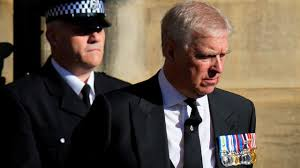

Former civil servants have reignited scrutiny over Andrew Mountbatten-Windsor’s tenure as the United Kingdom’s Special Representative for International Trade and Investment, with claims that the former royal charged taxpayers for massage services during official overseas trips. The allegations, spanning his decade-long service from 2001 to 2011, have emerged amid broader examination of Andrew’s public and private conduct and have raised questions about accountability in government-funded roles.
According to retired officials familiar with his overseas engagements, certain expenses, including alleged claims for massages following a Middle East visit, were disputed internally at the time but ultimately approved by senior authorities.
Andrew Mountbatten-Windsor, the Duke of York, served as the UK’s unpaid envoy for international trade, a position that required him to undertake diplomatic and commercial engagements abroad. While he did not receive a salary for his role, all travel, accommodation, and operational support for his visits were funded by the British taxpayer, with civil servants tasked with logistical and administrative oversight.
His work involved promoting UK trade interests, attending international forums, and supporting British businesses in securing investment opportunities abroad. Despite the official nature of the role, sources allege that Andrew’s personal conduct during these engagements raised concerns among staff responsible for financial compliance.
The allegations center on the purported misuse of public funds to cover personal services during official trips, most notably massage services. One retired civil servant who worked within the trade department during Andrew’s tenure described resisting the payment but being overruled: “I thought it was wrong… I’d said we mustn’t pay it, but we ended up paying it anyway,” he told the BBC. The official’s statement suggests a pattern of internal debate over expense approvals and points to a lack of rigorous oversight at the time.
Other witnesses confirmed that extensive spending on flights, hotel accommodations, and accompanying staff frequently exceeded normal parameters, with approvals often granted automatically rather than being thoroughly examined.
Another former senior Whitehall official, who oversaw financial matters during Andrew’s tenure, corroborated the claims and expressed certainty regarding their authenticity. “I had absolutely no doubt about what I saw,” he said. “It was like it wasn’t real money, they weren’t spending any of their own money. Approvals were a rubber stamp, and record-keeping was fragmented. It was difficult to track the personnel involved and their exact expenses.” Such testimony emphasizes the ongoing concerns about administrative and financial controls in ministerial travel and the handling of government resources during Andrew’s assignments.
Despite these claims, there is no direct documentary proof confirming that massage services were paid for using public funds, with records from over two decades ago limited and sometimes incomplete. Nevertheless, whistleblowers emphasize their proximity to financial processes at the time, lending weight to the credibility of their observations.
The Department for Business and Trade, when approached for comment, did not dispute the claims regarding historical expense controversies but instead referred to an ongoing police investigation into Andrew, highlighting the legal and administrative dimensions that now surround the matter.
Andrew Mountbatten-Windsor has consistently denied any wrongdoing in relation to his public duties. He has also rejected allegations linking him to convicted sex offender Jeffrey Epstein, maintaining that he personally did not profit from his role as a trade envoy and that he performed his duties in accordance with official guidance. “At no point did I act unlawfully or benefit personally from my official responsibilities,” a spokesperson for Andrew stated in a prior briefing. Legal experts note that, while these claims are under scrutiny, they do not constitute formal allegations of criminal activity at present.
The renewed attention comes amid broader examination of Andrew’s past, including references to him in US legal proceedings associated with Epstein. Juan Alessi, a former employee of Epstein, alleged that Andrew received a “daily massage” during visits, and certain email records referenced payments for massages for an individual named “Andrew.”
However, it remains unclear whether these emails refer to Andrew Mountbatten-Windsor, adding an element of uncertainty to the investigation and public reporting. These references have amplified interest in the historical financial oversight of his travel and the scrutiny of royals’ roles in public service.
Biographer Andrew Lownie, revising his book Entitled, noted that limited access to official records has complicated efforts to fully assess Andrew’s decade-long tenure. “Many Freedom of Information requests have been denied, citing the sheer volume of documentation,” Lownie explained. “Without access to official records, it is difficult to verify exactly how expenses were managed or the degree to which oversight was exercised, leaving a partial picture of his activities abroad.” Lownie emphasized that these gaps in transparency contribute to both public curiosity and policy debates over accountability.
The political implications of the allegations are significant, prompting calls for further investigation into governmental oversight. The Liberal Democrats have pushed for a parliamentary debate on the matter, stressing the importance of public accountability for taxpayer-funded roles. Former Conservative minister Tom Tugendhat has similarly advocated for a formal inquiry led by MPs, peers, and potentially judges, highlighting the need to scrutinize the propriety of conduct by individuals holding official public positions. Such political interest underscores the enduring sensitivity of Andrew’s historical role and the reputational stakes involved.
Several retired UK Trade and Investment officials have also criticized Andrew’s performance during international trips, suggesting that his presence could sometimes hinder rather than support trade and diplomatic objectives. One official recalled: “Andrew was seen as a liability. He went off script, he thought he was an expert when he wasn’t. He thought he was funny when he was being rude to people.”
These perspectives indicate the tension between ceremonial or high-profile representation and effective administration of trade diplomacy, raising broader questions about oversight and performance standards.
Officials further noted that preparations for Andrew’s visits were often undermined by unpredictable conduct. “Extensive planning could be undone by behavior that wasn’t aligned with the objectives of the trip,” said a retired official, who added that staff were often reluctant to voice concerns for fear of damaging their professional standing. This dynamic illustrates the structural challenges in balancing accountability, protocol, and the discretion afforded to royal representatives in public roles.
The Department for Business and Trade has clarified that Andrew’s position differed significantly from contemporary trade envoy roles, which operate under stricter guidelines and oversight mechanisms. Today’s appointments feature structured responsibilities, clearer lines of reporting, and accountability measures designed to prevent excessive or unauthorized expenditure. The contrast highlights both historical gaps in administrative controls and the evolution of government protocols over the past two decades.
Legal developments have added another layer of public scrutiny. Thames Valley Police recently arrested Andrew Mountbatten-Windsor on suspicion of misconduct in public office. While no formal charges have been filed, the arrest signals that authorities are actively investigating the nature of his past official conduct, raising the possibility of future legal proceedings. The case remains under investigation, with police refraining from releasing further details due to the ongoing nature of inquiries.
Andrew’s legal representatives have emphasized that, as of now, no wrongdoing has been proven, and that their client fully intends to cooperate with law enforcement. They have also underscored Andrew’s long-standing denial of allegations concerning financial impropriety or misuse of public resources. Legal analysts note that investigations of this nature are complex, particularly when assessing historical roles, incomplete records, and evolving standards of oversight.
The resurfacing of these allegations has also reignited media interest, reflecting the enduring public fascination with Andrew Mountbatten-Windsor and the royal family. News outlets have highlighted both the potential misuse of taxpayer funds and the broader questions of propriety for high-profile public representatives. Observers have noted that the coverage intersects with ongoing debates about transparency, accountability, and privilege in the management of government-funded roles.
Observers have also considered the implications for diplomatic and trade policy. While Andrew’s role was largely ceremonial in nature, he was expected to represent UK interests abroad and contribute to economic diplomacy. Experts note that any perception of impropriety in such roles can have reputational consequences for the United Kingdom, potentially undermining the credibility of trade missions and government-supported initiatives.
Whistleblowers and former officials involved in administrative oversight argue that the lack of rigorous scrutiny during Andrew’s tenure illustrates systemic weaknesses in financial governance. As one former senior civil servant explained, “There were insufficient checks to ensure accountability. Approvals were routine, documentation was incomplete, and reporting lines were unclear, which created opportunities for questionable expenditure.” These concerns have informed contemporary debates about strengthening oversight mechanisms for public funds.
The timing of the renewed allegations coincides with heightened attention on the royal family’s public duties and historical controversies. Public interest is amplified by Andrew’s high-profile status, familial connections, and prior associations with legal and ethical controversies. Analysts suggest that this combination of factors has created a unique environment in which historical administrative decisions are subject to retrospective scrutiny and political debate.
Legal commentators emphasize that investigations must differentiate between procedural irregularities, potential misconduct, and unlawful behavior. In Andrew’s case, the absence of definitive proof linking him personally to specific payments, combined with the passage of time and incomplete records, presents challenges for investigators seeking to establish culpability. Nevertheless, authorities are pursuing inquiries to assess whether public funds were misused and whether any criminal liability exists.
The potential political ramifications extend to parliamentary oversight and public accountability. Calls for a formal inquiry are likely to test the robustness of governmental procedures, transparency measures, and reporting frameworks governing high-profile envoys. As Tom Tugendhat argued, “A clear investigation is necessary to maintain public confidence in taxpayer-funded roles, especially when they involve prominent figures who wield significant influence abroad.”
Meanwhile, the Department for Business and Trade continues to stress that the current governance framework for trade envoys ensures more rigorous scrutiny and accountability than in the past. Officials have highlighted ongoing reforms to prevent ambiguous expense approvals, improve record-keeping, and clarify reporting lines, reflecting lessons learned from prior experiences.
The case against Andrew Mountbatten-Windsor, both historical and ongoing, remains closely monitored by the media, Parliament, and the public. Its outcome could set precedents regarding accountability for government-funded roles held by royals, the limits of discretion afforded to high-profile representatives, and the oversight of historical expenditures. Legal, political, and reputational stakes remain high.
As the investigation continues, analysts caution that transparency and evidence-based inquiry are essential to ensure fair outcomes. The interplay of historical administrative practices, royal privilege, and evolving oversight standards highlights the complexity of balancing public accountability with the ceremonial and diplomatic functions traditionally associated with high-profile envoys.