

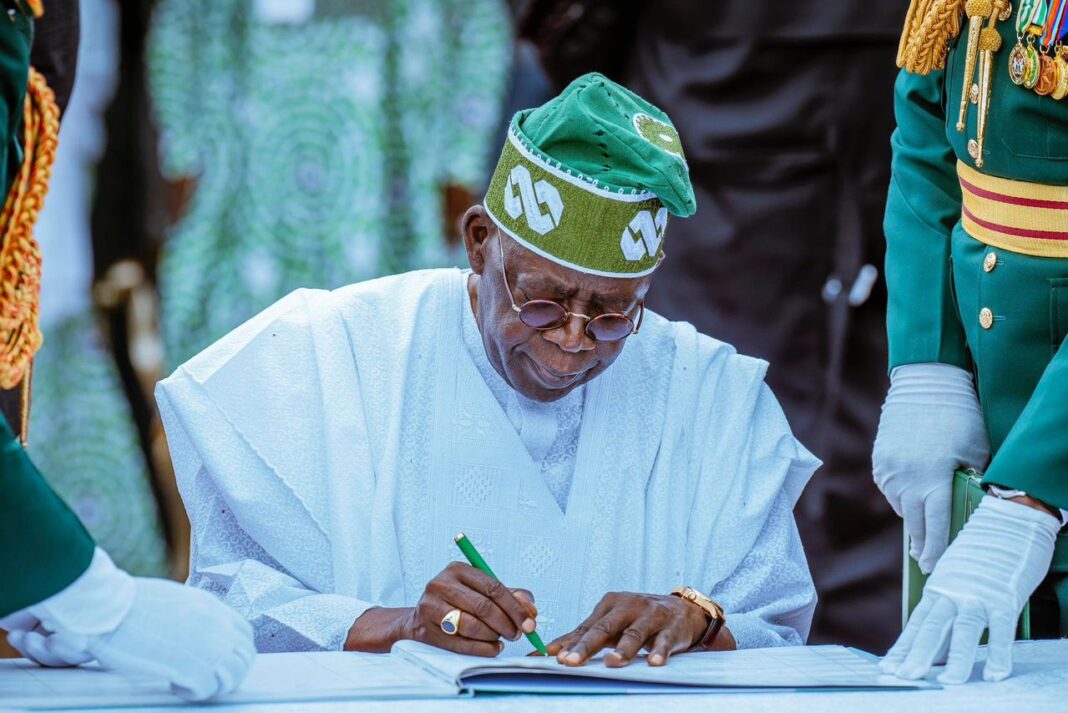

Nigeria’s President, Bola Ahmed Tinubu, has approved a verified payment of N2.8 trillion to electricity generation companies as the Federal Government’s liability for long-standing debts in the power sector following years of disputed claims and mounting fiscal pressures on the nation’s budget.
Nigeria’s electricity crisis has been a defining economic challenge since the privatisation of the power sector in 2013. At that time, state-owned power plants and distribution companies were sold to private investors for around N400 billion with the promise that market forces would revive generation and delivery of electricity. What followed instead was chronic liquidity shortfalls, tariff structures that failed to cover the full cost of production, and a rising stock of unpaid invoices owed by the Nigerian Bulk Electricity Trading Plc to generation companies known as GenCos. Unpaid debts repeatedly ballooned into what the operators and government alike describe as accumulated legacy liabilities stretching back more than a decade.
Over recent years, those backlogs have grown even more unwieldy. Operators warned early in 2026 that debt levels across the sector had surged to N6.5 trillion and were on course to exceed N8 trillion by year-end if unchecked. The companies told regulators and government officials that monthly invoices of about N280 billion for electricity supplied into the national grid were being met only in small measure, with roughly N80 billion paid, leaving the bulk of obligations unpaid.
Tinubu’s announcement comes after intense negotiations between the Presidency, the Ministry of Finance, and Nigeria’s power companies. In August last year, GenCos presented their claims directly to the president, asserting that they were owed over N6 trillion. Tinubu declined to accept the figure pending a comprehensive audit of the evidence, drawing parallels between unverified claims in the power sector and the inflated invoices seen in the fuel subsidy regime that once cost the government hundreds of billions of naira.
A tripartite audit was established involving GenCos, the Federal Ministry of Finance, and the Nigerian Bulk Electricity Trading Plc. Independent scrutiny of documentation and reconciliation of invoices and payments lasted several months. In the meantime, the government issued a N501 billion bond under the Presidential Power Sector Debt Reduction Programme in January 2026, which was fully subscribed by pension funds, banks, and asset managers, signalling confidence in the initiative and providing liquidity to the system even as reconciliation continued.
When the audit was concluded, it found the total eligible liability to be N2.8 trillion, far below the N6.6 trillion figure cited by the generators’ leadership in media interviews. Tinubu accepted the audited number and made clear that the government will honour only that amount, insisting that no additional naira beyond verified obligations would be paid. The president also attached conditions to the disbursement, requiring that portions of the funds be ring-fenced to settle outstanding liabilities with gas suppliers, a practice aimed at tackling one of the root causes of grid instability. GenCos have long argued that unpaid gas bills resulted in cut-off supplies from gas producers, which forced generation plants to intermittently shut down and contributed to erratic power supply across the country.
The government has further stipulated that a percentage of the payments must be used for infrastructure renewal and expansion, with evidence of compliance before subsequent tranches are released. Arrangements signed with five key generation companies, including First Independent Power Limited, Geregu Power Plc, Ibom Power Company Limited, Mabon Limited, and the Niger Delta Power Holding Company, set the first phase for about N827.16 billion to be paid in instalments. Additional tranches of between N600 billion and N800 billion are planned later in the year to push out payments for liquidity support for the industry.
Whether this landmark intervention ultimately translates into meaningful improvements in electricity supply or becomes another chapter in a long history of fiscal compromises remains to be seen. The conclusion that emerges now is not one of simplistic optimism or uncritical scepticism but recognition that the real work of transforming Nigeria’s power landscape has only just begun.
Samuel Aina