

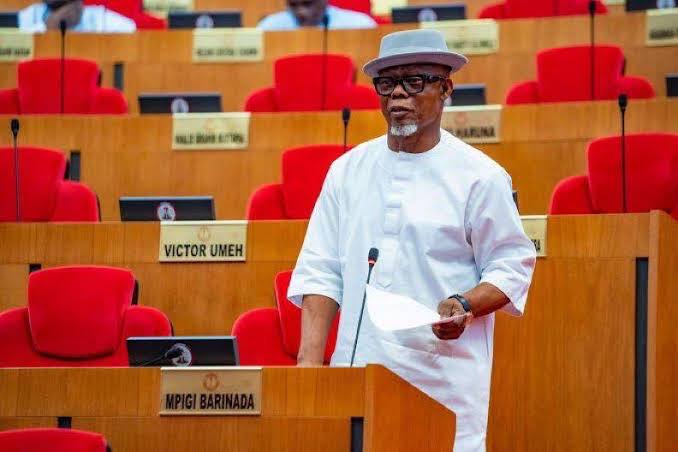

Nigeria’s Senate was thrown into mourning on Thursday, February 19, 2026, following the death of Senator Ipalibo Harry Banigo Mpigi, who represented Rivers South-East Senatorial District in the National Assembly. The news, first reported in national dailies including The PUNCH, marked a solemn moment inside the Red Chamber as lawmakers across party lines paid tribute to a colleague widely described as calm, principled and community-oriented.
The late lawmaker was 64.
Shock within the National Assembly
The announcement of Mpigi’s passing reportedly came as a surprise to many senators and aides at the National Assembly complex in Abuja. Parliamentary proceedings slowed as members received confirmation, after which tributes and condolences began pouring in.
Senate President Godswill Akpabio led the chamber in mourning, describing the death as a painful loss not only to Rivers State but to the Nigerian legislature as a whole. Lawmakers observed moments of reflection while colleagues spoke about his conduct, legislative contributions and interpersonal relationships within the chamber.
Across party lines — ruling and opposition alike — senators acknowledged that Mpigi maintained cordial relationships and avoided the heated confrontations that sometimes characterise Nigerian parliamentary debates.
His Political and Legislative Career
Senator Mpigi represented Rivers South-East, a politically sensitive senatorial district in the oil-rich Niger Delta region. His constituency includes areas deeply tied to Nigeria’s petroleum economy, environmental agitation and resource-control politics.
Before his election to the Senate, Mpigi had a long involvement in local and state-level politics and community leadership structures in Rivers State. His political influence was particularly rooted in grassroots mobilisation rather than national visibility, which made him more prominent within regional politics than media headlines.
In the Senate, his focus reportedly included:
- regional development
- youth empowerment
- environmental concerns in oil-producing communities
- constituency infrastructure projects
Colleagues often described him as a “quiet legislator” — a politician who preferred committee work, negotiation and constituency engagement to public political drama.
Reaction from Rivers State
In Rivers State, political leaders and traditional rulers began condolence visits to the family and his community soon after the news broke. Local supporters described his death as a major vacuum in representation.
The Niger Delta region places strong importance on federal representation due to its role in Nigeria’s oil production and the long-standing issues of environmental degradation, unemployment and development deficits. As a result, the loss of a sitting senator is not only emotional but also politically significant.
Community groups noted that Mpigi had maintained accessibility to constituents, frequently attending local meetings and engaging youth groups.
Implications for Representation
The death of a serving senator automatically triggers constitutional procedures. The Independent National Electoral Commission (INEC) is expected to organise a senatorial by-election in Rivers South-East to fill the vacant seat.
Until then, the district will effectively lack direct representation in the Senate, particularly affecting ongoing legislative matters connected to regional development projects, federal allocations and oversight functions.
Political observers say the upcoming by-election could become highly contested given Rivers State’s already complex political alignments.
Tributes Beyond Politics
Beyond formal politics, tributes emphasised Mpigi’s personality more than his political ideology. Associates described him as approachable, patient and deeply connected to his community.
In a country where politics is often adversarial, colleagues highlighted his ability to maintain friendships across factions — a quality increasingly rare in Nigeria’s polarised political environment.
Civic organisations in the Niger Delta also noted his involvement in mediation discussions and peace-building efforts among local stakeholders.
Mortality and Public Service
His passing also reminds the public of the human dimension of political office. Legislators are frequently seen only through debates, motions and party positions, yet behind those roles are individuals balancing health, family and public responsibilities.
Deaths of sitting lawmakers periodically disrupt parliamentary continuity and governance processes, particularly when committees lose experienced members.
What Happens Next
The Senate is expected to formally notify the Independent National Electoral Commission, after which a by-election timetable will be issued in accordance with electoral law. Political parties in Rivers State will then begin fresh primaries to select candidates.
Meanwhile, funeral arrangements are expected to involve both state and national dignitaries, reflecting the protocol accorded to a serving federal lawmaker.
Conclusion
The death of Senator Ipalibo Harry Banigo Mpigi marks both a personal loss to his family and a political moment for Rivers State and the Nigerian Senate. His tenure may not have been marked by national headlines, but by many accounts it was defined by steady constituency engagement and quiet legislative service.
As tributes continue and preparations for a by-election begin, the National Assembly resumes its work — now with an empty seat, a reminder of the fragility of public office and the enduring impact of those who serve within it.