

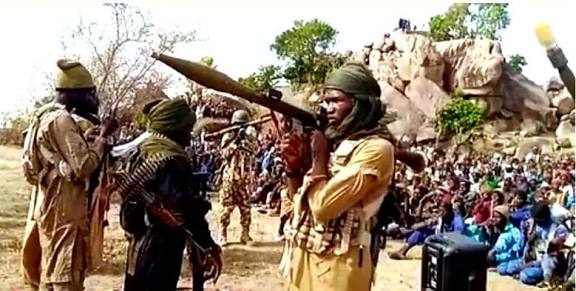

At least 34 people were killed in a series of coordinated attacks by suspected Islamist militants on several villages in Kebbi state, north-western Nigeria, officials reported.
The assaults occurred on Tuesday in a remote border district of Kebbi State, where multiple communities were simultaneously targeted, overwhelming local defences and forcing residents to flee their homes. Survivors described the attackers as “highly organised,” noting that they swept through villages firing indiscriminately at residents.
The intensity and synchronisation of the raids left villagers with little opportunity to mount resistance, contributing to significant casualties and widespread displacement.
Officials have attributed the attacks to Lakurawa, a relatively new insurgent group operating in the north-west. The group, which was formally declared a terrorist organisation last year, is reported to maintain connections with jihadist factions in neighbouring Mali and Niger.
Authorities said the militants have for years established themselves in border communities, marrying local women and recruiting young people into their ranks.
Lakurawa was previously targeted by United States airstrikes in December in Sokoto State, further north, as part of international efforts to disrupt the group’s operations, officials noted.
Nigerian security forces have now moved into the affected areas in Kebbi State to protect residents, provide assistance to survivors, and carry out tracking operations aimed at cutting off the militants’ escape routes.
According to officials, the presence of security personnel is intended to stabilise the affected villages and prevent further attacks, as well as to identify and apprehend those responsible for the coordinated raids.
Authorities have not yet released official statements on the attacks. However, images circulating on social media show shrouded corpses being prepared for burial, highlighting the human cost of the violence.
The attacks have prompted outrage across Nigeria, with citizens using social media to call on the government to take decisive action to end the recurring violence in the north-west. Many online users condemned the persistent insecurity and demanded stronger protective measures for communities along the border.
Lakurawa’s modus operandi in Kebbi and other north-western states has previously involved highly coordinated simultaneous raids designed to swamp local security forces. Officials said the group’s tactics allow it to inflict maximum damage while evading rapid counterattacks.
Last year, the group drew national attention when reports emerged that its fighters had flogged residents for listening to music, leading to its formal designation as a terrorist organisation. Analysts and officials have described Lakurawa’s emergence as adding complexity to Nigeria’s already multifaceted security challenges.
The attacks come amid ongoing insecurity in other parts of the country. Boko Haram continues to operate in the north-east, targeting civilians and military personnel alike, while heavily armed kidnapping gangs remain active across north-west and central states.
Separatist movements in the south-east also continue to pose challenges to national security, demonstrating the diverse threats facing Nigerian authorities.
Officials emphasised that Lakurawa’s activities, while localised in border regions, have implications beyond Kebbi State. Its reported links with jihadist factions in neighbouring countries increase the risk of cross-border attacks and complicate regional security efforts.
The group’s practice of recruiting youth and integrating into local communities has, according to officials, enabled it to maintain a presence despite previous counterinsurgency operations.
Survivors of the recent attacks spoke of the fear and chaos that ensued during the raids. “They were highly organised and moved from house to house, firing indiscriminately,” one resident said. “Many of us ran for our lives, leaving everything behind. We lost neighbours and friends. It was terrifying.”
Another villager added, “The local vigilante groups tried to resist, but there were too many of them, and they were armed. We had no choice but to flee.”
Images circulating on social media have amplified public concern, with some users describing the scale of the violence as “unacceptable” and urging the federal and state governments to increase security measures along vulnerable border areas. Calls for immediate intervention have grown louder as Nigerians grapple with the human toll of repeated attacks in the north-west.
The Nigerian government has faced criticism over perceived delays in effectively neutralising insurgent groups like Lakurawa. Analysts note that the group’s history of cross-border mobility, coordination, and recruitment complicates traditional counterinsurgency methods, necessitating both intelligence-led operations and collaboration with regional security partners.
In recent years, US involvement in the region, including targeted airstrikes and intelligence sharing, has focused on curbing Lakurawa’s operations and preventing further attacks on civilians.
Officials said that despite these interventions, the group has maintained the ability to launch swift, coordinated assaults, underscoring the persistent threat it poses to communities in Kebbi and other north-western states.
Residents displaced by Tuesday’s attacks are reported to be seeking temporary shelter in neighbouring villages and local government centres. Humanitarian actors have begun assessing the immediate needs of those affected, including food, medical assistance, and psychological support, as local authorities coordinate relief efforts.
Security analysts emphasised that while Lakurawa represents a serious challenge, it forms only one part of Nigeria’s broader security landscape. The combination of armed kidnapping gangs, Boko Haram insurgents, and separatist movements across various regions creates a complex environment that requires coordinated strategies at both federal and state levels.
Authorities continue to monitor the situation in Kebbi State closely, with tracking and intelligence operations underway to apprehend the perpetrators. Officials said the priority remains the protection of civilians, recovery of displaced residents, and disruption of the militants’ operational capabilities.
The attacks on Kebbi communities serve as a stark reminder of the ongoing threat posed by armed insurgent groups in north-western Nigeria. Analysts noted that without sustained and coordinated security measures, including regional collaboration and community engagement, such attacks are likely to recur.
Officials reiterated that all actions taken against Lakurawa are in line with Nigeria’s counterterrorism and security framework. “We remain committed to safeguarding citizens, restoring normalcy to affected communities, and preventing further attacks by insurgents in Kebbi and across the north-west,” a security source said.
“Our forces are working to ensure that these militants do not find safe havens and that communities are protected from further harm.”