

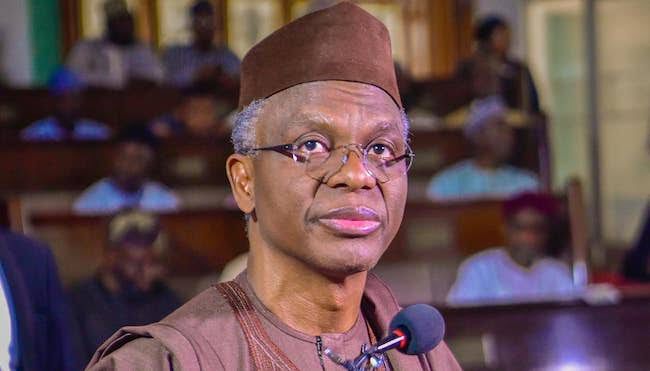

Operatives of Nigeria’s Independent Corrupt Practices and Other Related Offences Commission (ICPC) searched the residence of former Kaduna State Governor Nasir El‑Rufai in Abuja on Thursday as part of an ongoing corruption investigation that has rapidly intensified this week. The development follows his detention by the Economic and Financial Crimes Commission earlier in the week and comes amid mounting legal scrutiny of his conduct in and after public office.
The ICPC said in a statement late Wednesday that Mr. El-Rufai was in its custody in connection with ongoing investigations, although the anti-graft body did not provide detailed allegations or indicate whether formal charges had been filed. The agency’s Head of Media and Public Communications, J. Okor Odey, confirmed the proceedings.
Mr El-Rufai’s media adviser, Muyiwa Adekeye, disclosed the search at the former governor’s Abuja residence on the social media platform X, stating that ICPC operatives were conducting the operation. The move drew sharp criticism from Mr. El-Rufai’s legal team, with his lawyer Ubong Akpan describing the action as “unlawful” and a violation of his client’s fundamental rights and legal protections under the Constitution.
The latest developments form part of a series of investigations involving at least three federal agencies. On Monday, Mr. El-Rufai voluntarily presented himself to the Economic and Financial Crimes Commission at its Abuja headquarters following an invitation related to alleged financial irregularities during his tenure as governor. He had served as governor of Kaduna State from 2015 until May 2023. After spending two nights in EFCC custody, he was granted administrative bail on Wednesday evening.
As he exited the EFCC building on Wednesday night, he was immediately taken into custody by armed operatives believed to be acting for the ICPC, although there were initially conflicting reports about which agency was responsible for the takeover. The ICPC later confirmed it was responsible.
In parallel, the Department of State Services filed three counts of alleged offences against Mr. El-Rufai at the Federal High Court in Abuja under the Cybercrimes Amendment Act 2024 and the Nigerian Communications Act 2003. These separate charges relate to alleged unlawful interception of communications involving the National Security Adviser, Nuhu Ribadu, and the failure to report such interceptions.
The backdrop to the current enforcement actions includes a 2024 report by an ad hoc committee of the Kaduna State House of Assembly that alleged the diversion of approximately ₦423 billion in public funds during Mr. El-Rufai’s administration. The committee recommended that anti-graft agencies investigate and prosecute Mr. El-Rufai and certain former officials over alleged diversion of public funds, abuse of office, money laundering, and irregular contracts. Petitions were forwarded to both the EFCC and the ICPC. Mr. El-Rufai has consistently denied wrongdoing and has stated that funds obtained through loans were used for infrastructure, education, healthcare, and security.
Separately, reports indicate that the ICPC’s investigation may also involve scrutiny of the controversial Kaduna light rail project, a planned urban transit initiative that reportedly cost the state N11.1 billion but was never executed. Details from court filings and prior filings suggest that this project is a focal point in probes into alleged financial mismanagement linked to Mr. El-Rufai’s time in office.
Mr. El-Rufai was an influential figure in the ruling All Progressives Congress (APC) and later became aligned with the African Democratic Congress opposition party after falling out with the federal government. His public remarks last week on a national television programme, in which he alleged that the NSA’s phone had been unlawfully intercepted, have added another dimension to the controversy and informed the DSS’s actions.
As of Thursday evening, it was not yet clear whether Mr. El-Rufai would be formally arraigned or remain in detention pending further investigation. The ICPC has neither disclosed specific charges nor indicated how long the custody would continue, while his lawyers have pledged to challenge what they describe as procedural violations. Law enforcement agencies involved have remained tight-lipped on investigative specifics, citing the need for confidentiality in ongoing proceedings.
Samuel Aina