

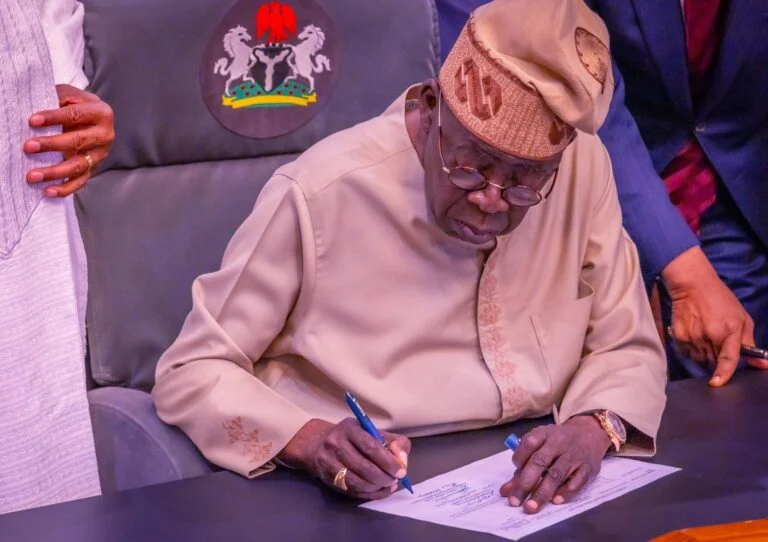

The President of Nigeria, Bola Tinubu, has signed the Electoral Act 2026 (Amendment) Bill into law, marking a pivotal update to Nigeria’s electoral framework just ahead of the 2027 general elections.
This followed a ceremony that occurred at the Presidential Villa in Abuja around 5:00 p.m. on Wednesday, February 18, 2026. The ceremony was attended by principal officers of the National Assembly who had passed the bill the previous day.
The National Assembly swiftly approved the amendment on Tuesday, February 17, following months of deliberations on electoral reforms. This rapid assent by President Tinubu underscored the urgency tied to the Independent National Electoral Commission’s (INEC) recent release of the 2027 election timetable.
Recall that INEC Chairman Prof. Joash Amupitan announced the schedule for the upcoming general elections last week, setting Presidential and National Assembly polls for February 20, 2027, while Governorship and State Houses of Assembly elections will be held on March 6, 2027.
The signing fueled longstanding debates, particularly on electronic transmission of electoral results which has resulted in heated debates since the 2023 elections. Civil society organizations and opposition leaders have championed real-time uploads from polling units to INEC servers to prevent manipulation, pointing to the 2023 Results Viewing Portal’s collapse linked to rigging allegations.
Key Provisions, Reforms Contain in the New Act
While specifics of the final act remain emerging, reports highlight strengthened INEC powers over election management, logistics, and personnel. The recent amendments introduced stiffer penalties for malpractice.
Returning officers declaring false results risk five-year jail terms, while improper result announcements without prescribed forms carry 10-year sentences. Provisions also tightened voter registration, primaries, candidate qualifications, and voters’ register maintenance to reduce pre-election litigation and manipulation.
A controversial manual backup clause persists, allowing Form EC8A as the primary source when electronic systems fail due to poor telecom infrastructure in some areas. This hybrid approach, geared by the ruling All Progressives Congress (APC), balanced technology adoption with practicality, though critics argue it risks and vulnerabilities.
Earlier proposals including inmate voting, early diaspora voting, NIN-based registration, and ditching mandatory PVCs were debated but not fully detailed in the signed version.
Previous Outcry, Outcomes
Recall that civil resistance stormed the National Assembly last week, with demonstrators demanding live transmission to restore trust post-2023 controversies. The APC supported phased tech integration, while opposition and activists pushed for full electronic mandates.
These changes targeted to close gaps from past polls, fostering transparency and deterrence.As Nigeria approaches 2027, nearly a year from now, the new law sets the operational blueprint, potentially shaping a more robust process amid battle for the next administrative power.
Meanwhile, further details on implementation are expected to be communicated by INEC and the presidency. With elections looming, stakeholders urge vigilant monitoring to ensure the reforms deliver credible outcomes for Nigeria’s democracy.