

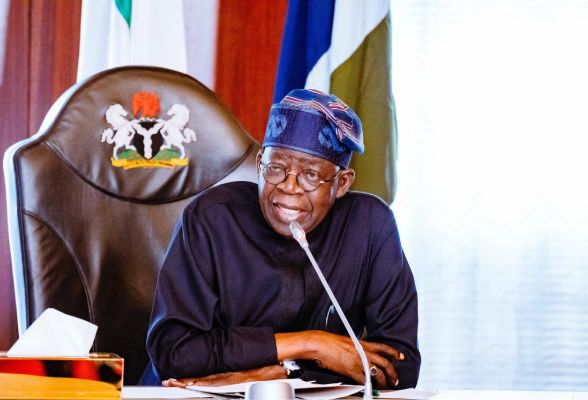

President Bola Tinubu has signed the Electoral Act 2026 (Amendment) into law as the nation prepares for the 2027 general elections. The signing took place at the Presidential Villa in Abuja on the evening of February 18, 2026, in the presence of principal officers of the National Assembly, just hours after the legislature passed the bill.
Addressing journalists shortly after adding his signature to the amended Electoral Act, President Tinubu defended his action in the face of mounting criticism. He said that the credibility of Nigeria’s electoral process depends on careful human oversight and that elections are ultimately resolved by people rather than computers. According to him, the focus of reform should be on ensuring “no confusion and no disenfranchisement of Nigerians” rather than mandating real-time electronic transmission of results.
Tinubu insisted that while technology plays a role in supporting elections, electronic transmission of results should not be the sole method for determining outcomes. He emphasised that manual ballot issuance and counting remain central to the process, with electronic systems serving only to transmit the arithmetic results captured in official forms after counting. 
The final form of the amended law did not come easily. The most dramatic and contentious debate in recent weeks revolved around the role of electronic transmission of election results from polling units directly to the Independent National Electoral Commission’s central servers. Civil society organisations, opposition parties, and reform advocates had led sustained pressure for mandatory real-time transmission to reduce the risk of result manipulation and boost public confidence in elections. Protests erupted outside the National Assembly complex, demanding live transmission and reflecting deep frustration with the failures of the Results Viewing Portal during the 2023 general elections.
Inside the National Assembly, tempers flared. In the Senate, lawmakers engaged in heated and at times disorderly sessions over Clause 60(3) of the Electoral Act amendment, which allowed manual transmission of results where electronic systems failed. At one point, the chamber was plunged into a closed-door session after intense lobbying and huddled discussions among senators once it became clear that the proposed removal of the manual transmission fallback was unlikely to succeed. A formal division saw a clear majority supporting the inclusion of the “fail-safe” provision after opposition senators sought its elimination.
The House of Representatives experienced its own drama. Lawmakers debated a motion seeking to rescind the passage of the amendment, and there were reports of a rowdy session characterised by disagreement and procedural interventions that underscored deep fractures over the content of the bill. After marathon deliberations and revisions by both chambers, the National Assembly harmonised its version of the bill and approved it on Tuesday. President Tinubu then moved swiftly to sign the law, a pace that has drawn both praise and criticism.
Supporters of the new law, including Senate President Godswill Akpabio, have welcomed the amendment as a step toward ensuring that “every vote counts” and eliminating persistent manipulation of results between polling units and collation centres, arguing that the law strikes a balance between technological innovation and existing infrastructure limitations. 
But the criticism has been fierce. The Peoples Democratic Party (PDP) described the amendment as a direct attack on democracy and accused the National Assembly of undermining the will of Nigerians by weakening provisions for electronic transmission. Human rights activists and political commentators have also denounced the law as a threat to free and fair elections, with calls for public resistance echoing on social media and in political circles. 
The discord around the amended Electoral Act comes against the backdrop of an already highly charged political atmosphere as Nigeria prepares for elections scheduled to begin on February 20, 2027, for the presidential and National Assembly polls, with gubernatorial and state assembly elections following on March 6.
Samuel Aina