



American civil rights leader Rev. Jesse Jackson has died at the age of 84, his family confirmed on Tuesday, February 17, 2026. The veteran activist, Baptist minister, two‑time Democratic presidential candidate and one of the most influential figures in the struggle for racial, economic and social justice in the United States passed away peacefully, surrounded by family, according to a statement issued by his loved ones.
Jackson had been battling an array of serious health challenges in recent years, including a rare neurological condition known as progressive supranuclear palsy (PSP), which had replaced an earlier diagnosis of Parkinson’s disease and gradually limited his movement and speech capacity. In their announcement, the Jackson family described him as a “servant leader not only to our family, but to the oppressed, the voiceless, and the overlooked around the world,” and urged others to carry forward the values he dedicated his life to advancing. His death marks the end of a remarkable journey in activism and politics that spanned more than six decades and influenced countless movements for equality both at home and abroad.
Born October 8, 1941, in Greenville, South Carolina, Jackson rose from humble beginnings in the segregated South to become a national figure. His early experiences with racial discrimination including the era of Jim Crow laws and the painful realities of segregation helped shape his lifelong commitment to civil rights.
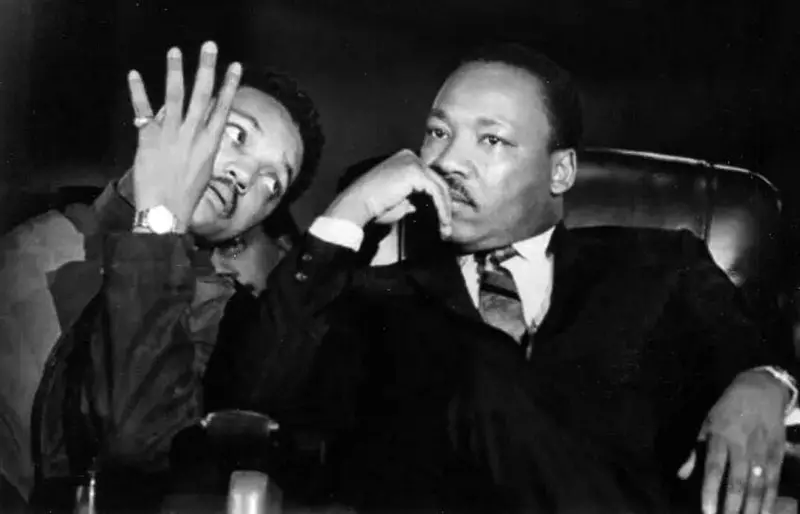
Jesse Jackson with Dr Martin Luther King in 1966
credit: Universal Images Group via Getty Images
As a youth, he participated in sit‑ins and was one of the “Greenville Eight” who peacefully challenged the local library’s whites‑only policies, an early demonstration of the courage and conviction that would characterize his activism. In the mid‑1960s, Jackson became involved with the Southern Christian Leadership Conference (SCLC), working closely with his mentor Martin Luther King Jr., and took part in key campaigns such as the Selma to Montgomery march for voting rights. The work of the SCLC and Jackson’s own voice helped mobilize Black Americans and allies in the fight against systemic racism and disenfranchisement.
Jackson’s association with Dr. King was not just professional but deeply personal. He was present in Memphis, Tennessee, on April 4, 1968, when King was assassinated, an event that left an indelible mark on him and, many believe, helped shape his role as a leader in his own right. The tragedy thrust Jackson into the national spotlight at a pivotal moment in the civil rights movement, and he carried forward King’s vision with a blend of spiritual conviction and political activism. Later that year, he was ordained as a Baptist minister, beginning a parallel journey as a religious leader whose pulpit was the broader struggle for human rights.
Credit: Getty Image
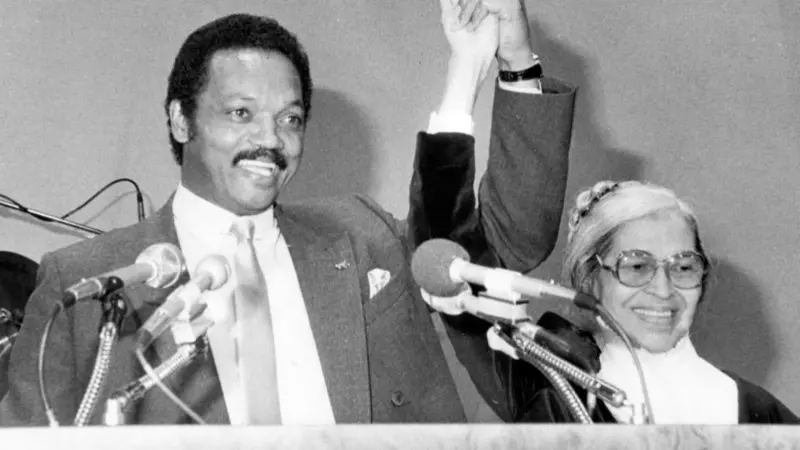
In the early 1970s, Jackson founded Operation PUSH (People United to Serve Humanity) in Chicago, an organization dedicated to improving economic opportunities for Black Americans and challenging discriminatory corporate practices. PUSH initiated successful boycotts of major companies that discriminated against Black employees and consumers, and it became a formidable force in the broader struggle for civil rights and equity.
Under Jackson’s leadership, PUSH expanded its mission, eventually evolving into the Rainbow PUSH Coalition, a multiracial social change organization that sought not only economic justice but inclusive political engagement and representation. The Rainbow PUSH Coalition would become synonymous with Jackson’s vision of unity across racial, gender and class lines.
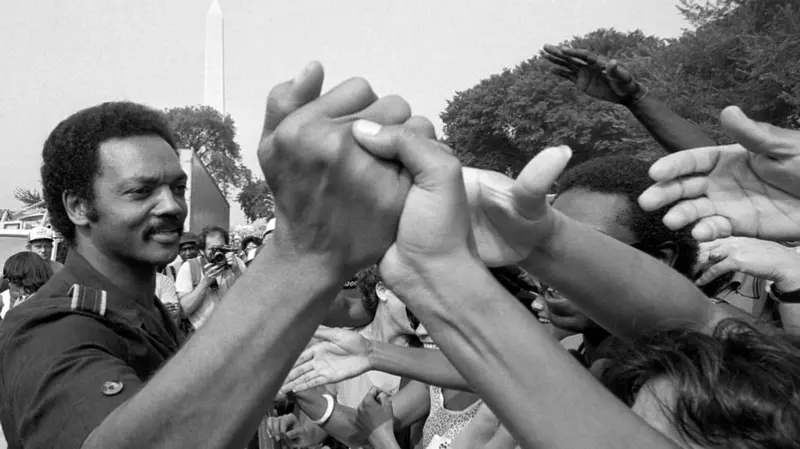
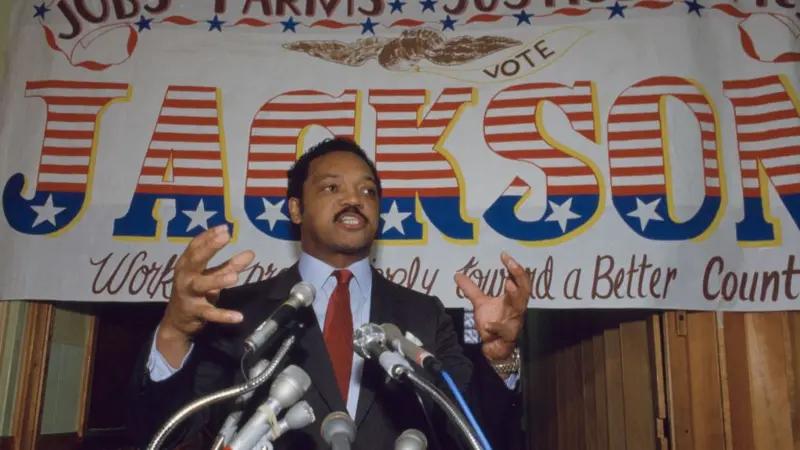
Jackson’s influence extended beyond grassroots activism to the national political stage. In 1984 and 1988, he launched historic campaigns for the Democratic presidential nomination at a time when Black candidates had limited precedent in national politics. His campaigns energized millions of voters and broadened conversations around issues of race, inequality, and economic justice within the Democratic Party.
Credit: Getty Image
Though he did not secure the nomination in either bid, his campaigns were breakthroughs that helped pave the way for future Black political leaders, including President Barack Obama. Jackson’s powerful oratory and uncompromising advocacy brought underrepresented voices into political discourse and reshaped expectations for Democratic coalitions.
Despite his political prominence, Jackson’s life was not without controversy and personal complexity. He faced criticism at times for his rhetorical style and political strategies, and his family’s statement acknowledged the multifaceted nature of his life and work. Through triumphs and trials, Jackson remained committed to the idea that freedom and dignity were inseparable from action and accountability. Friends and allies often described him as a tireless champion for the marginalized someone who refused to let the powerful ignore the needs of the powerless.
Jackson’s commitment to justice extended internationally. At various junctures, he engaged in diplomatic efforts, negotiating the release of hostages and advocating for peace in conflict zones where American and allied personnel were held. His efforts in the Middle East and elsewhere demonstrated a vision for civil rights that transcended national boundaries, emphasizing the universal value of human dignity. Whether pressing corporations to diversify their leadership or confronting oppressive regimes abroad, Jackson’s approach combined moral clarity with unyielding resolve.
Credit: Getty Image
Throughout his long career, Jackson received numerous honors, including the Presidential Medal of Freedom in 2000, the United States’ highest civilian honor, in recognition of his lifelong contributions to civil rights and public service. His advocacy touched countless areas, from voter registration drives and labor rights to education initiatives and healthcare access, and his work continued even as his health declined. Well into his 80s, he remained a figure of national relevance, participating in movements like Black Lives Matter and calling for systemic reform.
In his later years, Jackson’s health became a matter of public concern. In 2017, he revealed he had been diagnosed with Parkinson’s disease, a degenerative neurological disorder, and later his condition was reclassified as progressive supranuclear palsy (PSP), a rarer and more serious illness that affected movement, balance and speech.

Credit: Getty Image
Jackson was hospitalized in Chicago in November 2025 for observation and treatment related to the PSP diagnosis. His family regularly updated supporters on his health, thanking them for their prayers and encouragement, and noting that he remained engaged with advocacy even from the hospital.
When he passed away on February 17, 2026, Jackson was surrounded by loved ones a testament to the deep personal bonds he maintained alongside his public life. His family’s statement captured the dual nature of his legacy: a devoted father and husband, and a global figure whose advocacy reshaped the contours of civil rights and social justice.
“We shared him with the world, and in return, the world became part of our extended family,” they said, urging that “his unwavering belief in justice, equality and love uplifted millions of people, and we ask you to honor his memory by continuing to fight for the values he lived by.”
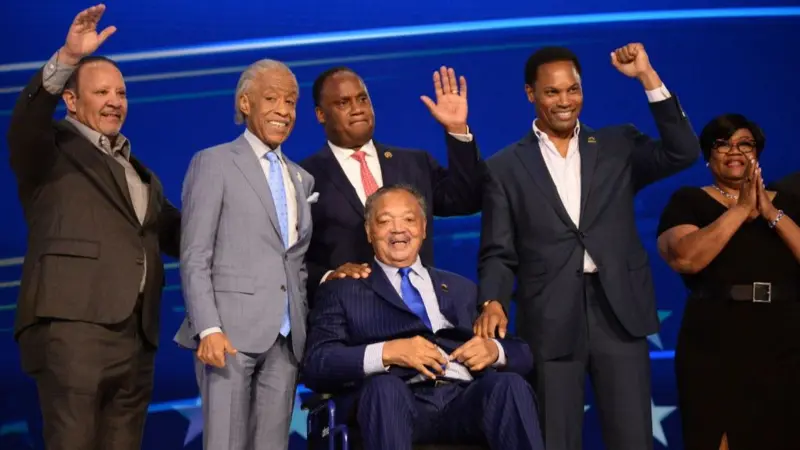
Credit: Getty Image
Jackson’s passing has prompted reactions from around the world, with tributes highlighting the breadth of his impact from the streets of Selma to the halls of national power in Washington, and from classrooms teaching civil rights history to movements advocating for a more just future. Leaders across the political spectrum have acknowledged his role in shaping public discourse and expanding opportunities for marginalized communities. While his methods and moments have sparked debate, his place in American history as a tireless advocate for equality is widely recognized.
Survivors include his wife, Jacqueline, to whom he was married for more than six decades, their children, grandchildren and a global community of activists, politicians, scholars and ordinary citizens inspired by his work. Jackson’s legacy encompassing both the victories and the ongoing struggles he championed will continue to influence generations seeking justice in the United States and beyond.
As the world mourns the death of Rev. Jesse Jackson, his life stands as a testament to the belief that activism, courage, and persistence can move societies toward greater equity and inclusion. His voice, once carried in the streets and on stages across America, now becomes part of history — a reminder of the power of one individual to challenge the status quo and reshape the arc of justice.