

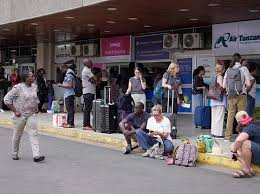

Flights at Kenya’s main airport in Nairobi, Jomo Kenyatta International Airport (JKIA), continued to experience severe disruptions for a second consecutive day, as an ongoing strike by aviation workers led to widespread cancellations, delays, and diversions, leaving hundreds of passengers stranded.
Airlines have urged travellers to verify their flight status before heading to the terminal, warning that the situation remains fluid amid the industrial action. The strike has transformed one of Africa’s busiest transport hubs into a scene of confusion and frustration, with long queues at check-in counters and crowded waiting areas reflecting the scale of the disruption.
Eyewitnesses described a tense and exhausting atmosphere at the airport. Jack Okoth, a Kenyan student bound for the United Kingdom, told the BBC that he had spent over 20 hours at JKIA without receiving definitive information about his flight. “We are still here and haven’t even got any concrete information on if we’ll be travelling soon,” he said, adding that the airport remained “quite crowded,” with passengers uncertain of their next steps.
Social media posts mirrored the sentiment of exasperation, with some travellers joking that they might need a mattress to cope with the delays, while others lamented having to abandon air travel and resort to road transport, including public figures like a senator who was travelling from Kisumu.
The Kenya Airline Pilots Association (KALPA) weighed in on the unfolding situation, cautioning that prolonged disruptions could compromise operational safety. In a statement, the body said it was concerned that the ongoing industrial action might “affect crew scheduling and rest, increasing fatigue,” adding that operational pressures should never be allowed to interfere with safety limits. “Aviation safety is non-negotiable,” the pilots’ association stressed, highlighting the delicate balance between labour action and the continued need to uphold regulatory safety standards in the aviation sector.
The strike, orchestrated by the Kenya Aviation Workers Union (KAWU), follows warnings issued last week over unresolved disputes regarding pay and poor working conditions. KAWU Secretary General Moss Ndiema told the BBC’s Newsday programme that the action was “not a go-slow strike but rather a full-blown industrial action,” explaining that one of the primary grievances was the failure by the Kenyan Civil Aviation Authority (KCAA) to conclude a collective bargaining agreement addressing salary concerns and working conditions.
According to union representatives, long-standing labour disputes including delayed remittances, alleged discriminatory practices, and management’s unwillingness to resolve issues persisting for over a decade were key drivers behind the strike.
The operational impact of the strike has been extensive. Flight tracking services, including Flightradar24, showed minimal air traffic at JKIA, reflecting the grounding of most departures and arrivals. Airlines operating from the airport have been significantly affected, with Premier Airlines, which flies directly to Juba in South Sudan, announcing the cancellation of all flights for the day. Kenya Airways also acknowledged “air traffic control operational delays affecting certain departures and arrivals” and apologised to passengers, advising them to expect schedule adjustments while emphasizing that the airline was “working with authorities to minimise disruptions and maintain safe operations.”
Government authorities have responded with contingency measures to manage the disruption. The Kenya Airports Authority (KAA) said it had activated contingency plans at JKIA and advised passengers to contact their respective airlines for updates. The authority highlighted that measures had been put in place to maintain safety and continuity, even as passengers expressed mounting frustration at the lack of timely information.
Officials emphasized the importance of patience and cooperation, noting that the airport remained operational despite the industrial action, albeit at reduced capacity.
The Kenya Civil Aviation Authority, which is at the centre of the labour dispute, has been accused by unions of stalling negotiations and failing to resolve longstanding grievances. Last week, the authority sought a court injunction to halt the strike. A labour court judge temporarily suspended the industrial action pending further directions due next week.
In a statement on Monday, KCAA said it was “actively engaging the relevant parties in line with applicable labour laws and court directions,” while simultaneously implementing measures to ensure aviation safety and service stability amid the strike.
The industrial action at JKIA underscores the broader significance of the airport in regional and international travel. Handling approximately nine million passengers last year, JKIA is a key gateway connecting Kenya and East Africa to the rest of the world. Prolonged disruptions at the airport have implications not only for stranded travellers but also for airlines’ operational schedules, crew logistics, and the regional economy. Analysts suggest that extended labour disputes could affect Kenya’s aviation reputation, particularly as the airport serves as a hub for cargo, tourism, and business travel across Africa.
Beyond operational concerns, the strike highlights ongoing tensions between aviation labour unions and regulatory authorities over wages, working conditions, and institutional transparency. KAWU’s insistence on resolving salary and employment issues reflects broader challenges faced by workers in sectors critical to national infrastructure, where industrial action can have widespread economic and social consequences. Meanwhile, aviation authorities face the dual responsibility of protecting worker rights while ensuring the safety and reliability of air travel for millions of passengers.
Passengers remain at the forefront of the crisis, with many sharing their experiences of prolonged waiting periods and uncertainty. Some travellers reported having to sleep in terminals or find alternative means of transport, illustrating the human impact of the industrial action. Airlines and authorities have urged travellers to stay informed, remain patient, and use digital platforms to monitor flight schedules, while contingency measures such as re-routing flights or arranging temporary staff deployments continue to be evaluated.
The strike also raises important questions about aviation safety in a context where operational staff are under stress and key services are disrupted. KALPA’s warnings about fatigue and crew scheduling underline the potential risks inherent in maintaining flight operations with constrained personnel. Aviation experts note that prolonged disruptions can compromise both safety and efficiency, making it imperative for labour disputes to be resolved promptly and collaboratively.
In response to the strike, government representatives have emphasised the importance of dialogue and negotiation to reach a sustainable resolution. While KCAA works with union representatives, court interventions are expected to play a pivotal role in determining the immediate course of action, including the resumption of normal operations. Labour law experts suggest that the balance between workers’ rights and public safety will be a determining factor in how quickly flights can return to full capacity.
Social media has become a platform for passengers and citizens to share updates, frustrations, and advice on navigating the airport during the strike. Reports from WhatsApp groups, Twitter, and Facebook indicate a mixture of impatience, humour, and calls for accountability, reflecting the widespread public attention the strike has garnered. This visibility underscores how industrial action in a critical sector like aviation can reverberate across society, amplifying pressure on authorities and airline operators to find a solution.
As JKIA continues to operate at reduced capacity, airlines are prioritising passenger safety while attempting to minimise economic and operational losses. The strike has exposed vulnerabilities in the coordination between regulatory authorities, aviation staff, and airline management, highlighting the need for proactive labour engagement and contingency planning in major transport hubs. Analysts argue that stronger institutional frameworks and more transparent communication channels could mitigate the effects of future industrial actions.
In the broader context, the ongoing strike at Kenya’s primary airport serves as a case study in labour relations, operational management, and crisis response within the aviation sector. It demonstrates the challenges of maintaining continuity in air travel when workforce disputes intersect with safety-critical operations. The resolution of this strike will likely have implications for labour negotiations in other strategic sectors, highlighting the interplay between workers’ rights, regulatory oversight, and public service delivery.