

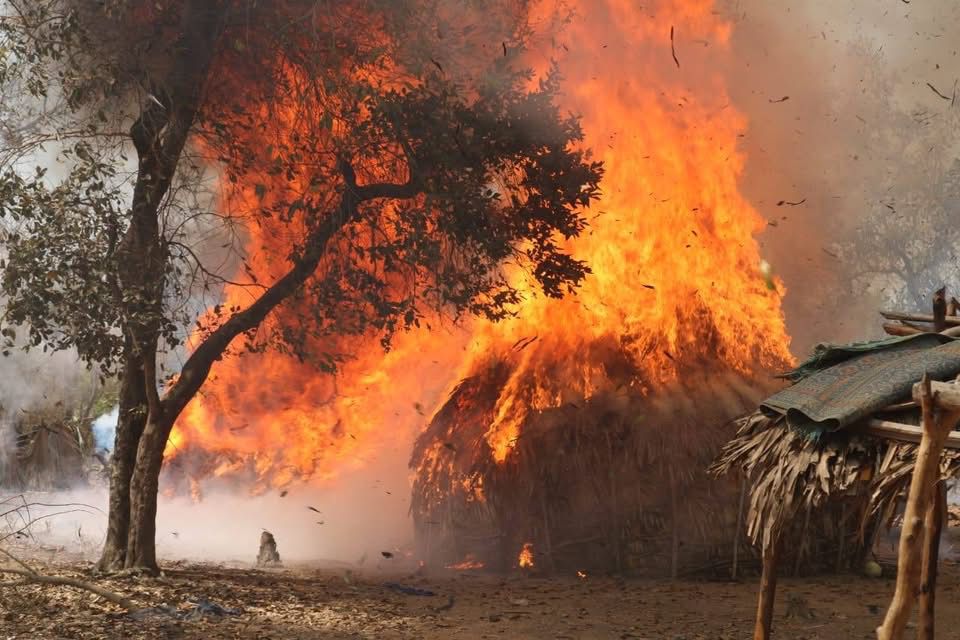

Security forces have recorded a significant breakthrough in Kogi State with the destruction of three major bandit camps linked to a notorious criminal network. The operation, jointly executed by multiple agencies of the Nigerian state, resulted in the dismantling of entrenched criminal enclaves and the rescue of numerous kidnapped victims. This development comes on the heels of the desire to stem the persistent threat posed by armed bandits, kidnappers, and other criminal syndicates that have destabilised communities across the country’s North-Central and North-West regions.
According to official statements released on Monday, security operatives operating under a coordinated command structure overwhelmed three sizeable bandit camps in Kogi State, which were reportedly linked to Kachalla Babangida, a figure described by local authorities as a notorious bandit leader. The camps were located in forested and difficult terrain typically exploited by criminal groups as hideouts and staging points for attacks on communities, kidnappings for ransom, and other violent criminal activities. The operation, which was carried out on Sunday, saw personnel from the Office of the National Security Adviser, the Nigerian Army, Nigerian Navy, Nigerian Air Force, the Nigeria Police Force, the Department of State Services, and local vigilantes and hunters engage the bandits and destroy their hideouts.
Security officials said the bandit camps were overwhelmed with superior firepower, compelling the criminals to retreat or be neutralised during the assault. Multiple gun battles between security forces and elements of the criminal groups were reported, and scores of bandits were killed or forced to flee. The operation also led to the liberation of several kidnapped victims, some of whom had been held in captivity for extended periods. After their release, the rescued individuals were transported to medical facilities for treatment and were expected to be moved to internally displaced persons’ camps before eventual reunification with their families. 
Jerry Omodara, the Kogi State Security Adviser, stated that the success of the operation demonstrated the resolve of Nigerian security agencies to dismantle criminal networks that have long exploited poorly policed forest reserves and rural hinterlands for illicit activities. He highlighted the collaborative nature of the mission and the robust use of intelligence to locate and target the bandit camps effectively. Operations like this have relied heavily on actionable human and technical intelligence, often sourced from local community members and informants who have borne the brunt of banditry and want an end to insecurity in their localities. 

The destruction of the camps linked to Kachalla Babangida marks another tactical success in a long, ongoing effort to degrade the operational capabilities of criminal organisations that have terrorised parts of Nigeria’s North-Central and North-West for several years. Banditry in Nigeria is a complex security challenge that has involved loosely organised armed groups engaging in kidnappings, cattle rustling, armed robberies, and attacks on villages. These groups have exploited the porous borders, dense forests, and limited state presence in rural areas to establish bases from which they launch attacks and conduct illicit activities.
This latest operation followed recent security initiatives by federal and state authorities. In early February 2026, officials in Kogi State announced coordinated efforts to rescue kidnapped victims and clamp down on criminal networks, including closing some markets and motor parks in parts of the state to restrict movements linked to bandit activities. That announcement noted the rescue of sixteen kidnapped individuals from forest hideouts associated with another bandit leader, Kachalla Battijo, in the Tunga Forest. These preventative and clearance actions were undertaken in support of ongoing clearance operations carried out in collaboration with the Office of the National Security Adviser and heads of security agencies in the state. 
The campaign against armed banditry in Kogi is part of a wider national strategy that has seen Nigerian security forces deploy ground troops, air assets, local vigilantes, and intelligence resources to confront criminal groups in several states. Notable among these has been the use of precision airstrikes by the Nigerian Air Force (NAF) in the North-West region, particularly within Zamfara State, where aircraft have targeted known strongholds and IED manufacturing sites. In late December 2025, the NAF conducted two precision air interdiction missions in Zamfara’s Tsafe Local Government Area, striking hideouts such as Turba Hill and an encampment run by Kachalla Dogo Sule, which intelligence identified as a key Improvised Explosive Device (IED) operational hub. These strikes were aimed at degrading the tactical capacity of bandits to stage IED attacks along critical transportation corridors.
At the time, military officials said the air component operations were based on multiple streams of intelligence and designed to disrupt the planning and execution of violent actions that have made daily life hazardous for residents. By targeting logistic centres and manufacturing facilities used to construct IEDs and other weapons, security forces have sought to deny criminals both safe havens and the means to sustain prolonged engagements against state forces. 
Operations against armed bandits have not been limited to air and ground offensives. In several states in the North-West and North-East, army units working in conjunction with local vigilante groups have conducted raids on bandit hideouts, resulting in the elimination of key leaders and the recovery of weapons, communication equipment, and stolen property. For example, troops under combined operations in parts of Sokoto and Zamfara States have dismantled bandit encampments, killed suspected bandits, and recovered weapons and motorcycles, further weakening criminal capabilities in those regions.
Before the Kogi operation, Nigerian security agencies had also recorded other significant successes against bandit networks. In Kogi itself, a separate security exercise in September 2025 saw troops of the Nigerian Army’s 12 Brigade neutralise a bandit commander, Babangida Kachala, who was reportedly the second-in-command to another notorious leader. That engagement involved an ambush that led to the death of the commander and the recovery of weapons and other items used by the criminal groups, marking a key step in efforts to stabilise security in the state.
The persistence of armed banditry has forced Nigerian authorities to adopt a multi-layered response that includes kinetic military operations, intelligence-led targeting, community collaboration, and socio-economic initiatives aimed at reducing the conditions that enable criminal groups to thrive.
As operations continue, authorities say sustained pressure and cooperation with local communities will be vital to ensuring that freed areas do not quickly revert to lawlessness.
Samuel Aina