

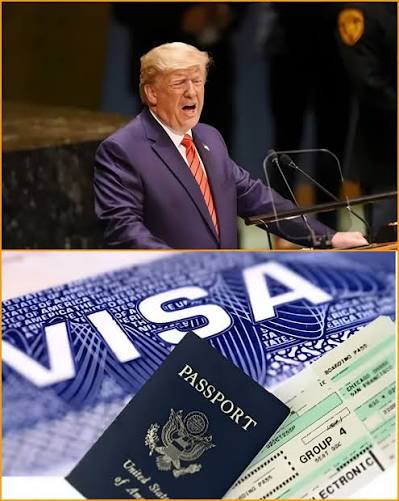

The administration of former U.S. President Donald Trump has directed federal immigration authorities to identify between 100 and 200 potential denaturalisation cases every month, marking a significant escalation in efforts to strip citizenship from individuals suspected of obtaining it fraudulently.
According to a report by the Economic Times, which cited NBC News, the move involves a coordinated push by U.S. immigration agencies to systematically review previously approved naturalisation cases and refer qualifying files for legal action.
The directive underscores a renewed focus on immigration enforcement and the integrity of the citizenship process, placing denaturalisation at the forefront of federal priorities.
NBC News reported that the U.S. Citizenship and Immigration Services (USCIS), which operates under the Department of Homeland Security (DHS), has reassigned personnel and deployed specialists to field offices nationwide to scrutinise past naturalisation approvals.
The objective is to create a steady pipeline of cases for the Justice Department’s Office of Immigration Litigation, which is responsible for initiating denaturalisation proceedings in federal court.
Denaturalisation, a legal process that revokes U.S. citizenship, typically occurs when authorities determine that citizenship was obtained through fraud, concealment of material facts, or wilful misrepresentation.
Historically, such cases have been relatively rare and often focused on individuals linked to war crimes, terrorism, or serious criminal conduct.
USCIS spokesperson Matthew Tragesser defended the agency’s actions, stating that enforcement measures are grounded in evidence of wrongdoing.
“We maintain a zero-tolerance policy towards fraud in the naturalisation process and will pursue denaturalisation proceedings for any individual who lied or misrepresented themselves,” NBC quoted him as saying.
He added that the agency would “continue to relentlessly pursue those undermining the integrity of America’s immigration system and work alongside the Department of Justice to ensure that only those who meet citizenship standards retain the privilege of US citizenship.”
Officials emphasise that the initiative targets cases involving demonstrable fraud rather than routine administrative errors.
The Justice Department has instructed its attorneys to prioritise denaturalisation matters, particularly those involving individuals who pose national security threats, committed war crimes, or engaged in large-scale Medicaid or Medicare fraud.
In addition, a broader clause permits action in “any other cases … that the division determines to be sufficiently important to pursue,” giving federal prosecutors discretion to expand the scope of enforcement where deemed necessary.
Legal experts note that denaturalisation cases are civil proceedings, meaning defendants do not have the same constitutional protections as in criminal trials, though the burden of proof remains on the government to establish fraud or misrepresentation by clear and convincing evidence.
Denaturalisation efforts gained prominence during the Trump administration, which established a dedicated section within the Justice Department in 2020 to pursue such cases more aggressively. According to DHS data and prior Justice Department statements, dozens of cases were filed during Trump’s first term, compared to far fewer in previous administrations.
Trump repeatedly framed immigration enforcement as central to national security and economic stability. He has also sought to end birthright citizenship for children born in the United States to foreign nationals, arguing that the longstanding interpretation of the 14th Amendment incentivises irregular migration.
That proposal is currently before the U.S. Supreme Court amid ongoing legal challenges.
Trump’s rhetoric on citizenship policy has remained consistent. In a Thanksgiving message last year, he wrote that he would remove anyone who was not a “net asset” to the United States and would “denaturalise migrants who undermine domestic tranquility.”
Critics argue that such language raises concerns about potential overreach and the politicisation of citizenship enforcement, while supporters contend that strict oversight is necessary to protect the integrity of the naturalisation system.
As federal agencies move forward with the directive to identify up to 200 cases monthly, the policy is expected to draw renewed legal scrutiny and public debate over the balance between immigration enforcement and the rights of naturalised Americans.