

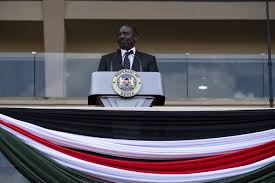

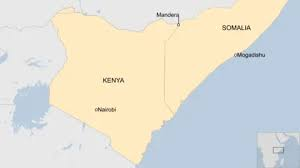
Kenya is set to re-open its border with Somalia in April, nearly 15 years after it was shut following a series of deadly attacks by the Islamist militant group al-Shabab, President William Ruto announced on Thursday during a visit to the border town of Mandera. The closure, imposed amid growing security concerns, left communities along the frontier largely cut off from relatives and trade across the border.
“It is unacceptable that fellow Kenyans in Mandera remain cut off from their kin and neighbours in Somalia due to the prolonged closure of the Mandera Border Post,” Ruto said in a post on X, underlining the long-standing impact of the restriction on social and economic connections in the region. The announcement marks a significant step toward restoring cross-border interaction after years of insecurity and limited connectivity.
The historical backdrop to the border closure reflects the devastating toll of al-Shabab attacks in Kenya over the past decade and a half. In 2013, the group carried out a coordinated assault on the Westgate shopping centre in Nairobi, killing 67 people. Two years later, the militants targeted Garissa University, resulting in the deaths of 148 students and staff.
In 2014, 28 passengers were killed in Mandera County when a bus was attacked, and in 2019, a hotel in Nairobi was struck, leaving at least 21 people dead. These attacks, along with numerous smaller raids and threats, prompted the Kenyan government to impose a near-complete shutdown of official crossings, particularly in its far north-east, to prevent militants from exploiting the porous border for operations and logistics.
Efforts to re-open the border have been considered in recent years but were repeatedly delayed due to ongoing threats from al-Shabab. In 2023, plans to resume cross-border traffic were announced but were postponed after new attacks underscored persistent security risks. Speaking during his visit, Ruto emphasized that the renewed plan followed extensive security assessments.
“There will be a heavy deployment of security forces to ensure the move does not compromise safety,” he stated, signaling that both military and police units would be mobilized to monitor crossings and prevent militant infiltration. The administration has also expressed concern over illicit weapons and contraband moving across the border, which has historically exacerbated instability in the region.
In addition to the security measures, Ruto highlighted the socio-economic benefits of re-opening the crossings. He expressed hope that the move would boost “cross-border trade for the mutual prosperity of our people,” reflecting the significant economic linkages between Kenyan border communities and neighbouring Somali towns.
Residents of Mandera, which has a large population of ethnic Somalis, have faced restricted movement for years, hampering trade, education, and family connections. Ruto also called on communities to actively participate in maintaining security, saying, “These al-Shabab are useless, I want to assure that Kenya will work together with you, just help us combat these criminals and terrorists.”
Kenya’s concerns about border security are rooted in both past experiences and ongoing threats. The government has historically struggled to regulate cross-border traffic due to the 680-kilometre length of the frontier, rugged terrain, and the presence of privately operated transport routes. In 2015, Nairobi initiated the construction of a perimeter barrier along the shared border to deter militant crossings.
However, the project was suspended after nearly three years, with only 10 kilometres of the wire fence completed at a cost of $35 million (£26 million), leaving much of the border still vulnerable to illegal crossings and security breaches. Authorities have now committed to deploying advanced surveillance and checkpoint measures alongside personnel to mitigate these risks as the crossings resume operations.
The closure of the border, and its long-lasting effects on communities like Mandera, reflects the broader challenge of balancing security with social and economic connectivity. Al-Shabab, based in Somalia, has used the porous frontier to infiltrate Kenya, recruit local sympathizers, and smuggle arms and contraband.
Analysts note that rural communities along the border have been particularly vulnerable, often relying on traditional trade routes and riverine paths that bypass formal checkpoints. The prolonged closure disrupted livelihoods and limited access to essential services for thousands of people, emphasizing the necessity of a coordinated security framework before reopening.
President Ruto’s announcement also comes amid broader regional and international concerns regarding militant activity in East Africa. Kenya has contributed troops to the African Union Mission in Somalia (AMISOM) and other counter-terrorism initiatives to limit al-Shabab’s operational reach.
Despite these efforts, attacks on civilians and high-profile targets have persisted, illustrating the enduring threat posed by the group and the continued need for vigilance. The re-opening of the border is therefore being framed as a controlled and monitored measure, with the government balancing humanitarian and economic imperatives against ongoing security threats.
The historical record shows that riverine and desert crossings, along with poorly monitored roads, have frequently been exploited during periods of insecurity. Similar border closures in Kenya, as well as in neighbouring Somalia and Ethiopia, have often been linked to temporary military threats, but long-term closures are rare due to their socio-economic impact.
Local sources report that families on both sides of the border have been separated for over a decade, and cross-border traders have suffered losses due to the lack of legal movement, emphasizing the human dimension of the policy decision.
Authorities have yet to provide detailed operational plans for how the crossings will function on a daily basis, but observers expect a combination of biometric checks, patrols, and community reporting systems to form the backbone of the security strategy. The Kenyan government has reiterated that these measures aim to prevent the reintroduction of militant activity into Kenya while simultaneously enabling legitimate trade and family reunification.
The reopening of Kenya’s border with Somalia represents both a historic policy shift and a test of the government’s ability to maintain security while restoring socio-economic connectivity. As President Ruto stated, the goal is to allow communities previously cut off from their kin to reconnect, while preventing al-Shabab from exploiting the renewed access: “It is unacceptable that fellow Kenyans in Mandera remain cut off from their kin and neighbours in Somalia due to the prolonged closure of the Mandera Border Post…These al-Shabab are useless, I want to assure that Kenya will work together with you, just help us combat these criminals and terrorists.”
With nearly 15 years of closure behind them, residents of Mandera and neighbouring Somali towns are watching closely to see whether the careful security preparations and heavy force deployment will ensure that the border can safely serve both trade and human connection once more.