

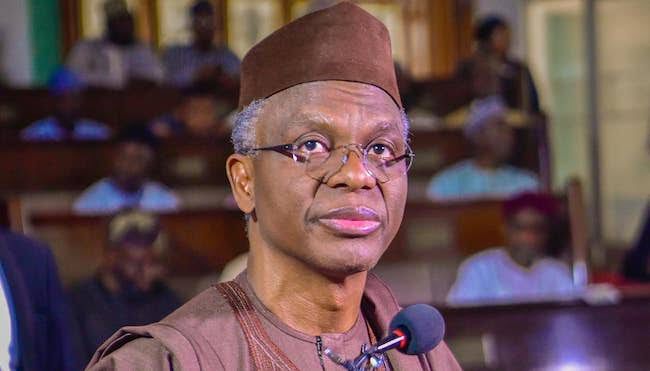

Former Kaduna State governor and senior political figure, Nasir El-Rufai, has ignited a fresh national controversy when he publicly admitted in an interview on Friday evening that his associates had intercepted and listened to private telephone communications of Nigeria’s National Security Adviser (NSA), Nuhu Ribadu.
Appearing on Arise News Channel, El-Rufai recounted a dramatic encounter at Nnamdi Azikiwe International Airport, Abuja, where he alleged that operatives of the State Security Service (SSS) had attempted to detain him upon arrival from Cairo. He said this action was allegedly ordered by NSA Ribadu through a telephone instruction that was intercepted by unidentified parties. 
According to El-Rufai, those giving the order to arrest him were captured on phone calls he and his aides could hear because “someone tapped his phone.” He said the intercepted conversations revealed a directive to take him into custody, a revelation he says explained the sudden presence of security operatives at the airport.
El-Rufai conceded during the interview that unlawful interception of private communications is illegal but asserted without presenting specific evidence that such practices are routine among government agencies. “I know [it is illegal], but the government does it all the time,” he said, adding that his side also “has ways” of accessing communications. 
The former governor also sought to distinguish between anti-graft agencies, contending that the Economic and Financial Crimes Commission (EFCC) had acted professionally by formally inviting him for questioning, but that the situation involving the Independent Corrupt Practices and Other Related Offences Commission (ICPC) and the SSS reflected what he described as an escalating tool of personalised pressure orchestrated by Ribadu. 
El-Rufai’s claims quickly drew public pushback from several quarters. A senior presidential aide, Temitope Ajayi, sharply criticised his admission, pointing out that acknowledging the tapping of the NSA’s phone on national television was tantamount to validating an illegal action and posed deeper questions about accountability. Ajayi’s critique highlighted fears that El-Rufai could be summoned to “produce the person who illegally tapped the NSA’s phone,” or face legal consequences himself. 
Human rights lawyer and activist Deji Adeyanju demanded a formal investigation into the statements, describing them as extraordinary admissions that warranted scrutiny and accountability from law enforcement and judicial authorities.
Security institutions have not issued a formal response to El-Rufai’s specific allegation about phone interceptions. However, media reports indicate strong institutional sensitivity to the claim, given the constitutional mandate that surveillance or interception of communications must be authorised by a court order, a safeguard meant to protect citizens’ privacy and national security.
The unauthorised interception of a top national security official’s communications could expose participants to significant criminal liability under Nigeria’s Cybercrimes Act and other statutory frameworks governing privacy and national security. There is also concern that the allegations could escalate institutional mistrust between former political office holders and current security leadership.
El-Rufai said he would comply with formal invitations from the EFCC and would appear before its offices next week, asserting his willingness to face questioning but reiterating his contention that other security bodies had acted outside constitutional bounds. 
Samuel Aina