

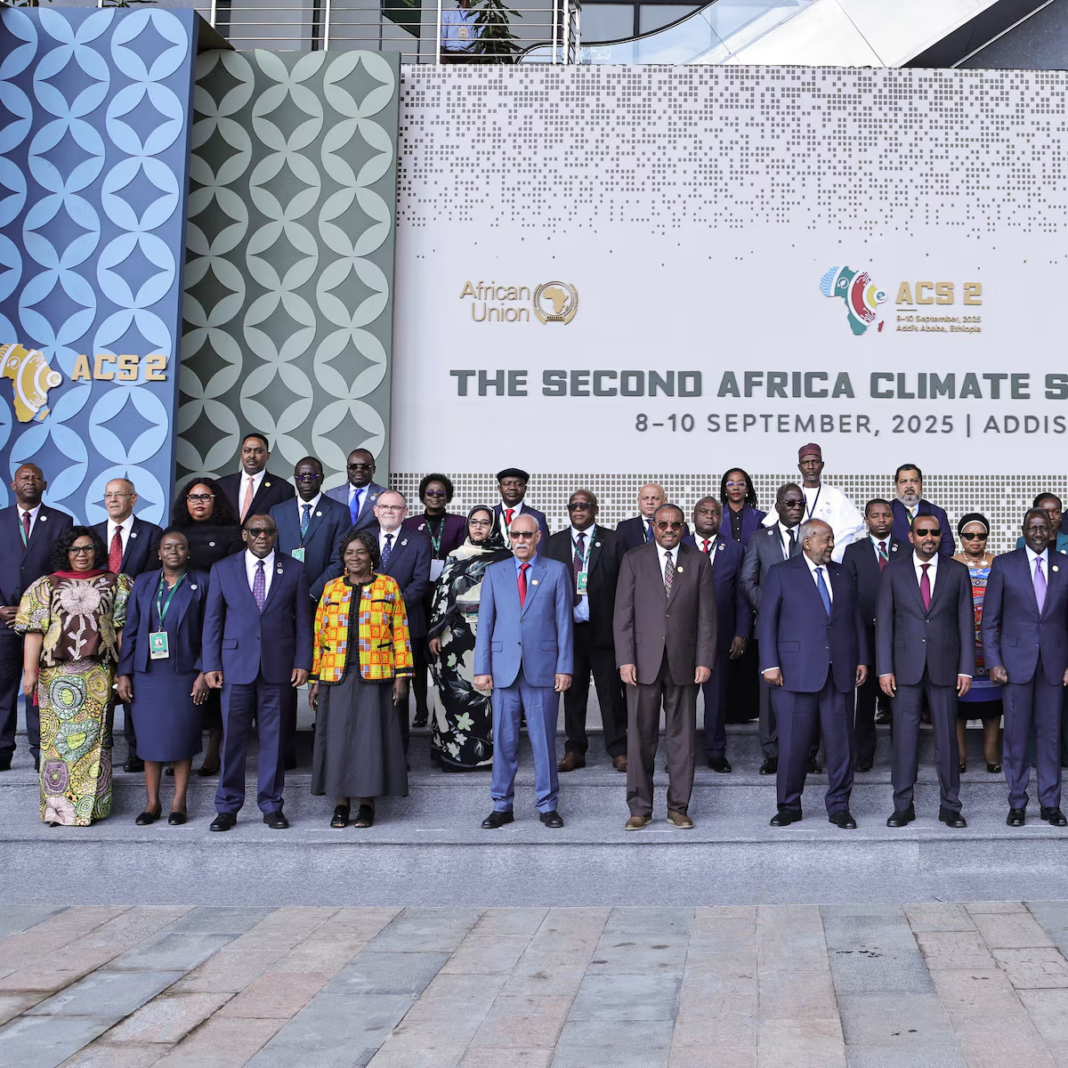

Africa’s heads of state convened in the Ethiopian capital, Addis Ababa, this weekend for their annual summit at a time when the continent’s position in global affairs appears increasingly uncertain, reflecting a shift in international power dynamics and renewed urgency for strategic engagement.
Canada’s Prime Minister, Mark Carney, speaking at the World Economic Forum in Davos last month, offered a stark analogy for the changing global order, declaring that countries were “either at the table or on the menu.” For African leaders who have long argued for a place at the “top table” in global diplomacy, Carney’s words struck a familiar chord, encapsulating the pressure on the continent to assert its interests in an era of rising great-power competition.
The summit comes amid a US foreign policy under President Donald Trump that has prioritized an “America First” approach, emphasizing strategic focus on the Western Hemisphere and select global regions while reducing attention to Africa. The White House’s updated National Security Strategy underscored this pivot, stating, “We cannot afford to be equally attentive to every region and every problem in the world,” while also encouraging bilateral engagements in Africa to address conflict, foster trade, and stimulate investment rather than relying solely on multilateral institutions.
Experts monitoring African diplomacy have emphasized the risks inherent in this evolving global context, warning that a lack of coordination could leave African nations disadvantaged in negotiations with powerful partners. Tighisti Amare, director of the Africa programme at Chatham House, noted that African countries could be “left behind” if they fail to develop a unified strategy, stressing the urgency of collective action.
At the same time, Peter Pham, who served as a US special envoy to Africa under Trump, argued that the American approach, though transactional, reflects a pragmatic realism: “There’s no way any country, even a superpower, can be all things to everyone…we have to husband those resources and steward them as best we can to achieve the optimal outcome for obviously our own citizens, but also our partners writ large.” These perspectives underscore the dual challenge facing African leaders: securing immediate economic and security gains while also building strategic capacity to safeguard long-term continental interests amid a fragmented and competitive international environment.
One of the most concrete expressions of the US’s transactional engagement with Africa under Trump has been the December 2025 minerals deal with the Democratic Republic of Congo, negotiated alongside a peace agreement with Rwanda. The agreement is aimed at “building secure, reliable and durable supply chains for critical minerals” vital for American technology industries while simultaneously encouraging investment in the DRC.
Observers note that this reflects a broader pattern of selective engagement where economic opportunities are pursued on a bilateral, rather than multilateral, basis. Addressing concerns about potential exploitation, DR Congo’s Mines Minister, Louis Watum Kabamba, assured stakeholders that his country would not “sell everything for nothing to America,” highlighting a careful balancing act between attracting foreign investment and protecting national resources.
Related infrastructure initiatives, such as the “Liberty Corridor” project connecting Guinea’s iron ore deposits to a Liberian port, further illustrate how the US and other partners are seeking to secure critical resources while also promoting development-linked projects.
Beyond the US, multiple global powers have intensified their involvement in Africa, creating a complex web of competition and cooperation that African leaders must navigate. China, long a major investor, briefly outspent the US in foreign direct investment but saw its position reverse last year, while Russia, Turkey, and the United Arab Emirates have all pursued security, trade, and energy deals across the continent.
Analysts caution that the continent’s current approach often lacks the strategic depth required to fully leverage these opportunities. Ken Opalo, an Africa specialist at Georgetown University, noted that while the transactional approach can yield short-term gains, “there is not the strategic depth of thinking going on, or diplomatic expertise, in African governments to play this game well. This means leaders may go for easy wins without considering the long-term implications,” highlighting the risk of fragmented or opportunistic policymaking undermining Africa’s leverage in global negotiations.
Security challenges across the continent further complicate Africa’s ability to assert itself internationally. The ongoing civil war in Sudan, which the UN has called the world’s worst humanitarian crisis, exemplifies the limitations of African agency. Despite officially neutral stances, external powers such as Turkey, Iran, Russia, and the UAE have all been accused of supplying arms or supporting competing factions, illustrating the entangled geopolitical pressures at play.
According to Opalo, “The failure to sort Sudan out is symptomatic of the lack of agency that the continent has,” emphasizing how domestic conflicts can weaken Africa’s bargaining position internationally and limit its ability to secure favorable terms in broader diplomatic or trade arrangements.
Amid these challenges, some African leaders have articulated a vision for increased self-reliance and continental coordination. Ghana’s President, John Mahama, who also spoke at Davos, argued that “Africa must pull itself up by its own bootstraps,” pointing to the continent’s dependency on external aid and security support, as well as the disproportionate capture of value from natural resources despite supplying the world with critical minerals.
Mahama described the situation as an “inflexion point,” where Africa must reassert sovereignty and coordinate regional development, advocating for investment in skills, coordinated industrialization, and unified continental negotiation strategies. His Accra Reset project seeks to address these systemic challenges and enhance Africa’s collective leverage in international negotiations, though he acknowledged the difficulty of translating these ambitions into immediate outcomes.
Efforts toward regional integration, such as the African Continental Free Trade Area (AfCFTA) and the African Union’s Agenda 2063, have created institutional frameworks for collective action, but progress has been slow. Experts highlight that successful implementation requires African countries to prioritize continental interests over narrow national objectives.
Tighisti Amare emphasized that “the key challenge is that to create a united front, leaders should be more focused on regional interests. Sometimes this means that national interests have to be put aside if they really want agency in international negotiations,” stressing that fragmented approaches undermine Africa’s influence and negotiating power on the global stage.
At the summit, discussions also addressed the economic dimension of Africa’s international positioning. While individual bilateral deals, such as the US-DR Congo mineral agreement, can generate immediate financial inflows, analysts caution that these arrangements may insufficiently address broader development goals.
Opalo stressed that securing mining rights alone does not equate to comprehensive economic cooperation: “The region needs deeper market access, investment treaties and the ability to attract US capital for all sectors, not just mining.” This perspective underscores the importance of developing strategic, long-term partnerships that can support diversified industrialization, technology transfer, and sustainable growth across the continent.
The geopolitical landscape in Africa is further complicated by the interplay of multiple external actors pursuing both investment and strategic influence. Russia’s agreement to establish a naval base in Sudan and the involvement of the UAE, alongside China’s continued economic investments, illustrate that Africa is increasingly at the center of competing global interests.
Observers caution that without coherent regional strategies, the continent risks being maneuvered into transactional agreements that prioritize external powers’ interests over Africa’s long-term development. Such dynamics reinforce the urgency of stronger continental coordination, collective bargaining, and unified foreign policy frameworks to secure equitable outcomes in trade, security, and infrastructure development.
Despite these challenges, African leaders and institutions are seeking to reclaim agency and influence in shaping the continent’s future on the global stage. Mahama, echoing Carney’s “table or menu” analogy, declared at Davos that “Africa intends to be at the table in determining what that new global order will look like.” The summit in Addis Ababa provided a forum for heads of state to explore strategies for leveraging resources, fostering intra-continental cooperation, and negotiating collectively with external powers.
However, analysts caution that achieving these goals will require disciplined coordination, prioritization of regional interests, and strong leadership from key states such as Nigeria, Egypt, Ethiopia, Kenya, and South Africa, which are viewed as pivotal actors in advancing Africa’s collective influence and ensuring the continent is no longer relegated to the margins of global decision-making.