

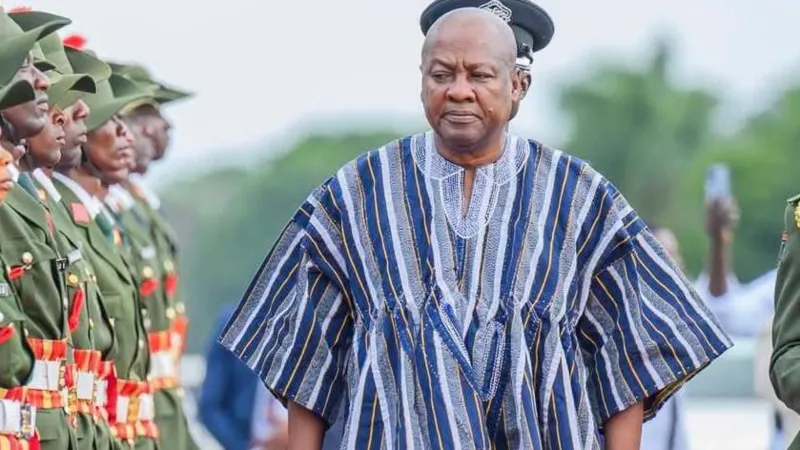

Ghanaians across the country turned out in large numbers on Wednesday to don the traditional fugu, also known as batakari, in response to the government’s new designation of Wednesdays as “Fugu Day.” The initiative comes after President John Dramani Mahama’s recent state visit to Zambia, during which he wore the garment and sparked playful online debate when some mockingly called it a “blouse.” The conversation ignited a surge of national pride, with citizens embracing the outfit as a symbol of Ghanaian identity and cultural heritage.
Ghana’s Tourism Minister, Abla Dzifa Gomashie, highlighted the significance of the weekly observance, emphasizing that it would help project the country’s identity “with pride on the global stage.” She added that wearing the garment would “generate far-reaching social and economic benefits” and support local artisans, designers, weavers, and traders. Gomashie encouraged Ghanaians to embrace the fugu “in all its diverse forms, designs, and expressions, complemented by its distinctive and beautiful accessories,” underscoring the government’s vision of linking cultural pride with economic growth and national unity.
The fugu is a traditional northern Ghanaian top made from handwoven, narrow strips of thick cotton stitched together to form a structured, poncho-style garment. It is historically associated with royalty and authority, worn by traditional leaders as well as ordinary citizens, and exists in variations for both men and women. Men often wear trousers and matching hats with the fugu, while women may wear longer, dress-like versions. The garment holds deep historical significance, notably featuring in Ghana’s independence celebrations in 1957 when Kwame Nkrumah, the country’s founding father, and five others wore fugus during the ceremonies marking Ghana’s emergence as the first sub-Saharan African nation to gain independence from colonial rule.
The nationwide celebration of “Fugu Day” has elicited enthusiastic responses from citizens. In the capital, Accra, Bismark Owusu Sarpong told the BBC, “I am proud to wear my blue, white and black striped fugu, which I received as a gift, to put Ghana on the map. Plus, the outfit comes with the added bonus of being comfortable.”
Similarly, Raymond Avenor, sporting a blue fugu with white stitching, said, “Fugu is an easy wear. You pick it and off you go. You don’t have to iron it, we don’t wash it often as it should be. Significantly, it’s the northern people of Ghana that use this, and it depicts, according to my understanding, royalty. I feel good when I wear it.”
For Andrews Tetteh Zutah, who owns more than seven fugus, “Fugu Day” should not be confined to Wednesdays. “I wish to have more,” he said, wearing a striped red, khaki, and black fugu. “I wish I will be allowed to wear it anytime to the office, but because of office constraints I’m unable to wear it every day. Personally, it’s one of the outfits I love most.”
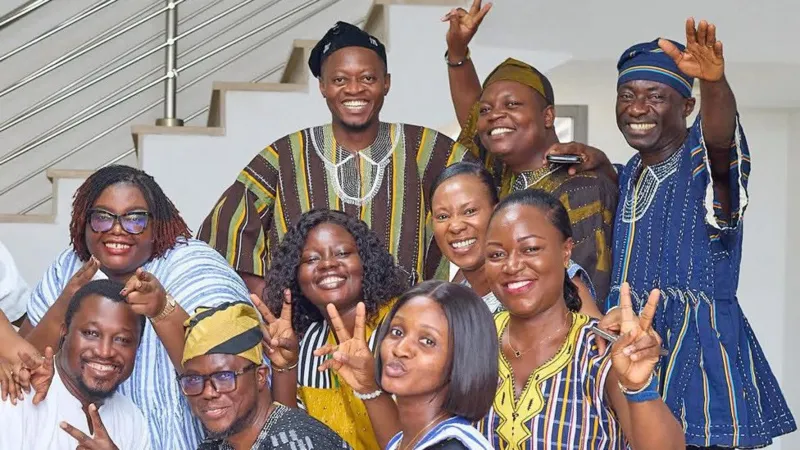
The government’s initiative has also invigorated local businesses and artisans. Elijah Sulemana Musah, owner of a fugu factory, said, “Business is booming. I have received lots of orders from Ghanaian celebrities such as popular musicians Okyeame Kwame and Kwabena Kwabena. I’ve had calls coming in from several places both within and outside Ghana. I just met someone who said Zambians have called her and they are interested in the fugu and so she would want me to supply to her.” The surge in interest reflects the growing cultural and commercial appeal of the garment.
The initiative has sparked significant attention on social media, where playful exchanges between Ghanaians and Zambians have highlighted traditional clothing from both countries. Ghanaians have revived an informal “Fugu Friday” movement to showcase the outfit, while Zambians have featured their own traditional attire, known as siziba. Members of Parliament and other public figures have shared their fugus online, amplifying the cultural conversation. The attention even drew the notice of Zambian President Hakainde Hichilema, who announced that Zambia would order fugus from Ghana, prompting President Mahama to suggest exporting the smock in bulk.
Several former and current Ghanaian presidents have also publicly promoted the fugu, including Nana Akufo-Addo, John Kufuor, and Jerry John Rawlings. Mahama noted his own recent appearance wearing the fugu at the United Nations, further emphasizing the outfit’s international symbolic significance. Through these endorsements, the fugu has become not only a marker of cultural pride but also a political and diplomatic emblem.
“Fugu Day” has quickly become a platform for national pride, cultural confidence, and economic empowerment. By encouraging citizens to wear the fugu weekly, the government aims to stimulate the creative economy, provide visibility for local artisans, and strengthen national unity through shared cultural expression. As Ghanaians from all walks of life continue to embrace the outfit, the initiative demonstrates the power of clothing as a medium for identity, celebration, and connection both within Ghana and on the global stage.