

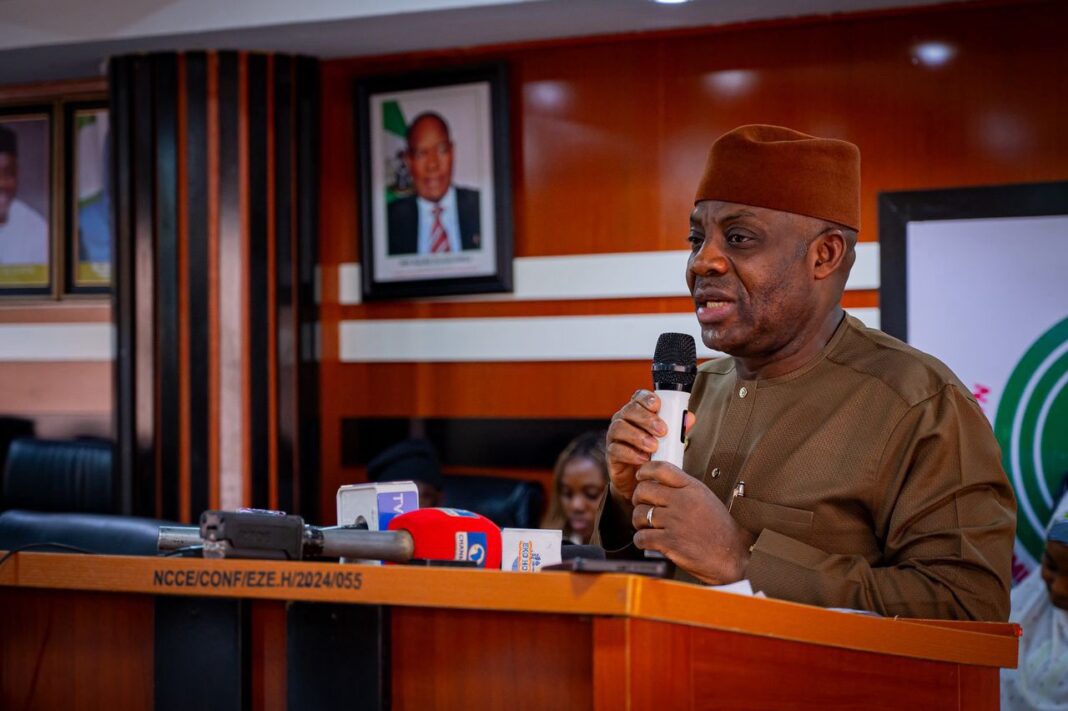

The Federal Government has commenced the implementation of the renegotiated agreement reached with the Academic Staff Union of Universities, marking a significant development in the long-running industrial relations dispute that has shaped Nigeria’s public university system for more than a decade. The agreement, which is scheduled to take effect from 1st of January 2026, and will run for an initial period of three years before review, represents the conclusion of a protracted renegotiation process that began after the original 2009 pact between the government and university lecturers became due for revision in 2012.
The implementation of the renegotiated agreement is anchored in a revised remuneration structure for academic staff in federal tertiary institutions, with a salary increase of at least 40% approved by the National Salaries, Income and Wages Commission. The new remuneration package combines the Consolidated University Academic Staff Salary with a stronger Consolidated Academic Tools Allowance to support research and teaching activities like journal publications, conference participation, internet access, professional memberships, and book development. The government has indicated that the new salary structure and allowances are intended to boost morale among lecturers and enhance the global competitiveness of Nigeria’s public universities.
In addition to the salary increase, the agreement introduces restructured earned academic allowances that are explicitly tied to measurable academic responsibilities, including postgraduate supervision, clinical duties, fieldwork, examinations, and administrative functions. These allowances are designed to promote accountability, transparency, and productivity within the university system, addressing longstanding concerns about inefficiencies and ambiguities in the previous allowance framework. The renegotiated pact also introduces a professorial credit allowance for senior academics, with additional annual payments for professors and academic readers in recognition of their research, teaching, and administrative responsibilities. The allowance is expected to support academic leadership and mentorship while enabling senior scholars to focus more on research and knowledge production.
Beyond remuneration, the agreement addresses broader issues of university funding, governance, autonomy, and academic freedom. It proposes a new funding framework for public universities with dedicated allocations for research, libraries, laboratories, equipment, and staff development. A National Research Council has been proposed to coordinate and fund research activities nationwide, with a minimum allocation of one percent of Nigeria’s gross domestic product. The establishment of such a council is intended to strengthen innovation, research output, and national development, positioning universities as key drivers of economic and technological progress.
The agreement further reinforces the principles of university autonomy and academic freedom, including provisions for the election of academic leaders such as deans and provosts, with eligibility restricted to professors. It also includes a non-victimisation clause that guarantees that no academic staff member will be penalised for participating in past industrial actions or negotiations. This provision is seen as a critical step toward rebuilding trust between the government and academic staff after years of strained relations.
The renegotiated agreement marks the end of a sixteen-year impasse in revising the 2009 Federal Government Academic Staff Union of Universities agreement, which had been due for renegotiation since 2012. The delay in renegotiation became a persistent source of industrial unrest, leading to multiple strikes by university lecturers and prolonged disruptions to academic calendars across the country. Between 2009 and 2023, public universities in Nigeria experienced cumulative strike periods equivalent to more than three years, significantly affecting students, academic progress, and institutional stability.
The original 2009 agreement had addressed issues such as funding of public universities, conditions of service for academic staff, university autonomy, and the retirement age for lecturers. While some provisions of the agreement were implemented, including the extension of the retirement age of university lecturers from sixty-five to seventy years, many other aspects remained unimplemented or contested, leading to recurring disputes between the government and ASUU. Successive administrations constituted several renegotiation committees to review the agreement, but these efforts repeatedly stalled without producing a signed and implemented pact.
Renegotiation committees were established at different times under various administrations, including committees chaired by Wale Babalakin, Munzali Jibrin, Nimi Briggs, and Yayale Ahmed, among others. These committees produced draft agreements, but disagreements over funding commitments, salary structures, and governance reforms prevented the government and ASUU from reaching a final consensus for several years. The prolonged stalemate contributed to repeated industrial actions by lecturers, with ASUU accusing the government of failing to honour agreements and renegotiation outcomes, while the government cited fiscal constraints and competing national priorities.
The latest renegotiated agreement was concluded on 23 December 2025, following intensive negotiations between the Federal Government Tertiary Institutions Expanded Negotiation Committee and the leadership of ASUU. The agreement was scheduled to take effect from 1st of January 2026, with both parties agreeing to review its implementation after an initial three-year period. The Federal Government has described the agreement as a deliberate shift toward dialogue and reform, emphasising the importance of industrial harmony and stability in the education sector.
The implementation of the agreement comes at a time when Nigeria faces significant challenges in its tertiary education system, including underfunding, infrastructural deficits, brain drain, and declining global rankings of public universities. Stakeholders have long argued that sustained investment in university education is critical to national development, particularly in science, technology, engineering, and innovation. The renegotiated agreement is seen as a framework for addressing some of these challenges, although its success will depend on consistent and full implementation by the government.
Academic staff and other stakeholders have expressed cautious optimism over the commencement of implementation, noting that previous agreements had often suffered from delays, partial execution, or outright abandonment. University-based unions, including the Senior Staff Association of Nigerian Universities and the Non-Academic Staff Union, have also called on the government to extend similar negotiations and reforms to other categories of university staff to ensure holistic improvements in the tertiary education sector.
Public universities remain the primary institutions for training professionals in critical sectors such as engineering, medicine, law, education, and the social sciences. Disruptions caused by strikes have often delayed graduations, increased dropout rates, and contributed to the migration of students and academics to private institutions and foreign universities. By improving lecturers’ welfare and strengthening funding and governance structures, the agreement is expected to stabilise academic calendars and enhance the quality of teaching and research.
Government officials have stated that the implementation of the agreement is part of broader reforms aimed at repositioning the education sector and improving Nigeria’s global competitiveness. The issuance of a circular by the National Salaries, Income and Wages Commission directing the implementation of the wage components of the agreement signals the government’s commitment to executing the new remuneration framework. However, analysts have noted that the financial implications of the agreement will require sustained budgetary commitments and fiscal discipline, particularly in an environment of economic pressures and competing demands on public finances.
ASUU has historically been one of the most influential labour unions in Nigeria, often engaging in prolonged strikes to press for improved funding and conditions of service for public universities. The union has argued that adequate funding and fair remuneration are essential for maintaining academic standards, retaining skilled personnel, and preventing the deterioration of the university system.
The conclusion and implementation of the renegotiated agreement are expected to influence future negotiations between the government and other labour unions, both within and outside the education sector. It also sets a precedent for addressing longstanding labour disputes through structured negotiation and policy reform rather than prolonged industrial action.
Samuel Aina