

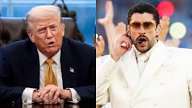

Puerto Rican superstar Bad Bunny transformed the Super Bowl LX halftime show on Sunday into a lively street-party spectacle, delivering a fully Spanish-language performance that highlighted cultural pride and unity while drawing sharp criticism from former President Donald Trump. The 31-year-old reggaeton star, whose real name is Benito Antonio Martínez Ocasio, captivated tens of millions of viewers with a colorful, symbolically rich set that blended music, dance, and Puerto Rican imagery, marking a historic moment for Latin music on one of America’s largest entertainment stages.
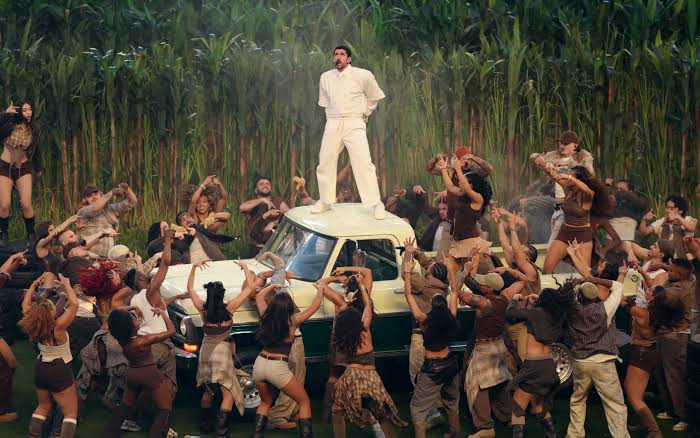
The performance opened with his hit “Tití Me Pregunto” and the feminist anthem “Yo Perreo Sola,” featuring a cast of dancers and elaborate set pieces that evoked the sights and sounds of Puerto Rico, including a sugar-cane plantation, a traditional piragua cart selling treats, and even a staged wedding. Celebrity guests such as Pedro Pascal, Jessica Alba, and rapper Cardi B joined Bad Bunny on stage, alongside his familiar “La Casita” backdrop, symbolizing a Puerto Rican home. Bad Bunny wore an all-white outfit, including a football jersey marked with the number “64” and his surname, before donning a stylish suit jacket later in the show.
The artist’s set also touched on more political themes, particularly with “El Apagón” (“Blackout”), which addresses the ongoing displacement of Puerto Ricans on the island and chronic issues with its unreliable power grid. At one point, Bad Bunny carried the Puerto Rican flag, reinforcing the performance’s cultural messaging. A dramatic moment featured a young boy watching the Grammys on an old television, to whom Bad Bunny presented a golden gramophone — a symbolic gesture echoing his own rise from modest beginnings. Online rumors incorrectly suggested the boy was a five-year-old Ecuadoran recently detained by U.S. immigration authorities, but an NFL spokesman confirmed the child was an actor, identified as Lincoln Fox.
Surprise musical guests included Lady Gaga, who performed a Latin-inflected version of her hit “Die With a Smile” — the only English lyrics in the show — and Puerto Rican singer Ricky Martin, further emphasizing the event’s Latin cultural focus.
Although Bad Bunny has been openly critical of Trump’s immigration policies in the past, notably calling for “ICE out” at the Grammys, he largely refrained from overt political statements during the Super Bowl. The show concluded with Bad Bunny spiking a football inscribed with “Together, we are America,” accompanied by a giant stadium screen displaying the message, “The only thing more powerful than hate is love.”
In the lead-up to the game, Trump confirmed that he would not attend Super Bowl LX, marking a departure from an event he had previously embraced during his presidency. His absence was widely interpreted as a symbolic distancing, particularly with Bad Bunny and rock band Green Day slated to headline the halftime show. Despite skipping the stadium, Trump addressed the nation in a public message as millions of viewers tuned in, stating,
“Enjoy the Super Bowl, America! Our Country is stronger, bigger, and better than ever before and, THE BEST IS YET TO COME!”
While the statement conveyed a patriotic tone, Trump has historically been critical of the NFL’s entertainment choices. In prior interviews, he described the selection of performers bluntly as “a terrible choice,” signaling his long-standing skepticism of the league’s halftime productions.
Trump nevertheless reacted sharply to the performance itself, calling it “an affront to the Greatness of America” on Truth Social and asserting that “nobody understands a word this guy is saying,” despite more than 41 million Spanish speakers in the United States. The former president had previously criticized Bad Bunny by name, calling the selection “absolutely ridiculous” and claiming he had “never heard of him,” prompting backlash from fans, musicians, and cultural commentators who noted the artist’s massive global influence.
Bad Bunny’s journey from Vega Baja, Puerto Rico, to international superstardom underscores the cultural weight of his performance. Working at a supermarket and gaining recognition via SoundCloud, he quickly rose to become one of Spotify’s most-streamed artists globally and the first Spanish-language artist to win Album of the Year at the Grammys with Debí Tirar Más Fotos. The Super Bowl performance represented not only a musical milestone but also a statement about representation and identity, giving a global platform to Puerto Rican culture.
The halftime show reflects the NFL’s evolving approach to entertainment, guided by its 2019 partnership with Roc Nation, Jay-Z’s entertainment company, which has overseen the league’s strategy to diversify Super Bowl performances. Previous headliners, such as Jennifer Lopez and Shakira, included Spanish-language elements but did not perform entirely in Spanish, making Bad Bunny’s set a historic first.
Audience reactions varied widely. While some conservative commentators criticized the lack of English lyrics, Puerto Ricans and Latino audiences celebrated the performance as a moment of pride and cultural affirmation. Olvin Reyes, a San Juan resident, told AFP, “For someone from here to be at one of the most important events in the United States is a source of pride for every Puerto Rican.”
Bad Bunny’s Super Bowl halftime performance may set a new benchmark for Latin music representation in U.S. mainstream entertainment, highlighting the growing influence of Spanish-language artists on a global stage and potentially influencing how future Super Bowl performances incorporate diverse cultural narratives.