

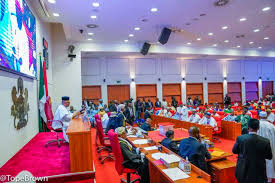

The Nigerian Senate has announced an emergency plenary sitting for Tuesday, February 10, 2026, following a mounting wave of public outrage over its recent passage of the Electoral Act (Amendment) Bill, particularly the rejection of a clause that would have made real-time electronic transmission of election results from polling units to the Independent National Electoral Commission’s Result Viewing portal mandatory. This announcement, disclosed on Sunday in a statement signed by the Clerk of the Senate, Emmanuel Odo, directed all senators to reconvene for the session, with the President of the Senate, Godswill Akpabio, cited as the authority behind the reconvening.
“The President of the Senate, Godswill Akpabio, has directed the reconvening of plenary for an emergency sitting on Tuesday, February 10th, 2026,” the statement read, adding that the emergency plenary would commence at 12 noon, underscoring the urgency of the matter in the face of growing public criticism. The directive came after widespread condemnation from civil society organizations, opposition figures, labour unions, and concerned citizens, who have all voiced fears that the rejection of Clause 60(3) of the bill which sought to mandate immediate electronic transmission of election results represents a major step backward in Nigeria’s ongoing efforts to strengthen transparency and accountability in its electoral process.
The rejection of Clause 60(3), a provision designed to ensure that results from polling units are transmitted electronically in real time to INEC’s Result Viewing portal to prevent manipulation and enhance transparency, has drawn intense criticism from various quarters. Labour unions, particularly the Nigeria Labour Congress (NLC), have warned that the Senate’s action could spark nationwide protests and even lead to election boycotts, accusing the legislature of creating confusion and undermining public confidence in the electoral system by failing to clearly state whether electronic transmission of results would be mandatory.
In a statement released on Sunday, NLC President Joe Ajaero expressed deep concern over “the confusion and contradictory narratives emerging from the Senate regarding the amendment to the 2022 Electoral Act, particularly on electronic transmission of results,” and stressed that “Nigerians deserve a transparent system where votes are not only counted but seen to be counted.”
He further warned that “legislative ambiguity” at a critical period following the 2023 general elections could institutionalize doubt within the electoral system and jeopardize public trust, stressing that the National Assembly must provide an “immediate, official, and unambiguous account” of the exact provisions passed, including the final wording and the rationale behind its decisions. The NLC insisted that “the amended Electoral Act must provide a clear mandate compelling INEC to electronically transmit and collate results from polling units in real time, and failure to do so could trigger mass action before, during and after the election, or total boycott of the election,” underscoring the seriousness of the labour union’s concerns about electoral credibility and democratic integrity.
The rejection of Clause 60(3) has also provoked strong condemnation from a coalition of political activists under the banner of the Movement for Credible Elections (MCE), which described the Senate’s decision as a “deliberate act of democratic sabotage” and an “assault on the right of Nigerians to freely choose their leaders.” In a statement issued on Saturday by MCE spokesperson James Ezema, the coalition warned that “by rejecting the mandatory electronic transmission of election results from polling units, the National Assembly has chosen opacity over transparency, manipulation over credibility, and elite conspiracy over the sovereign will of the Nigerian people,” further highlighting the gravity of the legislative decision.
The coalition added that there is “no legitimate justification for rejecting the provision,” noting that mandatory electronic transmission is a basic safeguard against election rigging, ballot rewriting, and post-election fraud. As part of its response to the Senate’s action, the MCE announced plans for a mass protest tagged “Occupy NASS,” scheduled for Monday in Abuja, and called on “all our partners and allies to mobilise and proceed peacefully to defend the popular yearnings of Nigerians and resist any attempt to return the country to the dark days of manual manipulation and backroom results,” demonstrating the coalition’s determination to actively hold lawmakers accountable.
Clause 60(3) was designed to enhance transparency by requiring presiding officers at polling units to transmit results electronically in real time directly to INEC’s Result Viewing portal, thereby preventing tampering, manipulation, or delays in the collation process and ensuring immediate public verification of votes. By voting down the clause, the Senate retained the discretionary provision that allows electronic transmission only after votes have been counted and publicly announced at polling units, leaving the process vulnerable to selective compliance and administrative lapses. Observers and civil society organizations have widely criticized this decision, describing it as a significant setback to the credibility of elections in Nigeria, particularly given that the measure was intended to strengthen the integrity of the 2027 general elections.
Amid the controversy, the House of Representatives’ bipartisan Conference Committee on the Electoral Act (Amendment) Bill is scheduled to meet with its Senate counterpart to harmonize divergent provisions between the chambers’ versions of the bill. Mr. Saidu Abdullahi, a member of the committee representing Bida/Gbako/Katcha Federal Constituency of Niger State, confirmed that the committee would meet within the week to discuss these differences, emphasizing that the committee’s mandate is to reconcile the two versions ahead of final consideration and passage by the National Assembly. Chaired by Lagos lawmaker Mr. Adebayo Balogun, the committee is tasked with resolving outstanding disputes, particularly regarding electronic transmission and digital voter identification, which have generated widespread public debate.
The ongoing deliberations occur against the backdrop of sustained public agitation for further amendments to the 2022 Electoral Act, which introduced critical reforms such as clearer timelines for party primaries and provisions to strengthen INEC’s independence. However, inconsistencies observed between polling unit results and uploaded figures have intensified calls for legislative clarity, with civil society groups warning that failure to adopt real-time electronic transmission provisions risks undermining electoral credibility and public confidence in Nigeria’s democratic system.
Senate President Godswill Akpabio has defended the chamber’s actions, insisting that the Senate “did not reject electronic transmission” and asserting that the body acted within its constitutional mandate. He vowed that the Senate would not be intimidated by public pressure, emphasizing that the ongoing harmonization process would address concerns raised by stakeholders, a position that has done little to quell public criticism. Meanwhile, MCE has described the Senate’s rejection of mandatory electronic transmission as prioritizing political elites over the electorate, warning that the decision could deepen voter apathy, increase manipulation of results, and further erode public trust in the democratic process.
The coalition further warned that flawed electoral processes in Nigeria have contributed to impunity and compromised judicial independence, as courts have been used to validate manipulated mandates rather than uphold the rule of law. According to MCE, the political elite’s resistance to technology stems from a fear of transparency, as electronic systems would expose corrupt practices and reduce opportunities for manipulation. The group insisted that mandatory electronic transmission, alongside a Voter Verifiable Paper Audit Trail (VVPAT), is essential to prevent post-election fraud, arguing that “any legislature that blocks it is openly defending a system that thrives on stolen mandates and manufactured elections.”
Afenifere, the pan-Yoruba socio-political organization led by Oba Oladipo Olaitan, has also weighed in, urging the Joint Committee of the National Assembly to adopt mandatory real-time electronic transmission of results. In a statement released on Saturday by Olaitan and the group’s National Publicity Secretary, Justice Faloye, Afenifere warned that “care must be taken not to completely lose the people’s trust in the current democratic disposition” and emphasized that survival of Nigeria’s democracy “depends on the legislature embracing a credible, technology-driven electoral framework ahead of the 2027 General Elections, including compulsory real-time transmission of results from polling units to the INEC Result Viewing portal.”
The organization condemned the Senate’s passage of the Electoral Act 2022 (Repeal and Re-enactment) Amendment Bill on February 4, 2026, which rejected provisions for mandatory real-time electronic transmission of results and digital voter identification, describing the decision as self-serving and a dangerous drift toward a one-party state. Afenifere dismissed claims that electronic transmission remained permissible under existing law, pointing out that the Supreme Court had ruled that such transmission is not mandatory because it is not expressly provided for in the Electoral Act 2022, and warned that leaving the process discretionary undermines the constitutional guarantee of free and fair elections.
Afenifere also highlighted the rejection of downloadable electronic voter cards embedded with QR codes, noting that reliance on physical Permanent Voter Cards disenfranchises voters who lose their cards and ignores global advances in digital identification. “By keeping electronic transmission optional, Nigeria is lagging behind global standards and choosing opacity over trust,” the organization stated, emphasizing that the Senate’s decisions risk eroding public confidence in the democratic process and compromising the integrity of future elections.
The MCE coalition emphasized that it represents Nigerians from all walks of life including youth, women, persons with disabilities, professionals, civil society organizations, faith-based groups, and citizens in the diaspora and is united by the principle that every vote must count and must be protected. The coalition stressed that it is not aligned with any political party, warning that “the failure to implement mandatory electronic transmission and Voter Verifiable Paper Audit Trail safeguards will allow continued manipulation of results between polling units and collation centers, growing voter apathy, and declining public trust in elections.”
The coalition called for three key actions from the National Assembly: reinstatement of mandatory electronic transmission, public accountability from lawmakers who opposed the clause, and the adoption of VVPAT alongside electronic transmission to ensure verifiable results. Citing international best practices, including India’s electoral model, MCE urged that electronic transmission must align with polling unit documentation to prevent manipulation. “Democracy dies when votes are allowed to be stolen. It is time to end electoral rigging in Nigeria,” the group insisted, reflecting deep public concern over electoral integrity.
Civil society groups and opposition figures have consistently criticized the Senate’s decisions, asserting that the failure to mandate electronic transmission is a setback for democratic progress. They argue that the decision prioritizes incumbency and elite interests over the sovereign will of the people, creating conditions ripe for manipulation, fraud, and further erosion of electoral credibility. As civil society, labour unions, and citizens continue to monitor developments, public pressure on lawmakers remains intense, emphasizing the need for transparency and accountability in the legislative process.
As Nigerians prepare for Tuesday’s emergency plenary and await subsequent meetings of the House-Senate Conference Committee, the nation watches closely, with widespread calls for legislative clarity, technological safeguards, and electoral reforms that guarantee transparency, protect every vote, and restore trust in the democratic process. The unfolding situation reflects both the challenges and the urgency of reforming Nigeria’s electoral system to meet global best practices and safeguard the country’s democratic future.