

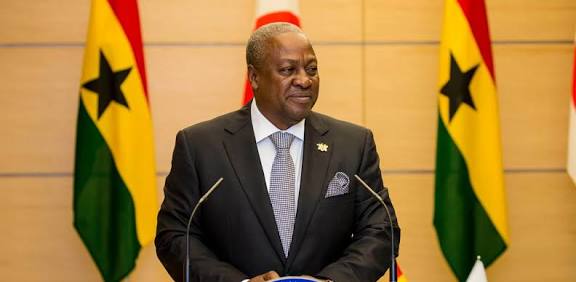

In a move that has sent ripples through Ghanaian political and diplomatic circles, President John Dramani Mahama has ordered the immediate recall of Ghana’s High Commissioner to Nigeria, Mohammed Baba Jamal Ahmed, following serious allegations linking his involvement in electoral misconduct with a fiercely contested party primary election back home. The decision, announced in a presidential statement on Saturday from Accra’s Jubilee House, underscored the government’s intent to uphold stringent ethical standards for public officeholders, particularly those serving abroad in senior diplomatic roles. The Presidency said Ahmed’s recall was driven by concerns that his continued position as High Commissioner – Ghana’s principal diplomatic representative to Nigeria – had become untenable amid accusations of voter inducement and vote-buying during the National Democratic Congress (NDC) parliamentary primary in the Ayawaso East Constituency. The statement directed the Ministry of Foreign Affairs to begin immediate administrative and diplomatic procedures to effect the recall.
The controversy stems from the internal NDC contest held on 7 February 2026 to choose the party’s parliamentary candidate for a by-election scheduled for 3 March 2026, triggered by the death of the sitting Member of Parliament for Ayawaso East, Naser Toure Mahama. In that primary, Ahmed, who was serving as Ghana’s envoy in Abuja at the time, secured 431 votes to narrowly defeat his closest rival, Hajia Amina Adam, who received 399 votes, among other contenders. However, the election was overshadowed by widespread allegations of inducement, with multiple reports suggesting that material items such as television sets and foodstuffs were distributed to accredited delegates during the voting process – actions critics described as potential vote-buying and a serious breach of democratic norms within the party. Ahmed has publicly denied any wrongdoing, insisting such distributions were gestures of goodwill rather than attempts to influence the vote.
At the heart of the government’s rationale for the recall is Ghana’s Code of Conduct for Political Appointees, a regulatory framework introduced by President Mahama designed to enhance transparency, integrity, and accountability across public service. This code, which applies to ministers, deputies, presidential staffers, and other political appointees, lays out clear principles requiring officials to place national interest above personal ambitions, avoid misuse of office and resources, and refrain from conduct that could bring public service into disrepute. The code also explicitly prohibits any actions that might compromise impartiality or create *conflicts between private political interests and official duties*, including the misuse of state resources or acceptance of significant gifts that might influence decisions. Analysts say the president’s decision to recall Ahmed, even before the conclusion of internal party investigations, reflects a firm application of these ethical standards to protect public trust in Ghana’s diplomatic corps.
The Ayawaso East Constituency itself is a politically significant seat located within the Accra Metropolitan Area of the Greater Accra Region. Historically an NDC stronghold, it elects one Member of Parliament under Ghana’s first-past-the-post electoral system and has been represented predominantly by NDC lawmakers since the inception of the Fourth Republic. That legacy deepens the stakes of the by-election to fill the vacancy left by the late MP, making the primary that selected Ahmed both a local and national focal point for debates on internal party democracy and electoral ethics.
In recent years, Ghanaian political parties have grappled with challenges around internal election conduct. Allegations of inducement, vote-buying, and procedural irregularities during primaries are not unique to the Ayawaso East contest, and they have periodically ignited broader discussions on the need for stronger safeguards to protect the integrity of internal democratic processes. While Ghana’s national elections are overseen by the Electoral Commission of Ghana, internal party primaries are largely managed by party organs themselves, with rules designed to promote fairness and healthy competition.
In this case, the NDC’s national leadership has condemned the alleged acts of inducement and swiftly constituted an internal committee to investigate, led by senior party figures and mandated to report back with findings and recommendations on disciplinary actions.
The diplomatic implications of recalling a high-ranking envoy like a High Commissioner to Nigeria – one of Ghana’s most important bilateral partners – cannot be understated. High Commissioners serve as the primary representatives of their governments, tasked with managing political relationships, promoting economic ties, and protecting Ghanaian interests abroad. A recall, particularly tied to allegations of misconduct, sends a strong signal about how seriously the Ghanaian government views ethical breaches by its officials.
It also places additional pressure on the NDC to resolve internal disputes and demonstrate that its processes reflect the democratic values it publicly espouses. Political analysts note that the move might also shape how other parties and electorates view internal accountability mechanisms ahead of general elections and by-elections across the country.