

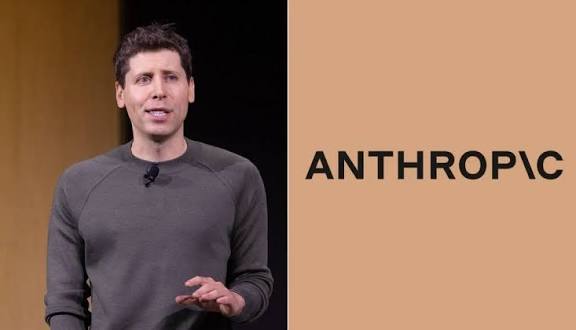

In one of the most surprising developments of the AI industry in early 2026, the notoriously technical rivalry between two of the world’s leading AI labs—OpenAI and Anthropic—finally spilled out of labs and into prime-time advertising and the public arena. At the heart of the dispute: how generative AI should make money, what it should offer users, and who gets to shape its future.
What started as competition over models and engineering has now morphed into a marketing war that exposes deeper tensions within the AI industry’s philosophy and business strategy.
From Labs to the Super Bowl: Ads as the New Front Line
Traditionally, AI research companies didn’t compete via flashy consumer ads. That changed during the 2026 Super Bowl, when Anthropic, the AI startup founded by former OpenAI leaders, launched a striking new ad campaign targeting the broader AI narrative. The commercials mocked what they portrayed as the inevitable arrival of intrusive ads in conversational AI—implicitly critiquing OpenAI’s plans to introduce advertising in ChatGPT’s free tier.
The core tagline was simple but pointed:
“Ads are coming to AI. But not to Claude.”
The spots used humour and absurd scenarios to show hypothetical AI assistants interrupting personal conversations with irrelevant ad pitches—a direct way of capturing user anxieties about monetisation creeping into comfort and utility.
Anthropic’s move was more than just boasting; it was a public declaration of principle. By positioning its flagship Claude AI as ad-free, the company sought to differentiate itself not just technically, but morally: a safe, distraction-less environment for deep thinking and productivity—a stark contrast to AI models monetised through ads.
Sam Altman’s Response: From Laughter to Fire
OpenAI CEO Sam Altman responded forcefully—and publicly. In a post on X (formerly Twitter), Altman described the Anthropic ads as “funny” but **“clearly dishonest,” arguing that they misrepresented OpenAI’s actual plans and values.
In his rebuttal, Altman made several key points:
- The ads depicted a scenario that does not reflect OpenAI’s advertising practices—OpenAI claims ads will be transparent and separate from the conversational content itself.
- OpenAI’s philosophy is rooted in broad access; free tiers, even with ads, allow billions of users to benefit from AI. “Access creates agency,” Altman wrote, underscoring his belief that free access helps more people than premium-only models.
- He also criticised Anthropic for acting in ways he described as restrictive, saying the rival serves “an expensive product to rich people” and has blocked competitors from using its tools.
In one particularly pointed line, Altman suggested OpenAI and Anthropic have fundamentally different problems—OpenAI must support a massive, global free user base, while Anthropic’s audience is smaller and more select.
Altman also framed the competition in terms of broader values: democratizing access versus building for a wealthier niche. As he put it, OpenAI’s mission is to put AI in as many hands as possible—a stance directly at odds with Anthropic’s principled ad-free narrative.
More Than Ads: A Strategic and Philosophical Rift
The ad war is only one visible symptom of a deeper rivalry between the two companies. At its core are different visions of AI’s future:
1. Monetisation vs. Access
OpenAI is exploring advertising as a way to fund the massive infrastructure costs of running large-scale models while keeping access open. For many users, the potential of ads feels like a necessary trade-off for free or low-cost AI, even if the details remain controversial.
Anthropic has chosen to make ad-freedom a core part of its messaging—a selling point itself. In an era where ad saturation and data privacy concerns are common, this can be powerful positioning.
2. Public Narrative Control
By taking the rivalry into a global broadcast event, Anthropic brought a typically technical discussion into popular culture. The Super Bowl campaign wasn’t just advertising—it was about shaping public perception of what ethical AI should look like.
Altman’s lengthy public response shows how seriously OpenAI views this narrative battle—underlining that brand and trust are now strategic assets in tech warfare.
3. Competing Business Philosophies
Altman positioned OpenAI as inclusive, arguing that free access—even with ads—is a democratic model for global AI adoption. In contrast, Anthropic’s messaging leans toward a premium, distraction-free platform built around safety and trust. This is not merely marketing fluff—investors, corporate customers, and governments are watching closely.
What This Means for the Industry
The spat between OpenAI and Anthropic reflects a broader shift in how AI companies compete:
- It’s no longer just about model size or benchmarks, but brand positioning and values.
- Consumer perception matters as much as technical prowess.
- The way AI products make money—whether through subscriptions, enterprise deals, or ads—will shape user experience and trust.
As competition intensifies, this clash could set precedents for how AI is marketed and regulated in the years ahead.
Beyond Ads: A Continuing Rivalry
This Super Bowl ad war is just one chapter in the ongoing rivalry that stretches back to Anthropic’s founding in 2021, when a group of former OpenAI researchers left to prioritize safety and ethical concerns. Both companies continue to launch new models and services, sometimes on the same day, underscoring how close and heated this competition remains.
Today’s beef is not simply about commercials on TV—it’s about the future direction of AI, trust in technology, and who gets to decide what users deserve.