

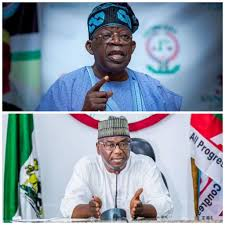

President Bola Tinubu on Thursday convened an emergency security meeting with Kwara State Governor AbdulRahman AbdulRazaq at the State House, Abuja, as national and international outrage surged over the massacre of residents in Kaiama Local Government Area. The meeting was called in response to the deadly attack on the Woro and Nuku communities, which government sources confirmed claimed at least 75 lives, and left scores more injured, missing, or displaced. The scale of the violence, described as a “cowardly and inhumane assault” by both local and federal officials, prompted a wave of condemnation from international actors, including the United Nations and the Republic of Türkiye, as well as mounting calls from lawmakers for urgent security reform, federal intervention, and the strengthening of intelligence and operational capacities to curb future attacks.
The Northern Senators Forum immediately issued a statement expressing deep concern over the killings and appealed for urgent measures to strengthen Nigeria’s security architecture. Chairman of the Forum, Senator Abdulaziz Yar’Adua, in a condolence message released on Thursday, called on the Federal Government to “urgently recruit more security personnel and strengthen operational capacity to curb the rising wave of violent attacks across several states.” Senator Yar’Adua also expressed sympathy with the affected states, noting that “we express our deepest condolences to the governments and people of Kwara, Katsina, and Benue states on the recent brutal attacks that have claimed over 130 lives. These senseless acts of violence are a stark reminder of the insecurity plaguing our nation.”
At the emergency meeting, President Tinubu was briefed by Governor AbdulRazaq on the sequence of events surrounding the Tuesday night attack. The governor confirmed that the attackers, believed to be armed extremists preaching a radical ideology, had targeted residents of Woro and Nuku, communities predominantly of Muslim faith, reportedly because locals refused to embrace the insurgents’ doctrine. “At least 75 people of the Muslim majority village lost their lives and properties to the unfortunate incident that occurred on Tuesday,” AbdulRazaq told reporters after the briefing. He added that several residents remained missing and that the full extent of the tragedy was still being assessed by security and community leaders.
In response to the attack, the Inspector-General of Police, Kayode Egbetokun, ordered the immediate deployment of tactical, operational, and intelligence assets to Kaiama Local Government Area. According to a statement released by the Force Public Relations Officer, Benjamin Hundeyin, the Nigeria Police Force “strongly condemns the violent attack that occurred on Tuesday, February 3, 2026, in Kaiama Local Government Area of Kwara State, which sadly resulted in the confirmed death of seventy-five persons.” Hundeyin added, “The Inspector-General of Police extends his heartfelt condolences to the families of the victims, as well as to the Government and people of Kwara State, over this deeply painful and tragic incident.”
The police assured that a thorough manhunt had been launched for the perpetrators and their collaborators, with all available resources mobilized to ensure that those responsible are apprehended and brought to justice. Hundeyin emphasized that “the perpetrators will not escape the long arm of the law” and urged residents to cooperate by providing credible information to law enforcement agencies. The Inspector-General’s directives were reinforced with assurances that tactical units, operational teams, and intelligence personnel would remain in Kaiama and surrounding communities until calm was fully restored.
Governor AbdulRazaq further explained that the deployment of troops under the newly established Operation Savannah Shield would serve as a deterrent to further attacks and help restore peace to the affected communities. Speaking to journalists in Abuja following his closed-door meeting with President Tinubu, the governor stated, “I’m confident because the force commander of Operation Savannah Shield has reported in Kwara and is hitting the ground running. We rely on the military to do what they do best.” He added that the operation’s immediate priority was to secure the area, protect remaining residents, and prevent a recurrence of the attacks.
President Tinubu, who had already approved the deployment of an army battalion to Kaiama and the creation of a new military command to oversee the operation, condemned the killings as “cowardly and inhumane,” noting that victims had been targeted for rejecting extremist ideology in favor of peaceful Islamic practice. The President called for tighter collaboration between federal and state agencies to support affected communities and ensure that perpetrators are apprehended. His directives included the mobilization of emergency services, reinforcement of operational intelligence, and coordination of humanitarian aid for the victims and their families.
The House of Representatives Speaker, Tajudeen Abbas, also weighed in on the incident, condemning the killings and describing the continued loss of life across Nigeria as deeply troubling. In a statement issued by his Special Adviser on Media and Publicity, Musa Krishi, the Speaker called on security agencies to rise to their constitutional responsibility of protecting citizens. He emphasized the need for concerted efforts by all stakeholders to confront insecurity and restore public confidence in the state’s capacity to guarantee safety, describing the socio-economic impact of the attacks as “immeasurable.”
Northern Governors’ Forum Chairman and Governor of Gombe State, Muhammadu Yahaya, expressed sorrow over the tragic loss of innocent lives, describing the attacks as “barbaric, senseless, and a direct assault on the collective conscience of the nation.” In a statement issued on behalf of the Northern Governors, Yahaya extended condolences to bereaved families and urged security agencies to intensify intelligence gathering, surveillance, and coordinated operations to bring perpetrators to justice. He stressed that “the protection of lives and property remains a sacred duty” and reassured Nigerians that the Forum would collaborate with federal authorities and community leaders to confront insecurity through both short-term and long-term interventions.
The Peoples Democratic Party (PDP), as a leading opposition party, criticized the federal government’s handling of the situation, asserting that warnings of a potential attack had been ignored. In a statement by its National Publicity Secretary, Ini Ememobong, the PDP stated, “The most painful part of this sad story is the fact that several community leaders have stated that the notice of this impending attack was available for months, without any meaningful proactive action from the Government, which makes the post-carnage military deployment weak, reactive, and irresponsible.” The party demanded an independent investigation and a national security summit to prevent similar incidents.
Former Senate President Bukola Saraki also condemned the attacks, labeling them a national disaster and calling for direct presidential intervention. “What we require now is decisive and direct intervention from the President,” Saraki said, highlighting Kwara State’s strategic significance as a bridge between the northern and southwestern regions of Nigeria. He further stressed the importance of federal and state coordination to prevent insurgent elements from establishing safe havens within the state.
Senator Natasha Akpoti-Uduaghan, representing Kogi Central, described the attacks as “deeply troubling” and warned that ongoing insecurity threatened national cohesion. “The persistent killings of innocent Nigerians are unacceptable and deeply troubling. My heart goes out to the families who have been plunged into grief by these senseless acts. Protecting lives and ensuring justice must be non-negotiable,” she said, urging authorities to move beyond rhetoric and deploy effective measures to stabilize the affected areas.
The Northern Senators Forum added that the attack underscored the need for a comprehensive security overhaul. Senator Yar’Adua noted, “We acknowledge the efforts of security agencies and urge citizens to cooperate with them by reporting suspicious activities. However, we call on the Federal Government to urgently increase the recruitment of security personnel and enhance their capacity to combat these growing threats.” His comments reinforced calls from multiple lawmakers for expanded manpower, intelligence capability, and rapid response capacity across vulnerable rural areas.
In a related development, Governor AbdulRazaq directed the Kwara State Emergency Management Agency to mobilize support for victims, ensuring that displaced residents and families of the deceased received food, medical attention, and psychological assistance. The governor personally visited Kaiama on Wednesday night, accompanied by the Speaker of the State House of Assembly, Salihu Yakubu-Danladi, senior security commanders, and government officials, to meet with local leaders, the Emir of Kaiama, Alhaji Muazu Omar, and residents affected by the attacks.
The Emir of Kaiama explained that the attackers were followers of a radical preacher named Mahmuda, who reportedly promoted extremist ideology in surrounding communities. “They attacked their victims who rejected their doctrine,” the Emir said, noting that the violence had not only resulted in mass casualties but also destroyed property and disrupted community life. Governor AbdulRazaq commended President Tinubu for approving the immediate deployment of soldiers under Operation Savannah Shield, stating, “Within the next month, the whole place will be flooded with soldiers. And the results will be positive, God willing.”
On the international stage, the United Nations Secretary-General Antonio Guterres condemned the attack in a statement shared via social media. “I strongly condemn the terrorist attack of 3 February, in Kwara State, Nigeria. My heartfelt condolences to the families of the victims and to the people and Government of Nigeria. I wish a speedy recovery to the injured,” Guterres wrote. Similarly, the Republic of Türkiye described the attack as heinous, stating that it “strongly condemns this attack and extends condolences to the families of those who lost their lives and to the people of Nigeria. Türkiye will continue to support Nigeria in its fight against terrorism.”
The attacks in Kwara formed part of a broader wave of violence affecting multiple northern and central states. Lawmakers highlighted the deaths in Katsina and Benue, noting that more than 130 people had been killed in coordinated assaults over recent weeks. These incidents prompted appeals for enhanced security presence, proactive intelligence operations, and federal support to prevent further escalation and safeguard vulnerable communities.
Following the Kaiama attack, the Inspector-General of Police reiterated that joint operations involving the army, police, and intelligence services had been intensified in border and forested areas to apprehend the assailants and dismantle criminal networks. “All available resources have been mobilized to ensure that those responsible are identified, apprehended, and brought to justice,” said Force spokesman Benjamin Hundeyin, emphasizing that community cooperation would be vital to the success of ongoing security operations.
Amid the chaos, reports emerged regarding the release of the Oniwo of Afin, Oba Simeon Olanipekun, who had been abducted by gunmen in Ifelodun Local Government Area. According to a family source, the monarch was released after about a month in captivity following negotiations that included additional payments. “It is true the monarch was released on Wednesday night after we paid N12 million and two power banks in addition to the earlier N20 million paid before. They dropped him at a local herders’ settlement around Oreke in Ifelodun Local Government Area. From there, he was taken to the military base in Oreke, where they contacted us,” the source said.
Police spokesperson Adetoun Ejire-Adeyemi confirmed the release but declined to comment on ransom payments. “The command is aware that the release of the monarch was secured last night, and he has been reunited with his family. You are aware that there are ongoing joint security operations on that axis, and the bandits are fleeing. We are not aware of any ransom payment,” Ejire-Adeyemi said, highlighting the role of security operations in facilitating the monarch’s safe release.
The events in Kaiama and Ifelodun have reignited debate over the adequacy of Nigeria’s rural security infrastructure. Lawmakers, governors, and security officials emphasized the strategic importance of rapid troop deployment, intelligence coordination, and close engagement with local communities to counter the activities of armed extremists, particularly in areas bordering Niger State and forested regions vulnerable to insurgent infiltration.
Governor AbdulRazaq emphasized that the combination of Operation Savannah Shield, enhanced state emergency services, and collaboration with federal agencies would restore order and protect residents. He stated, “This is a major challenge to tackle now, because it goes beyond Kwara and to the Kainji Park in Niger State. They have murdered sleep, and I can assure you that within the next month, the whole place will be flooded with soldiers.”
Speaker Tajudeen Abbas reinforced the importance of multi-level cooperation between federal, state, and local authorities. “Both the government and the governed must collaborate to face the nation’s common enemies,” he said, urging citizens to assist security agencies by reporting suspicious activity and by remaining vigilant during ongoing operations.
The Northern Governors’ Forum, under Chairman Muhammadu Yahaya, similarly called for swift and decisive action, urging security agencies to employ all lawful means necessary to apprehend the perpetrators and prevent further attacks. “These crimes must not go unpunished,” Yahaya stated, reaffirming the Forum’s commitment to support federal efforts while promoting community-based intelligence and longer-term socio-economic interventions to address insecurity.
Opposition parties, particularly the PDP, criticized the government for what they described as reactive rather than proactive measures. They maintained that warnings about impending attacks were available but ignored, and demanded an independent investigation and a national security summit. “The Presidential deployment of the military cannot bring back the killed people or erase the concomitant trauma imposed upon the community,” the PDP said.
Former Senate President Bukola Saraki reiterated that decisive federal intervention was necessary to prevent insurgents from establishing strongholds in strategic states like Kwara. “Kwara is too strategic to allow insurgency to gain ground. The level of killings, arson, and displacement of people that we are witnessing now is unprecedented,” he said, calling for accelerated action to secure the region and protect lives.
Senator Natasha Akpoti-Uduaghan highlighted the human toll of the attacks, describing the killings as deeply troubling and a threat to national cohesion. “Protecting lives and ensuring justice must be non-negotiable. The safety of our citizens should always be the highest priority of government,” she said, urging authorities to implement coordinated and effective measures to prevent a recurrence of such incidents.
Governor AbdulRazaq detailed the operational readiness of the military under Operation Savannah Shield, emphasizing that troops were already deployed and engaging the terrain to identify insurgent hideouts, recover stolen property, and protect civilians. He assured that the efforts would be sustained until security was fully restored in Kaiama and neighboring communities.
International responses reinforced the gravity of the situation. UN Secretary-General Antonio Guterres and Türkiye’s Ministry of Foreign Affairs condemned the attacks, stressing the importance of global support in Nigeria’s fight against terrorism. Guterres expressed condolences to families of victims and the government of Nigeria, while Türkiye pledged continued collaboration in counterterrorism efforts.
The broader socio-economic consequences of the attacks were also highlighted. The killings and abductions disrupted local markets, hampered agricultural activities, and created widespread fear among residents. Authorities warned that the attacks, if left unchecked, could threaten regional stability and compromise national food security, as rural communities play a critical role in Nigeria’s agrarian economy.
Security experts noted that the Kaiama attacks reflect a growing trend of extremist and bandit infiltration into previously peaceful communities. They emphasized the need for sustained intelligence gathering, proactive deployment of tactical units, and increased community engagement to deter future attacks and dismantle criminal networks operating across state borders.
Residents of Kaiama and neighboring areas continue to grapple with trauma, loss of loved ones, and displacement. Authorities are coordinating the provision of emergency medical care, psychosocial support, and temporary shelters, while also assessing damages to homes, schools, and places of worship affected by the assaults.
Governor AbdulRazaq concluded by reiterating his commitment to restoring normalcy. “We rely on the military, the police, and all security agencies to protect our people. Operation Savannah Shield is already in motion, and we are confident that the results will be positive. The state government will continue to work hand-in-hand with the Federal Government to ensure peace returns to our communities,” he said.