

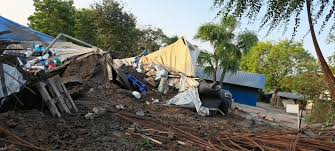

An unknown number of aid workers are missing after a hospital run by the international medical charity Doctors Without Borders (MSF) was struck in an air raid in Jonglei state, South Sudan, near the country’s border with Ethiopia, humanitarian sources reported on Thursday. MSF said the hospital in Lankien was hit by an air strike carried out by the South Sudanese government forces late on Tuesday night, in what the organisation described as a devastating blow to already fragile health services in the conflict‑affected region. The South Sudan government has not yet issued an official comment on the incident. In a separate attack on the same day, MSF reported that its health facility in Pieri, also in Jonglei, was looted by unknown assailants and left unusable for local residents, forcing staff to flee alongside community members. “Our colleagues from Lankien and Pieri had to flee with the community and their fate and whereabouts are still unknown as we are trying to establish communication with them,” MSF said, highlighting the deepening risks faced by humanitarian workers amid renewed fighting.
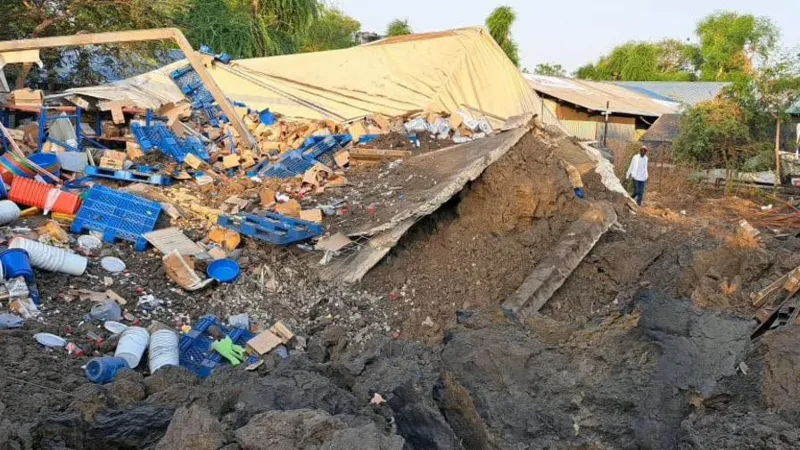
According to MSF’s detailed statement, the Lankien hospital, which served tens of thousands of people, including those displaced by conflict, was partially evacuated hours before the strike after receiving information about a potential attack. Despite evacuations, one MSF staff member suffered minor injuries and the facility’s main warehouse — containing critical medicines and medical equipment was destroyed, along with most of its supplies. The charity stressed that it had shared the GPS coordinates of its facilities with all parties to the conflict, and that South Sudan government forces are the only armed group in the country with aerial capability, implicitly underscoring its belief that the attack came from government military aircraft. MSF also emphasised that it was the primary, often only, health provider for some 250,000 people in Lankien and Pieri, warning that the loss of these facilities will leave those communities without essential healthcare services.
The tragic attacks come amid a resurgence of fighting in Jonglei state between forces loyal to President Salva Kiir’s government and factions aligned with First Vice President Riek Machar, who has been suspended from his post amid allegations which his supporters deny of plotting to overthrow the president. Renewed clashes erupted late last year and have since intensified, with government troops launching operations aimed at reclaiming territory held by Machar‑aligned fighters of the Sudan People’s Liberation Army‑in‑Opposition (SPLA‑IO). The violence has displaced hundreds of thousands of civilians and prompted restrictions on humanitarian access in opposition‑held areas.
Jonglei, one of the most food‑insecure parts of South Sudan with already severe health needs, has borne the brunt of this escalation. The United Nations Office for the Coordination of Humanitarian Affairs (OCHA) and other UN agencies estimate that fighting and aerial bombardments since December have forced roughly 280,000 people to flee their homes in Jonglei alone, fleeing to locations with minimal resources or protection. These displacement figures add to a humanitarian crisis that pre‑dates the latest conflict flare‑up, leaving many civilians vulnerable to hunger, disease, and lack of access to basic services.
South Sudan, the world’s youngest country after gaining independence in 2011, has never fully emerged from cycles of civil war and ethnic violence that have plagued it since even before independence. A power struggle between Kiir and Machar, which first erupted into open conflict in 2013, resulted in a civil war that killed tens of thousands and displaced millions before a 2018 peace agreement. That agreement has been repeatedly undermined by sporadic violence, delayed implementation, and mistrust between rival factions, contributing to recurring insecurity across multiple states, including Jonglei.
The renewed fighting has severely hampered humanitarian operations. Since late 2025, the South Sudanese government has imposed restrictions on humanitarian access in parts of Jonglei held by opposition forces, including Lankien and Pieri, suspending flights and movements that are critical for delivering medical supplies, evacuating patients, and transporting aid workers. This constraint has made it nearly impossible for organisations like MSF to maintain regular services or respond to emergencies, amplifying the suffering of civilians caught in the conflict’s crossfire.
The broader humanitarian situation in South Sudan remains dire, with multiple UN agencies warning that escalating insecurity could drive acute food insecurity to even more critical levels in northern Jonglei and neighbouring states. The World Food Programme has said that projections indicate a substantial increase in counties facing emergency‑level hunger conditions, with some households at risk of slipping into catastrophic food insecurity if access to food assistance continues to be restricted and if conflict disrupts local agricultural production and trade.
International humanitarian law obliges parties to a conflict to protect civilians and ensure safe passage and operation for medical facilities and aid workers. Human rights groups and international organisations have repeatedly condemned attacks on health infrastructure and medical personnel, stressing that such actions violate fundamental protections and worsen already critical crises. The International Humanitarian Law Centre noted its concern over the rapidly deteriorating security situation in Jonglei and the grave risks posed to civilians and humanitarian workers alike, emphasising the urgent need to safeguard life‑saving relief operations.
For millions of South Sudanese, especially in remote and conflict‑affected areas like Jonglei, access to healthcare, food, clean water, and shelter remains tenuous at best. The destruction and looting of essential health facilities not only disrupt immediate care but also erode long‑term community resilience, leaving civilians with fewer resources to cope with displacement, trauma, and disease. Aid organisations are increasingly forced to make difficult decisions about personnel safety, potentially withdrawing from front‑line areas, which further limits the availability of emergency medical care.
As the crisis unfolds, concerns are mounting that South Sudan already struggling with fragile peace and humanitarian fragility could be pulled back into a cycle of widespread conflict and displacement. The attacks on MSF facilities, the disappearance of aid workers, and the rapid rise in displacement numbers paint a stark picture of a country where humanitarian needs are growing as security deteriorates. The fate of those missing aid workers remains a pressing concern for MSF and the international community, as efforts to re‑establish communication and ensure their safety continue amid volatile conditions on the ground.