

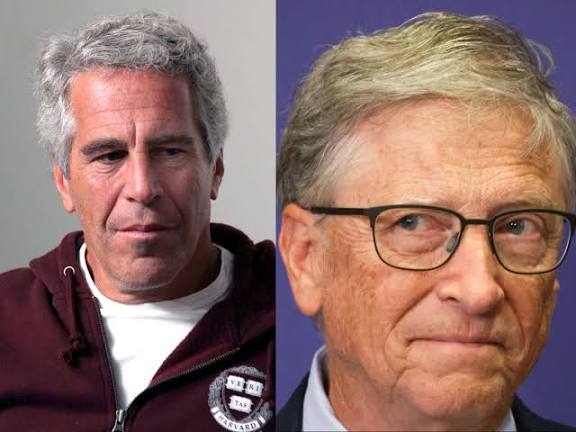

Bill Gates has publicly expressed regret over his past association with convicted sex offender Jeffrey Epstein following the release of a new tranche of documents by the United States Department of Justice, which included emails and materials detailing Epstein’s interactions with a number of prominent figures. In an interview with 9News Australia, the Microsoft co-founder and billionaire philanthropist addressed the controversy directly, saying, “Every minute I spent with him, I regret, and I apologize.” The statement came amid renewed scrutiny of Gates’ past meetings with Epstein, whose criminal history and associations have continued to draw global attention years after his death in prison in 2019.
The documents released by the Justice Department reportedly contain a range of communications between Epstein and well-known individuals from politics, business, and philanthropy, often revealing attempts by Epstein to cultivate influential relationships. Among the materials was a draft email attributed to Epstein in which he alleged that Gates engaged in extramarital affairs. The contents of the draft message included claims about Gates’ personal life, but Gates strongly rejected the allegations, stating unequivocally, “That email was never sent. The email is false. I don’t know what his thinking was there. Was he trying to attack me in some way?”
A spokesperson for Gates also responded to the release of the files, dismissing the allegations and asserting that the documents demonstrate Epstein’s efforts to manipulate and tarnish the reputations of others. “The only thing these documents demonstrate is Epstein’s frustration that he did not have an ongoing relationship with Gates and the lengths he would go to entrap and defame,” the spokesperson said. The spokesperson’s remarks echoed Gates’ own view that the claims lacked credibility and were part of a broader pattern of behavior by Epstein aimed at cultivating leverage over influential individuals.
Gates provided additional context for his past association with Epstein, explaining that he first met the financier in 2011 and had several dinners with him over a period of about three years. According to Gates, the purpose of those meetings was related to philanthropic interests, particularly discussions about mobilizing wealthy donors to support global health initiatives. “The focus was always, he knew a lot of very rich people, and he was saying he could get them to give money to global health. In retrospect, that was a dead end,” Gates said, while emphasizing that he never visited Epstein’s private Caribbean island and had no involvement in any illegal activities.
The renewed attention to Gates’ past association with Epstein has also drawn comments from his former wife, Melinda French Gates, who spoke about the issue during an interview with National Public Radio (NPR). She described the release of the documents as reopening painful memories from their marriage. “For me, it’s personally hard whenever those details come up,” she said, adding that the situation brought back “memories of some very, very painful times in my marriage.” The couple finalized their divorce in 2021 after nearly three decades together.
Melinda French Gates further stated that she believed any remaining questions raised by the documents should be addressed by those directly involved. “Whatever questions remain there of what — I can’t even begin to know all of it — those questions are for those people and for even my ex-husband. They need to answer to those things, not me,” she said. In a separate NPR podcast appearance, she also described feeling “unbelievable sadness” and remarked, “I am so happy to be away from all the muck,” underscoring the personal toll the issue has taken on her.
Despite the allegations referenced in the documents, it has been clarified that Bill Gates has not been accused of wrongdoing by any of Epstein’s victims, and his name appearing in the files does not imply criminal activity. Legal and investigative experts have repeatedly cautioned that the inclusion of individuals in Epstein-related materials does not automatically equate to evidence of misconduct. This distinction has been emphasized by Gates’ representatives as well as in media coverage of the document release.
In a statement to the BBC, a spokesperson for Gates reiterated the denial of any improper conduct and described some of the allegations circulating in the files as “absolutely absurd.” The statement added, “While Mr Gates acknowledges that meeting with Epstein was a serious error in judgment, he unequivocally denies any improper conduct related to Epstein and the horrible activities in which Epstein was involved.” The spokesperson also emphasized that Gates never attended social events or parties with Epstein.
Gates’ own remarks to 9News Australia reflected a similar tone of regret and distance from the disgraced financier. He reiterated that his interactions with Epstein were limited in scope and purpose, primarily involving dinners focused on philanthropic discussions. “Every minute I spent with him I regret and I apologise that I did that,” Gates added, reinforcing his earlier expression of remorse over the association.
The broader release of the Justice Department files has once again highlighted Epstein’s extensive network of contacts across various sectors, revealing how he cultivated relationships with powerful individuals. Analysts note that Epstein often sought to use these associations to enhance his own influence and credibility, even after his prior conviction became widely known. The documents, while shedding light on these interactions, have also prompted renewed public scrutiny of those whose names appear in the records.
Observers have noted that the renewed focus on Gates underscores the reputational risks faced by public figures who had any level of association with Epstein, regardless of intent or context. The situation illustrates how historical connections, even those framed as professional or philanthropic, can resurface years later with significant public and personal consequences. For Gates, whose post-Microsoft career has been centered on global health and philanthropy, the controversy represents a complicated chapter that continues to draw attention.
Melinda French Gates’ comments further underscore the personal dimension of the story, revealing how the issue intersects with the private history of the couple’s marriage and eventual divorce. Her remarks suggest that the controversy has had emotional ramifications beyond the public debate, particularly as new details emerge in official records years after the events took place.
While the Justice Department’s document release has reignited public discussion, experts continue to stress the importance of distinguishing between documented associations and evidence of criminal wrongdoing. In Gates’ case, both he and his representatives have consistently denied any improper behavior, while acknowledging that meeting with Epstein was, in retrospect, a serious lapse in judgment.
As scrutiny continues, Gates’ public apology and Melinda French Gates’ candid reflections highlight the enduring impact of Epstein’s legacy on those whose paths crossed with his. The episode serves as a reminder of how past decisions, particularly those involving controversial figures, can reverberate long after the events themselves, shaping public perception and personal narratives alike.