

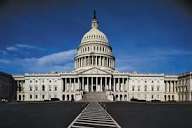

Written testimonies submitted ahead of a United States Congress Foreign Affairs Committee hearing have raised alarm over the escalating risks of widespread Christian–Muslim violence in Nigeria, describing the country as a major flashpoint in a global crisis of religious freedom. The warnings, contained in documents released in advance of the joint hearing, come as lawmakers convene the session under the title “Defending Religious Freedom Around the World,” which is being jointly organized by the House Subcommittee on Africa and the Subcommittee on the Western Hemisphere. The session is part of a broader congressional effort to examine threats to religious freedom worldwide and assess how effectively the United States has responded to emerging crises in diverse geopolitical contexts. Observers say the timing of the hearing reflects growing concern among US policymakers about the interplay of internal governance challenges, insurgency, and global ideological movements that collectively threaten vulnerable religious communities. By focusing on Nigeria, a country with a complex mosaic of ethnic and religious identities, the hearing aims to understand whether local patterns of insecurity may have implications that extend beyond the region, potentially influencing broader global trends in religious persecution.
The testimonies were made publicly available on the committee’s official website ahead of the session, providing a foundation for discussion and analysis by the lawmakers who will participate in the hearing. The witnesses scheduled to testify include highly experienced figures in the field of international religious freedom and human rights, among them former US Ambassador-at-Large for International Religious Freedom Sam Brownback; Principal Advisor for Global Religious Freedom at the US State Department Mark Walker; Grace Drexel, the daughter of the detained Chinese pastor Ezra Jin; and Dr Stephen Schneck, former chair of the US Commission on International Religious Freedom (USCIRF). Each of these witnesses has extensive experience in assessing global patterns of religious persecution, and their written testimonies reflect a shared concern that Nigeria’s religious landscape is increasingly fragile, with persistent violence, displacement, and insecurity marking a trajectory that could evolve into large-scale conflict. The committee’s public disclosure of these testimonies reflects a commitment to transparency and allows lawmakers, analysts, and the public to engage with the evidence prior to the formal proceedings, thereby framing the hearing in a context of careful, fact-based deliberation rather than reactionary politics.
In his prepared testimony, Brownback offered a stark assessment of Nigeria’s position within global religious dynamics. He warned that radical and militant Islamist movements are actively seeking to expand their influence, not only within the Middle East and North Africa (MENA) region but also across other continents where they perceive opportunities for ideological dominance. Brownback stated, “Radical, militant Islam continues its purification efforts throughout the MENA region and beyond. Syria and Nigeria are key focus areas of opportunity for them in their quest for dominance, excluding all other faiths, even others within Islam.” By emphasizing the intersection of local conflicts in Nigeria with broader global trends, Brownback framed the Nigerian context as both a domestic and international issue, suggesting that the country’s internal challenges could have ripple effects for global religious freedom advocacy.
Brownback further elaborated on the stakes involved, portraying targeted faith communities as essential partners in the global promotion of liberty and democratic principles. He argued, “The people of faith being targeted by this persecution are America’s greatest allies in the spread of freedom around the world. We should see and treat them as such.” His testimony underscored the notion that protecting religious minorities is not only a moral imperative but also a strategic concern for US foreign policy. By framing faith communities as pivotal allies in promoting freedom, Brownback highlighted the intertwining of religious rights and broader geopolitical considerations, signaling to lawmakers that inaction could undermine both humanitarian objectives and strategic interests.
Expanding on the geopolitical implications of religious freedom, Brownback characterized it as a primary fault line in contemporary global politics. “Religious freedom is now one of our primary weapons against the dark alliance gathered against us,” he wrote, asserting that authoritarian and totalitarian regimes increasingly perceive independent faith communities as threats to their control. According to Brownback, these regimes seek to suppress religious diversity because faith-based organizations often serve as centers for civil society engagement and moral authority independent of state structures. By highlighting this perspective, he positioned religious freedom not merely as a domestic human rights concern but as an instrument of strategic international influence, essential for countering authoritarian ambitions.
Central to Brownback’s testimony was a focus on Nigeria, which he described in emphatic terms as “the deadliest place on the planet to be a Christian.” He identified repeated incidents of targeted killings, abductions, and displacement as early indicators of what he fears could escalate into full-scale religious conflict. Brownback warned that patterns of violence are not isolated but interconnected, suggesting that certain regions in Nigeria are exhibiting signs of systemic targeting of Christian communities. “Early warning signs of a Muslim-on-Christian war are brewing across Africa,” he wrote, adding that Nigeria sits at the center of this potential crisis. This statement frames Nigeria not only as a site of localized religious tension but as a strategic concern with implications for regional stability and international security.
Brownback also expressed concern over the influence of external actors in Nigeria’s security environment, arguing that foreign involvement could exacerbate existing tensions if not carefully managed. He noted that support from countries such as “China, Russia, Turkey and Saudi Arabia” could unintentionally amplify instability by bolstering armed groups or fostering environments where religiously motivated violence can flourish. The testimony suggested that international engagement must be strategically coordinated and accompanied by careful monitoring to prevent unintended consequences, emphasizing the complexity of foreign policy interventions in contexts of fragile governance and endemic insecurity.
The former envoy further warned that failure to act decisively in Nigeria could result in the escalation of violence into atrocities reminiscent of those previously witnessed in Iraq. Brownback stressed that proactive, sustained engagement is required to prevent a trajectory in which local conflicts metastasize into broader humanitarian crises. By drawing parallels with other conflict zones, he underscored the potential for global repercussions if early warning signs are ignored, reinforcing the importance of timely intervention by both domestic authorities and the international community.
In a complementary testimony, Dr Stephen Schneck described freedom of religion or belief as facing a historic crisis on a global scale. Writing in a personal capacity, he stated, “Freedom of religion or belief is in crisis in the contemporary world. Whether measured structurally in culture, institutions and laws, or in the sheer number of incidents, persecution is increasing across the globe.” Schneck’s testimony provided a wider lens through which to view the Nigerian situation, linking domestic insecurity with broader trends of rising authoritarianism, religious nationalism, and the failure of state institutions to protect vulnerable communities. He emphasized that Nigeria is emblematic of a larger global problem where governance deficits leave faith communities exposed to systemic threats.
Schneck specifically identified Nigeria, Syria, and Sudan as countries where weak governance has created dangerous conditions for religious communities. “Nigeria, Syria, and Sudan are current examples of such conditions threatening freedom of religion or belief. Both Nigeria and Syria are experiencing high levels of societal insecurity and their respective governments have been unable to halt widespread violence against communities of faith,” he wrote. By highlighting these cases, Schneck suggested that religious persecution often flourishes in contexts where institutional capacity is limited and security forces cannot effectively enforce protections for vulnerable populations, allowing armed groups and criminal networks to exploit religious identity for political and economic gain.
He further noted that both Nigeria and Syria previously contained entities designated as Entities of Particular Concern, warning that the persistence of insecurity in these areas continues to pose significant threats to religious freedom. Schneck wrote, “Both have what were previously designated as Entities of Particular Concern operating within their borders,” emphasizing that the combination of weak governance, insurgent activity, and criminal exploitation of religious identities creates conditions for recurring violence, forced displacement, and long-term instability. His analysis portrays Nigeria as a case study in how structural weaknesses and extremist activity intersect to produce heightened risks for religious minorities.
Schneck criticized the US government for failing to fully implement the International Religious Freedom Act of 1998, arguing that despite strong rhetoric, the administration has not matched its statements with substantive, sustained action. “If we are to take the International Religious Freedom Act as our measure, then the United States is not doing enough. We have been long on rhetoric and short on substance, consistency and effectiveness,” he stated. He called attention to the gaps between policy pronouncements and concrete implementation, suggesting that delays in reporting, designation of countries of concern, and sustained diplomatic engagement undermine the effectiveness of US advocacy.
The former USCIRF chair also raised concerns about delays in updating the US State Department’s International Religious Freedom reports and the absence of timely designations for Countries of Particular Concern, Special Watch List countries, and Entities of Particular Concern. “The State Department has still not made its designations of Countries of Particular Concern, Special Watch List, or Entities of Particular Concern. President Biden’s 2023 designations were to have lapsed at the end of 2025,” he noted. Schneck highlighted the strategic risks of these delays, pointing out that they occur at a time when countries such as China and Iran are increasingly repressive toward people of faith, emphasizing that inaction may signal a lack of commitment to global religious freedom principles.
He emphasized the unique situation of Nigeria, noting that due to a special designation by former President Trump, it is currently the only country formally listed as a Country of Particular Concern. “Apparently, Nigeria, thanks to its unique designation by President Trump, is the only country in the world currently designated as a Country of Particular Concern and there are no designated Special Watch List countries or Entities of Particular Concern. This is very concerning at a time when countries like China and Iran are engaged in ever more repressive actions against people of faith,” Schneck wrote. He stressed that such a singular focus, while important, must be complemented by broader, systematic attention to global religious persecution.
Schneck also cautioned against restricting religious freedom advocacy to the protection of Christians alone, arguing that international law requires universal protection for all faiths and beliefs. “International religious freedom, as defined in human rights law, is universal,” he said. “Selective advocacy undermines both effectiveness and legitimacy.” His remarks underscored the principle that comprehensive protection requires engagement with all communities facing persecution, regardless of the demographic or geographic context, to maintain credibility and uphold international norms.
He additionally highlighted shortcomings in US strategy, noting that high-profile actions, including a one-off Tomahawk strike on Nigeria, and public statements on social media have been prioritized over sustained, long-term engagement. “The administration has relied on high-profile events (such as a one-off Tomahawk strike on Nigeria) and social media declarations rather than sustained, country-specific strategies. Religious freedom violations are deeply embedded in legal systems, security practices, and social norms; addressing them requires long-term engagement, multilateral coordination, and careful diplomacy. Early efforts seem to have prioritised visibility over durability,” Schneck wrote. His testimony reflected a belief that durable solutions require deep institutional and diplomatic investment rather than symbolic gestures.
Background to the Nigerian case includes its designation as a Country of Particular Concern over alleged religious freedom violations. In 2025, former US President Donald Trump redesignated Nigeria under this category, accompanied by threats of potential US military intervention. The move underscored long-standing concerns in Washington about religious violence in Nigeria, particularly the vulnerability of Christian communities to attacks by armed groups and extremist networks. The designation placed Nigeria at the center of US religious freedom advocacy efforts, signaling to both domestic and international actors that systemic monitoring and engagement were necessary.
Subsequent US military action included targeted strikes against terrorist hideouts in Sokoto on Christmas Day 2025. The operations were framed by US officials as measures to disrupt networks responsible for violence against religious communities. However, the Nigerian Federal Government rejected claims that the country is experiencing systemic Christian persecution, maintaining that insecurity affects citizens of all religious backgrounds. Nigerian authorities have emphasized that attacks are often rooted in criminality, insurgency, and local conflicts rather than deliberate targeting of specific religious groups, highlighting the complexities of interpreting patterns of violence in diverse and multi-religious societies.
Diplomatic efforts between Nigeria and the United States have continued alongside these security measures. On November 20, 2025, US Secretary of War Pete Hegseth hosted Nigeria’s National Security Adviser, Nuhu Ribadu, at the Pentagon for discussions focused on coordinated strategies to address the ongoing crisis. According to statements from the Nigerian National Security Adviser, the discussions centered on enhancing counter-terrorism cooperation, promoting regional stability, and strengthening the strategic security partnership between the two countries. These diplomatic engagements reflect a recognition on both sides that sustained dialogue and collaboration are critical to mitigating religiously linked violence.
In December 2025, Ribadu disclosed that he had hosted a US congressional delegation in Abuja to continue consultations regarding Nigeria’s designation as a Country of Particular Concern. The meetings were aimed at ensuring that US actions are informed by local realities and that interventions support both security and the protection of vulnerable religious communities. Officials reportedly discussed ways to balance military, diplomatic, and humanitarian tools to address the root causes of violence, emphasizing that effective responses require integrated strategies spanning multiple sectors.
Most recently, officials from both countries participated in a plenary session of the Nigeria–US Joint Working Group on the CPC designation. The session reviewed ongoing security measures, assessed patterns of religiously motivated violence, and explored opportunities for further cooperation in areas such as intelligence sharing, community engagement, and policy coordination. This ongoing dialogue underscores the importance of maintaining continuous engagement, as both nations work to address complex and evolving threats to religious freedom while respecting Nigeria’s sovereignty and internal governance structures.