

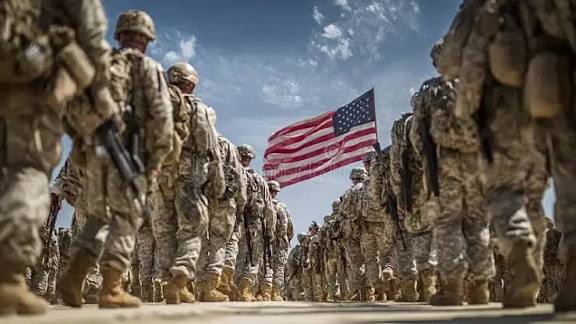

The United States has deployed a small team of troops to Nigeria in what marks the first confirmed American military presence on Nigerian soil since airstrikes struck terrorist locations in the country on Christmas Day 2025, a development that underscores a deepening phase of counterterrorism cooperation between Abuja and Washington. The move, reported by Reuters, signals a new level of operational collaboration as both countries confront escalating threats from extremist groups operating across parts of northern Nigeria and the wider West African region. While details of the deployment remain limited, officials from both governments have acknowledged the presence of the team, framing it as part of broader efforts to strengthen intelligence sharing and operational effectiveness against insurgent networks.
The deployment follows a series of airstrikes ordered in December 2025 by U.S. President Donald Trump, who said at the time that the strikes targeted “Islamic State targets” within Nigeria. The Christmas Day operation marked a significant escalation in U.S. involvement in Nigeria’s counterterrorism landscape and was accompanied by remarks from Trump suggesting that further American military action in Nigeria could occur if deemed necessary. Those comments drew attention internationally and fueled discussions about the extent to which the U.S. might become more directly involved in supporting Nigerian security operations on the ground.
According to Reuters, the groundwork for the December airstrikes had been laid weeks earlier through sustained surveillance operations. The news agency reported that U.S. surveillance flights had been conducted over Nigeria from neighbouring Ghana since at least late November 2025, providing intelligence support that preceded the strikes. This intelligence effort, Reuters noted, formed part of a coordinated approach designed to identify high-value targets and better understand the operational patterns of extremist groups believed to be active in affected regions. The revelation highlighted the quiet but strategic buildup to the more visible military action that followed in December.
Speaking during a press briefing on Tuesday, the Head of U.S. Africa Command, General Dagvin R.M. Anderson, confirmed that increased collaboration between Nigeria and the United States had led to the presence of a small American team with what he described as “unique capabilities.” While he did not disclose the size, structure, or precise mission of the team, Anderson indicated that its role would be supportive, aimed at enhancing Nigeria’s counterterrorism capacity rather than leading combat operations. His remarks suggested a carefully calibrated approach intended to strengthen Nigeria’s existing efforts while avoiding the optics of a large-scale foreign military footprint.
Nigeria’s Defence Minister, Christopher Musa, also confirmed the team’s presence, according to Reuters, but declined to provide further operational details. His response mirrored the cautious tone adopted by U.S. officials, reflecting sensitivities around sovereignty, security strategy, and public perception. The limited disclosure from both sides has fueled speculation about the exact nature of the team’s activities, but it has also reinforced the narrative that the collaboration is focused primarily on intelligence and technical support rather than direct battlefield engagement.
Security sources cited by Reuters suggested that the Americans are likely engaged in intelligence gathering and assisting Nigerian forces in identifying and targeting extremist factions such as Boko Haram and the Islamic State West Africa Province (ISWAP). These groups have remained persistent threats in parts of northern Nigeria, carrying out attacks on civilians, security personnel, and infrastructure. Analysts note that improved intelligence capabilities, including aerial surveillance and data analysis, could significantly enhance Nigeria’s precision in counterterrorism operations and reduce collateral risks during military engagements.
The deployment also unfolds against a backdrop of diplomatic tension between the two countries. Washington has mounted increasing pressure on Nigeria over the handling of terrorist attacks, particularly after President Trump accused the Nigerian government of failing to protect Christian communities in the northwest. The claim generated debate and drew a firm response from Abuja, which rejected the allegation and emphasized that its security operations are not religion-based but focused on neutralizing armed groups that threaten civilians.
In response to the criticism, the Federal Government has reiterated that its military campaigns are directed at all violent actors regardless of religious affiliation, stressing that terrorism in Nigeria is a complex security issue that cuts across ethnic and religious lines. Officials have maintained that the country’s armed forces operate under a mandate to protect all citizens and restore stability in affected regions. The arrival of the U.S. team, therefore, is being framed not as a response to religious concerns but as part of a broader security partnership aimed at improving operational outcomes.