

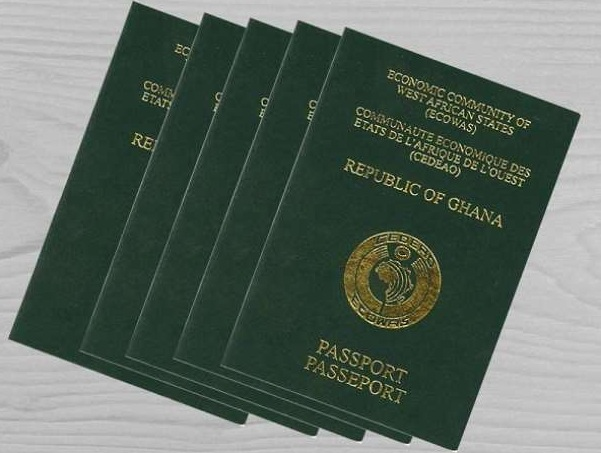

Ghana has temporarily suspended citizenship applications for members of the African diaspora as part of efforts to make the process more accessible, transparent, and user-friendly, government officials have said. The pause affects a program that, since 2016, has allowed people who can trace their ancestry to Africa particularly descendants of those affected by the transatlantic slave trade to obtain Ghanaian nationality. The initiative has drawn global attention over the years and attracted applicants from the United States, the Caribbean, Europe, and Latin America, including high-profile figures such as African American singer-songwriter Stevie Wonder, who was granted Ghanaian citizenship in recent years.
Authorities say the suspension is not a cancellation but a review aimed at improving a system that many applicants have described as complicated, expensive, and difficult to navigate. The government has indicated that updated timelines and clearer guidelines will be issued “in due course,” after which the application window will reopen. In the meantime, the decision has generated both relief and anxiety—relief among those who hope reforms will simplify the process, and anxiety among prospective applicants who had already begun planning relocations, investments, or family moves to Ghana.
Since its introduction in 2016, the diaspora citizenship pathway has been rooted in a broader moral and historical mission: reconnecting people of African descent with the continent, especially those whose ancestors were forcibly taken during the slave trade. Applicants were required to demonstrate ancestral ties to Africa through documentation and, in many cases, DNA testing. Over time, however, complaints mounted over how the process was structured and the tight deadlines imposed on applicants once they began the formal stages.
One of the most contentious requirements was the expectation that applicants submit DNA evidence within a week of filing their application. Dr. Erieka Bennet, ambassador for the Diaspora African Forum—an organization that assists people relocating to Ghana—told the BBC that the timeframe was “impossible” for many applicants scattered across different continents. She noted that beyond logistics, some applicants also questioned the reliability and interpretation of DNA testing as a definitive measure of ancestral connection, particularly given the complex migration histories of African peoples over centuries.
Cost has been another major concern. The initial application fee stands at $136 (£100), but shortlisted candidates are required to pay an additional $2,280 (£1,700) as part of the vetting and processing stage. After this, applicants undergo background checks, attend a one-day citizenship orientation program, and finally receive their nationality at a formal ceremony overseen by the President of Ghana. For many, the cumulative cost and procedural steps have made the process feel prohibitive rather than welcoming.
Dr. Bennet expressed confidence that the government’s review would address many of these challenges. She said numerous applicants were deeply committed to relocating to Ghana but found the administrative hurdles discouraging. “The intention behind the policy is powerful and historic,” she said, “but the process must match that intention by being humane, practical, and respectful of applicants’ circumstances.”
The uncertainty surrounding the suspension has left some prospective applicants in limbo. Individuals who had already sold property abroad, made investment plans, or initiated business ventures in Ghana are now waiting for clarity on when the revised system will reopen. For many in the diaspora, Ghana represents not only a symbolic homecoming but also a practical destination for long-term residence, entrepreneurship, and family life.
Ghana’s outreach to Africans worldwide is deeply rooted in the Pan-African vision championed by the country’s first President, Kwame Nkrumah, who believed that the liberation of Africa was incomplete without unity among its global descendants. This philosophy gained renewed international momentum in 2019 during the “Year of Return,” a landmark initiative that invited members of the African diaspora to visit, invest, and reconnect with Ghana. The campaign significantly boosted tourism and reignited interest in citizenship and residency pathways.
Members of the diaspora have since become active contributors to Ghana’s economy, investing in real estate, agriculture, technology startups, hospitality, and small businesses. For many, obtaining citizenship is not merely symbolic; it provides the legal framework to own property, vote, access public services, and participate fully in national life. These practical considerations have driven sustained interest in the program despite its challenges.
Government officials have acknowledged these economic and social contributions and emphasized that the pause is intended to protect and strengthen, not weaken, the relationship between Ghana and the diaspora. By reforming the application structure, authorities hope to ensure that the process reflects the country’s welcoming stance while maintaining necessary legal and security checks.
The move also places Ghana within a broader continental context. Several African countries, including Benin and Sierra Leone, have introduced or expanded citizenship and residency programs for people of African descent based on verified ancestral ties. These initiatives reflect a growing recognition across the continent of the importance of reconnecting with the global African community as part of economic development and cultural restoration.