

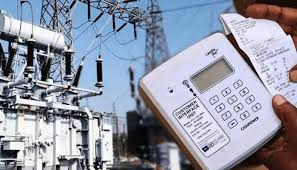

The Federal Government of Nigeria has announced a landmark reform to electricity subsidy funding, signaling the end of the longstanding practice of carrying subsidy costs solely at the federal level. Starting in 2026, a new framework will distribute the financial burden across federal, state, and local governments, a move aimed at improving transparency, accountability, and efficiency in the power sector. The announcement was made by Tanimu Yakubu, Director-General of the Budget Office of the Federation, during a training and sensitization workshop for ministries, departments, and agencies on the 2026 post-budget preparation process, held in Abuja on Monday.
Yakubu highlighted that President Bola Tinubu had directed that electricity subsidy costs be made explicit, tracked, and fairly shared among the tiers of government. “If we want a stable power sector, we must pay for the choices we make,” Yakubu said. “When tariffs are held below cost, a gap is created. That gap is a subsidy. And a subsidy is a bill.” He emphasized that the previous approach had generated hidden liabilities and recurring crises, undermining the efficiency and credibility of the electricity market.
Under the new directive, the federal government will no longer treat electricity subsidies as an open-ended obligation. “In 2026, we will stop pretending that this bill can be left to the Federal Government alone, especially where the policy choice or the political benefit is shared across tiers of government,” Yakubu said. He added that existing legal frameworks in the electricity sector would be invoked to ensure subsidy costs are explicit, tracked, funded, and enforceable, thereby preventing the accumulation of arrears and liquidity crises.
The background to this reform underscores the urgency of the policy shift. Nigeria’s electricity subsidy obligations have been mounting, with the Federal Government reportedly incurring N1.98 trillion in subsidy costs between October 2024 and September 2025, while outstanding debts to power generation companies reached N4 trillion. Analysts have long warned that such arrangements create distortions in the power market, foster inefficiencies, and discourage private investment in the sector, as the true cost of electricity is obscured.
Yakubu stressed that the reform is designed not as a sanction but as a mechanism to align incentives across government tiers. “This is not punishment. It is alignment,” he said. “When everyone carries a fair share of the cost, everyone also has an incentive to support cost-reflective efficiency, targeted protection for the vulnerable, and a power market that can actually deliver.” Ministries, departments, and agencies were instructed to reflect subsidy-related costs clearly in their 2026 budget submissions to avoid pushing unfunded liabilities into the electricity market.
Beyond the electricity sector, Yakubu outlined a broader vision for the 2026 Budget, which seeks to move away from the historical approach of rollover budgeting and fragmented project lists. He described the new strategy as a “single-train” framework, consolidating commitments into a coherent implementation pipeline. “One plan. One pipeline. One execution logic,” he said. “It allows the government to know, at any point, what we have committed to deliver.” This approach aims to improve prioritization, reduce duplication, and strengthen overall budget execution across all levels of government.
Central to these reforms is the Government Integrated Financial Management Information System Budget Preparation Sub-System (GIFMIS-BPS), which Yakubu described as the operating system for credible budgeting. The platform is expected to improve transparency, traceability, and accountability from budget submission to execution, ensuring that public funds are tracked efficiently and that projects are delivered according to plan. Yakubu noted that the success of the government’s “Renewed Hope Agenda” depends on rigorous implementation of these standards.
The President has also directed a review of the Fiscal Responsibility framework, with the aim of making fiscal rules more dynamic and enforceable. Yakubu explained that this will provide clearer fiscal anchors, define escape clauses for genuine shocks, and create credible paths back to compliance. “Fiscal rules are the guardrails of the government,” he said. “Without guardrails, spending becomes impulsive, debt becomes casual, and the budget becomes a statement of intent rather than a tool of delivery.” This reform is expected to ensure that budget proposals are evaluated not just on desire but on fiscal sustainability and measurable outcomes.
The overarching goal of the 2026 Budget reform, according to Yakubu, is to ensure tangible results for Nigerian citizens. By consolidating projects, enforcing fiscal discipline, and tracking subsidies explicitly, the government aims to deliver completed infrastructure, reliable power, functional schools, and working hospitals. “A long list of projects is not a development strategy. What citizens feel is delivery,” Yakubu said. The reforms mark a decisive step toward creating a more accountable, efficient, and results-oriented fiscal environment in Nigeria.