

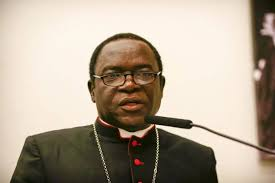

Most Reverend Matthew Kukah, the Catholic Bishop of the Diocese of Sokoto, has issued a stark warning about the escalating insecurity in Nigeria, describing the daily killings and violence in the country as unprecedented anywhere else in the world. Speaking on the sidelines of the launch of the book The Man They Could Not Stop in Yola, Adamawa State, Kukah said that the scale and frequency of violence in Nigeria had reached levels that other nations, even those grappling with conflict, had not experienced. “What is happening in Nigeria cannot happen in Sudan, Cameroon, Niger, Ghana, or any other country in the world,” he said, underscoring a sense of crisis in the West African nation.
At the heart of Kukah’s message was a criticism of how violence in Nigeria is often framed along religious lines. He asserted that narratives in the Western media which sometimes break down casualty figures by religion were deepening divisions rather than promoting unity. “Only in Nigeria do people die as Christians and Muslims. The Western media is fuelling the killings along religious lines 20 Christians killed, 30 Muslims killed,” he said, reflecting his apprehension that external portrayals might compound tensions within an already fragile society.
Kukah’s remarks come against a backdrop of prolonged insecurity that has plagued Nigeria for years. Various parts of the country, particularly in the North and Middle Belt, have seen waves of violence perpetrated by armed groups, including Boko Haram and Islamic State West Africa Province (ISWAP), as well as bandits and communal militias. According to conflict monitoring data, violence by non‑state actors in these regions has intensified over successive years, straining both state capacity and humanitarian resources. Between May 2023 and April 2024, the National Bureau of Statistics reported that over 600,000 Nigerians were killed nationwide due to insecurity, with the Northwest and Northeast among the hardest hit regions.
Experts say that while the dynamics of insecurity vary across Nigeria’s vast geographic landscape, the accumulative toll of violence including fatalities, abductions, and displacement has eroded trust in institutions and heightened social anxiety. Internal conflict monitoring organizations have documented thousands of casualties and mass kidnappings, with figures showing thousands killed and abducted in earlier periods. Such data contextualizes Kukah’s broad lament about persistent violence that seems to defy conventional solutions.
Kukah’s comments at the event were made during the launch of a biographical book on Governor Ahmadu Fintiri of Adamawa State, written by his former Director General of Media and Communication, Solomon Kumangar. The book – The Man They Could Not Stop celebrates Fintiri’s political journey and governance record, and the event drew several high‑profile attendees from Nigeria’s political landscape. This platform provided Kukah a space to link reflections on leadership with broader national challenges.
Among the dignitaries present was former Senate President and ex‑Kwara State Governor Bukola Saraki, who used the occasion to urge Nigerians to prioritize leadership qualities over narrow political affiliations. Saraki praised Fintiri’s developmental achievements, insisting that the country’s progress depends on competent and visionary leaders. “The country can only move forward when the right people are given the chance to pilot its affairs,” he said, reflecting a wider concern about governance and national direction.
The ceremony was also chaired by Nassarawa State Governor Abdullahi Sule, who pressed Governor Fintiri to consider joining the ruling All Progressives Congress (APC), suggesting that Fintiri’s leadership had garnered attention beyond regional party lines. “If I come with the APC cap and flag, I would hand it to you today as our new member,” Sule remarked, signalling political overtures and alliances that often accompany such high‑profile gatherings.
Governor Fintiri himself spoke candidly about his experiences in the tumultuous 2023 governorship election. He described himself as a “man of destiny,” emphasizing the obstacles he faced, including alleged acts of betrayal and attempts to derail his candidacy. “There were numerous futile shots at stopping me,” Fintiri said, condemning what he termed moral compromise and political opportunism among certain elites.
Reflecting on the electoral journey, Fintiri asserted that the 2023 election exposed the true character of many political actors — describing some as “pretentious, greedy, opportunistic, and desperate,” yet still claiming democratic credentials. His remarks resonated with many Nigerians who see political contests as revealing both the strengths and weaknesses of the country’s democratic processes.
Kukah, known for his outspoken critiques of national issues and calls for peaceful coexistence, used his platform to call on political and religious leaders to build institutions that promote unity rather than division. His appeal for unity reflects concerns that Nigeria’s ethnic and religious diversity, while a potential strength, has also been manipulated into fault lines exploited by violent actors. The implications of such divisions, he suggested, are profound for national stability and social cohesion.
Despite some controversy over his past remarks on topics such as religious violence — with some civil society voices debating whether specific groups face targeted persecution — Kukah has maintained that the core issue is stopping killings and fostering peace. His stance emphasizes both the scale of the problem and the need for a measured discourse that does not inflame tensions further.
The insecurity challenge in Nigeria extends beyond communal and religious strife to include complex interactions between economic despair, lack of opportunity, and weak governance structures. Analysts note that without addressing root causes — such as unemployment, access to education, and equitable resource distribution — cycles of violence are likely to continue compounding. Nigeria’s multifaceted crisis has thus drawn concerns not only domestically but also internationally, with external actors urging stronger responses from the federal government.
Indeed, recent court actions, such as the arraignment of suspects linked to major attacks in Benue State that killed around 150 people, highlight efforts by the legal system to bring perpetrators to justice even amid persistent challenges. Such prosecutions underscore the government’s attempts to respond to violent incidents, yet observers say much more systemic and sustained action is required to curb insecurity nationwide.
At the heart of Kukah’s appeal is a message that resonates with many Nigerians: that effective leadership, robust institutions, and a united citizenry are essential to confronting insecurity and building a stable future. His comments at the book launch were less about partisan politics and more about invoking a shared sense of responsibility among leaders and communities at a time of national stress.