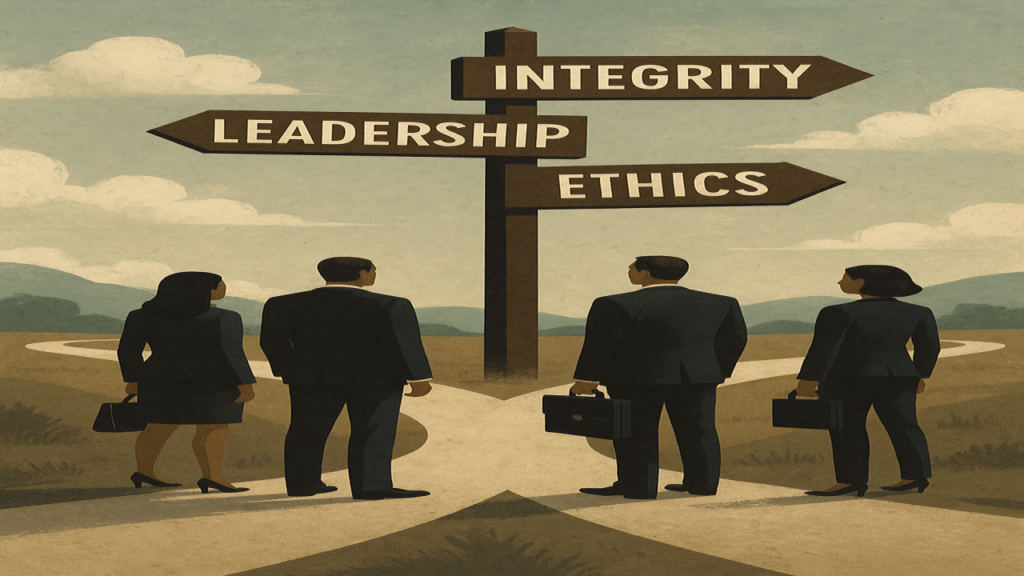

Leadership is often described as the ability to guide, inspire, and serve others toward a common goal. But when leadership exists without integrity, it becomes something else entirely. It becomes control without conscience, power without responsibility, and authority without trust. In many societies today, especially in developing nations, people are not just struggling with poor policies or weak systems; they are struggling with leaders whose words no longer match their actions. The problem is no longer a lack of leadership positions. The problem is a lack of honest leadership.
Integrity in leadership means doing what is right even when no one is watching. It means being accountable for decisions, being transparent about actions, and putting public interest above personal gain. When this integrity is missing, governance suffers first. Policies are no longer made for the good of the people but for the comfort of those in power. Public funds meant for hospitals, schools, roads, and security quietly disappear into private pockets. Contracts are awarded not to those who can do the job best, but to friends, family members, and political loyalists. Over time, this behavior becomes so common that it stops being shocking and starts being expected.
This absence of integrity slowly destroys public trust. Citizens begin to believe that nothing good can come from those in authority. They stop believing in promises, manifestos, and speeches. Elections become routine rituals rather than meaningful choices. People vote not out of hope, but out of habit or survival. When citizens lose trust in leadership, they also lose interest in participating in nation-building. They become detached from governance because they feel their voices no longer matter.
Institutions also weaken under leadership without integrity. Civil services become inefficient because merit is replaced with favoritism. Law enforcement becomes selective because justice is influenced by connections and money. Regulatory bodies lose credibility because rules apply only to the powerless. Schools produce graduates who learn early that success depends more on who you know than what you know. In such an environment, excellence is discouraged and mediocrity is rewarded.
The effects of this kind of leadership reach everyday citizens in painful ways. Roads remain bad because funds for repairs are diverted. Hospitals lack basic equipment because budgets are mismanaged. Electricity remains unreliable because projects are abandoned halfway. Youth unemployment rises because investments meant to create opportunities are stolen. Ordinary people end up paying for the dishonesty of those in power through poor living conditions and limited opportunities.
Corruption becomes normalized in such systems. People begin to justify wrongdoing because they see it practiced at the top. A civil servant demands a bribe because leaders steal millions. A contractor inflates project costs because politicians do the same. A student cheats in exams because society rewards shortcuts. Slowly, integrity stops being a value and starts looking like a disadvantage. Those who choose to remain honest are seen as naïve or foolish.
Hypocrisy also becomes a defining feature of leadership without integrity. Leaders preach discipline but live recklessly. They demand sacrifice from citizens while enjoying luxury. They call for transparency but operate in secrecy. This double standard creates frustration and anger among the people. It sends a dangerous message that rules are meant only for the weak.
In organizations and workplaces, the same pattern appears. When managers lack integrity, employees lose motivation. Promotions are no longer based on performance but on loyalty. Workplace morale drops because hard work is not recognized. Talented individuals leave, while less competent ones remain because they are connected. Productivity falls, and the organization struggles, not because of a lack of resources, but because of poor leadership character.
Leadership without integrity also affects justice. When powerful individuals escape accountability, the rule of law becomes meaningless. Court cases drag on for years without resolution. Investigations are influenced by political interests. Victims lose hope in getting justice. This deepens inequality, as the rich and powerful live above the law while the poor face its full weight.
Development slows down significantly under such leadership. Investors lose confidence in systems where transparency is lacking. International partnerships weaken when a country’s reputation is damaged by corruption. Local entrepreneurs struggle in environments where success depends on connections rather than innovation. The entire society pays the price for the moral failures of a few individuals.
Over time, people begin to adapt to dysfunction. They stop expecting good governance. They learn to survive within a broken system. They create personal shortcuts to avoid dealing with public institutions. This survival mentality further weakens the system because citizens no longer demand accountability. They simply try to navigate around the problems.

Yet, history has shown that true leadership is built on integrity. Leaders who are remembered for positive change are those who were transparent, accountable, and morally grounded. They earned trust not through speeches, but through consistent actions. Their decisions were guided by fairness and a genuine desire to serve.
Integrity remains the foundation of true leadership because it builds trust, strengthens institutions, and inspires citizens. When leaders act with honesty, people are more willing to cooperate, participate, and contribute to national progress. Systems work better because rules are respected. Opportunities increase because fairness replaces favoritism.
The long-term consequences of leadership without integrity are severe. Societies become divided, progress stalls, and citizens lose hope. But when integrity returns to leadership, even struggling systems can recover. Trust can be rebuilt, institutions can be restored, and development can resume.
In the end, leadership is not measured by how much power one holds, but by how responsibly that power is used. Without integrity, leadership becomes a burden to society. With integrity, leadership becomes a force for growth, justice, and lasting progress.