

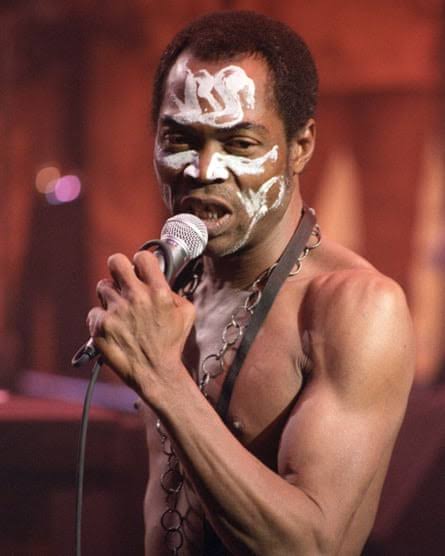

Legendary Afrobeat pioneer, Fela Anikulapo Kuti, has been posthumously honoured with a Grammy Award, decades after his death, marking a historic moment for Nigerian music and African cultural heritage.
The Grammy recognition celebrates Fela’s timeless contribution to global music and his enduring influence on generations of artists across Africa and beyond. Although the music icon passed away in 1997, his work continues to resonate strongly, reinforcing his status as one of the most important musicians to ever emerge from the African continent.
Fela, known for blending traditional African rhythms with jazz, funk and highlife, used his music as a weapon of social and political resistance. Through powerful lyrics, he confronted military oppression, corruption, colonial legacies and social injustice in Nigeria, often at great personal cost. His fearless activism made him both a cultural hero and a thorn in the side of successive governments.
The posthumous Grammy award is widely seen as long-overdue global recognition of Fela’s artistry and ideological impact. Music critics have described the honour as a reminder that Afrobeat did not begin with the current global wave, but with Fela’s revolutionary sound that challenged the status quo and redefined African music on the world stage.
Since his passing, Fela’s legacy has only grown stronger. His songs remain staples in political discourse, protests and popular culture, while modern Afrobeat and Afrobeats artists frequently cite him as a major influence. International stars have also sampled his music and adopted elements of his style, further extending his reach.
Fans, musicians and cultural commentators across Nigeria and the diaspora have welcomed the Grammy award with excitement, describing it as a proud moment for Africa. Many see it as validation that African music history deserves greater recognition within global institutions.
As the world celebrates this achievement, Fela Kuti’s message of truth, resistance and African pride once again takes centre stage — proving that even in death, his voice remains impossible to silence