

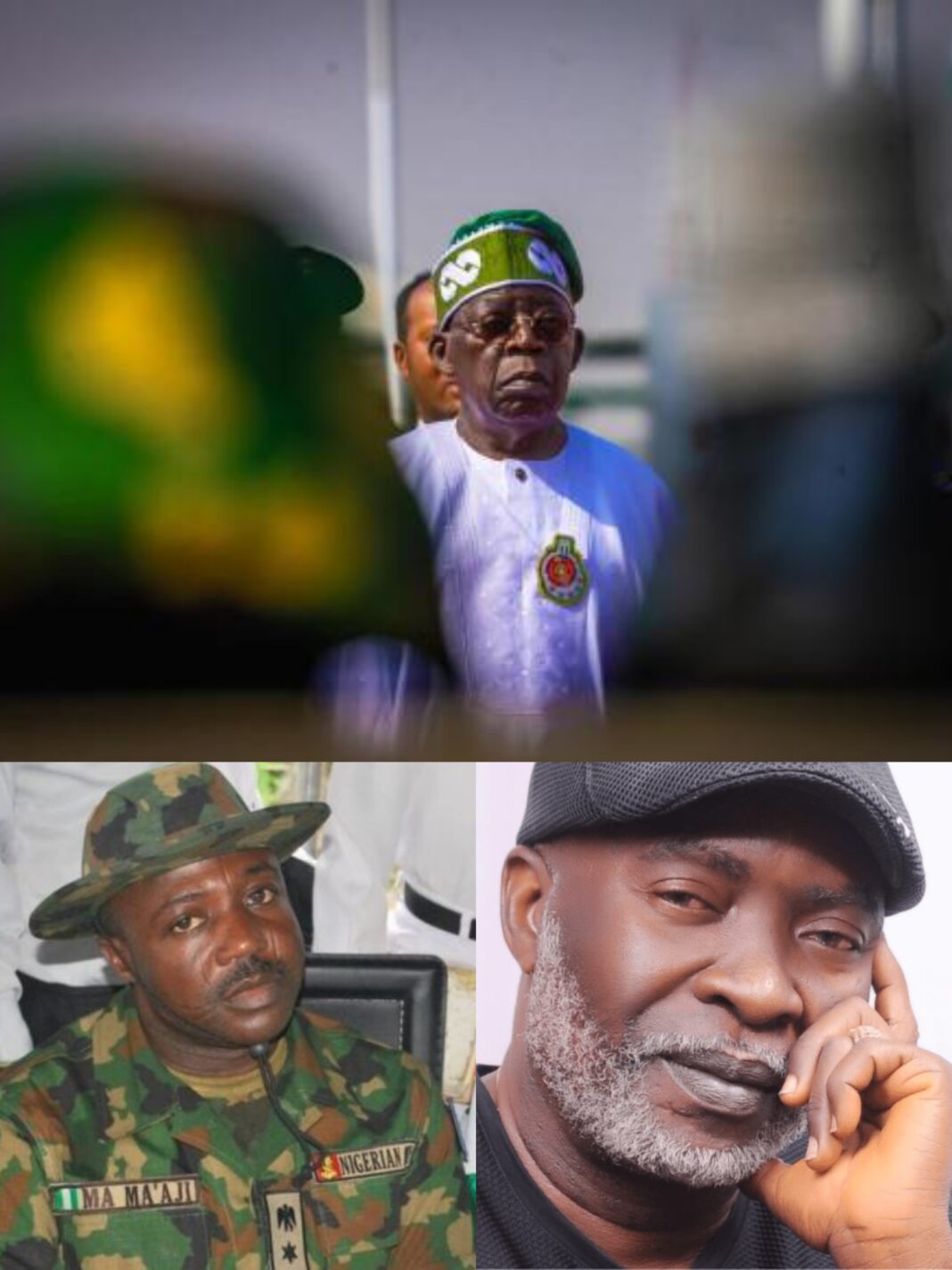

A recent investigation has alleged that a group of Nigerian military officers suspected to be perpetrators of the foiled coup in the late 2025, plotted to hijack the 29 May 2023 handover of power from former President Muhammadu Buhari to President Bola Tinubu. The plot schemed to eliminate top political and military leaders, while planning to seize key national institutions.
Several reports alleged Colonel Alhassan Ma’aji, an infantry officer and former Commanding Officer of the 19 Battalion in Okitipupa, Ondo State, as the orchestrator of the alleged treason. Ma’aji was also said to be a member of the 47 Regular Course of the Nigerian Defence Academy.
The officers initially planned to strike on inauguration day in 2023 but reportedly suspended the operation over funding and logistical constraints. The plan was later revived in 2025 after former Bayelsa State governor Timipre Sylva who was accused of financing the operation, allegedly moved nearly N1 billion into accounts linked to a Bureau De Change operator.
Mr Sylva remained firm in denying involvement, however was declared wanted by one the Nigeria’s anti–grafit institutions, Economic and Financial Crime Commission (EFCC), proceeding earlier military raids to his residence.
Investigators found that the conspirators allegedly marked to kill key government officials including President Tinubu, Vice President Kashim Shettima, Senate President Godswill Akpabio, Speaker of the House of Representatives Tajudeen Abbas, as well as service chiefs and the Commander, Guards Brigade, for assassination.
Some officers were reportedly tasked with taking control of the Presidential Villa, Niger Barracks, the Armed Forces of Nigeria Complex, and Nnamdi Azikiwe International Airport as part of the planned takeover.
The plot began to surface in late September 2025 when an unnamed officer with direct knowledge of the scheme alerted then Chief of Army Staff, Olufemi Oluyede, fearing he could be implicated if he remained silent.
Around the same period, the State Security Service independently obtained intelligence on a plan by serving officers to destabilise the government, prompting its Director-General, Oluwatosin Ajayi, to brief Mr Oluyede.
Both security chiefs then coordinated a discreet joint operation involving the army and SSS, leading to multiple arrests across the country and the formal briefing of President Tinubu, who subsequently cancelled the 2025 Independence Day’s parade scheduled for October 1st, ordering a special investigative panel led by Chief of Defence Intelligence, Emmanuel Undiandeye.
While one of the detained soldiers escaped before being rearrested in Bauchi, a retired officer identified as General Adamu and Mr Sylva remain at large.
Following the initial probe, President Tinubu removed all the former military Chiefs, with General Musa being later returned as Minister of Defence. Although the presidency firstly denied the coup, framing the previous probe as investigations into indiscipline and breach of service regulations, before admitting the coup plot against Tinubu in January 26th, 2026.
Defence authorities said the investigation was comprehensive and had been forwarded to the appropriate superior authority, adding that several officers were found with allegations of participation in a plot deemed contrary to the ethics and professional standards of the Armed Forces of Nigeria.
Crackdowns on Financing Behind the Coup Plot
To facilitate the coup, the suspects reportedly acquired 32 Gulf and SUV vehicles to support covert operations across the country, with investigators obtaining evidence that revealed the vehicles to be purchased under motive to conceal movements, gather intelligence, and gain discreet access to sensitive locations, including airports and other key public facilities.
The documents are said to detail how the vehicles and other logistics were funded and distributed among members of the network. While preparation for prosecutions are underway in court martial, 25 military personnel are expected to face trial in connection to the alleged coup attempt, with measures being put in place to crackdown on others.
Counts of civilians are also under investigation by the EFCC and SSS in respect of their roles in funding, supply logistics, and coordination of the plot.
The Mysterious Figures that Allegedly Fuel the Plot
Central to the failed coup is Colonel Mohammed Ma’aji, an officer from the Nigerian Army. His role stood out as the primary architect and financier of the foiled coup, military investigators revealed.
Ma’aji’s role was alleged to be comprehensive, including coordination of logistics, seeking of key postings like the National Security Adviser’s office, and transferring of funds to co-conspirators.
Born on March 1st, 1976, the 49-year-old Nupe native from the 47 NDA course is a Niger State descendant who rose to command the 19 Battalion in Ondo State.
His service in the Niger Delta linked him to networks including ex-Governor Timi Sylva. He was described as unrepentant and uncooperative after post-arrest.
Sylva, the former governor of Bayelsa State, was also implicated to have contributed significantly to the plot through financial links, though his spokesperson denied involvement, calling him a Tinubu loyalist. Reports pointed him to have fled the country since the incident emerged.
Another high–ranking military officer suspected to have connection to the alleged treason is Brigadier General Musa Sadiq, a senior Nigerian Army officer. He is among the 16 military officers arrested in October over the foiled plan, which security sources say contributed to the cancellation of the 1 October Independence Day parade.
Although some intelligence reports initially portrayed Sadiq as a suspected central figure in the plot, officials familiar with the probe say the main allegation against him is that he had advance knowledge of the conspiracy but failed to report it.This equated him as an accessory to the offence, breaching vital ethics of the military service.
Born on January 3rd, 1974, at Nasarawa State, Sadiq is a brigadier general with service number N/10321 and an infantry officer by training. He attended the Nigerian Defence Academy between August 1992 and September 1997 as part of Regular Course 44, before holding several strategic command positions, including brigade and garrison commands in Kano and Lagos.
Shocks as a Nollywood Actor Makes History
Stanley Amandi, the famous Nollywood filmmaker and actor, has also been detained alongside several senior military officers over the alleged plot to violently topple the government of President Tinubu.
Amandi was alleged to be contracted by the suspected coup plotters to serve as a propagandist in support of their planned takeover.
Defence Headquarters has confirmed that a comprehensive probe into the alleged conspiracy has been concluded and submitted to higher authorities in line with military regulations. The civilians implicated in the matter, including Amandi, are expected to be tried in civil courts.
Amandi, a former Enugu State chairperson of the Actors Guild of Nigeria and a director known for his famous works such as The Album, Tiger King, Cornerstone, and Once Upon a Dream, has remained low shortly before his reported arrest.
Amandi was said to become the first Nollywood actor to be indicted in connection with a coup plot in Nigeria.The actor’s involvement in the failed coup has sparked controversies among Nigerians, with the majority criticizing him for leaving film–making industry to politics.