

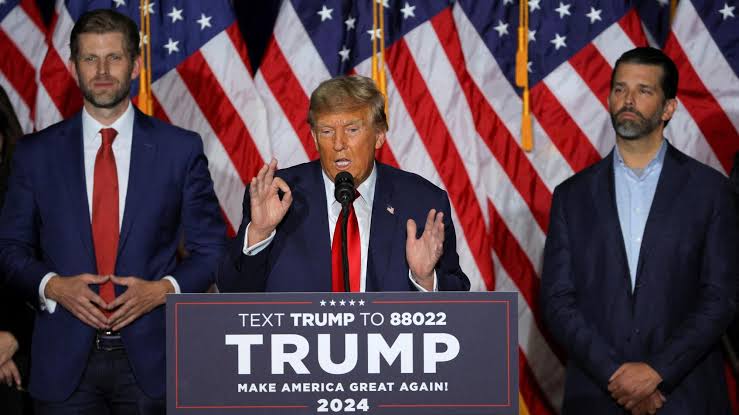

US President Donald Trump, alongside his two sons, Donald Trump Jr. and Eric Trump, has filed a $10 billion civil lawsuit against the federal government, claiming damages over the unauthorized leaks of their business and personal tax returns. The lawsuit, which was filed in a Miami federal court, represents the Trump family’s latest legal action concerning sensitive financial information that they say was wrongfully disclosed to the public.
The complaint specifically names the Internal Revenue Service (IRS) and the Treasury Department, accusing the agencies of failing to prevent the exposure of “confidential, personal financial information.” The filing comes nearly three years after the initial leaks occurred, drawing attention to longstanding concerns about the security of taxpayer data handled by federal authorities.
According to the lawsuit, the disclosures were carried out by former IRS contractor Charles “Chaz” Littlejohn, who has since been convicted of leaking tax documents to media outlets and is currently serving a five-year prison sentence. The complaint alleges that Littlejohn accessed sensitive taxpayer data for political reasons and shared it without authorization, violating federal law.
Littlejohn’s actions, the lawsuit contends, caused “significant reputational and financial harm” to the Trumps and their associated business entities. The filing argues that the leaks unfairly tarnished the family’s business reputations, portrayed them in a false light, and negatively affected their public standing, citing high-profile publications such as The New York Times and ProPublica as recipients of the confidential information.
The legal action provides historical context for the controversy surrounding Trump’s tax returns. Ahead of the 2016 presidential election, Trump refused to release his tax documents, citing an ongoing IRS audit, becoming the first US presidential candidate in nearly five decades to withhold such records. He repeated the decision ahead of his 2020 re-election campaign.
In September 2020, however, The New York Times published an extensive report based on the leaked tax returns, revealing that Trump had paid only $750 in federal income taxes the year he won the presidency and had not paid any federal taxes in ten of the previous fifteen years. The publication of this information sparked widespread political debate and media scrutiny.
Two years later, in 2022, Trump voluntarily released his tax documents, but the lawsuit maintains that the earlier unauthorized disclosures by Littlejohn and subsequent media reporting caused lasting damage. The complaint argues that the IRS and Treasury had a legal duty to safeguard taxpayer data but “failed to take mandatory precautions” to prevent the leaks from occurring.
The lawsuit also delves into Littlejohn’s motives, alleging that he deliberately exploited access to sensitive tax data to advance his own political agenda. According to the filing, Littlejohn believed Trump to be “dangerous” and a “threat to democracy” and viewed the disclosure of confidential information as necessary to make a political statement.
In a deposition referenced in the lawsuit, Littlejohn reportedly admitted that his actions were “less about harm, more just about a statement,” indicating that he considered Trump “remarkably resilient” and did not anticipate causing lasting damage but sought to convey a political message. The lawsuit frames these actions as a deliberate breach of legal and ethical obligations.
The Trump family argues that the leaks had tangible consequences, including reputational damage to both the president and his business enterprises. The filing claims that the unauthorized disclosure “unfairly tarnished” the family’s public image and affected ongoing and prospective business dealings, highlighting the personal and financial stakes involved.
Trump’s legal team emphasizes that the responsibility lies with the federal agencies charged with safeguarding taxpayer data. The lawsuit asserts that both the IRS and Treasury Department “had a duty to safeguard and protect” confidential tax information, and their failure to do so constituted negligence and misconduct.
Charles Littlejohn, who pleaded guilty in 2023 to stealing tax data from Trump and thousands of other wealthy Americans while employed as an IRS contractor, was sentenced in 2024 to five years in prison. The sentence underscored the seriousness of the breach and the federal government’s recognition of the criminal nature of the leaks.
The lawsuit also notes that Trump resigned from his namesake company and hundreds of affiliated entities in 2017 before taking office, a move intended to reduce conflicts of interest during his presidency. Despite these steps, the legal filing contends that the leaked tax information nonetheless inflicted reputational harm and personal embarrassment on the family.
The Trump family seeks $10 billion (£7.25 billion) in damages from the federal government, citing both the emotional toll and the financial consequences of the leaks. The lawsuit seeks to hold federal agencies accountable for failing to protect sensitive taxpayer data and to secure redress for what the family claims is significant and ongoing harm.
The case adds to the complex legal history surrounding Trump’s taxes and financial disclosures, which have been the subject of intense media scrutiny, political debate, and multiple investigations over the past decade.