

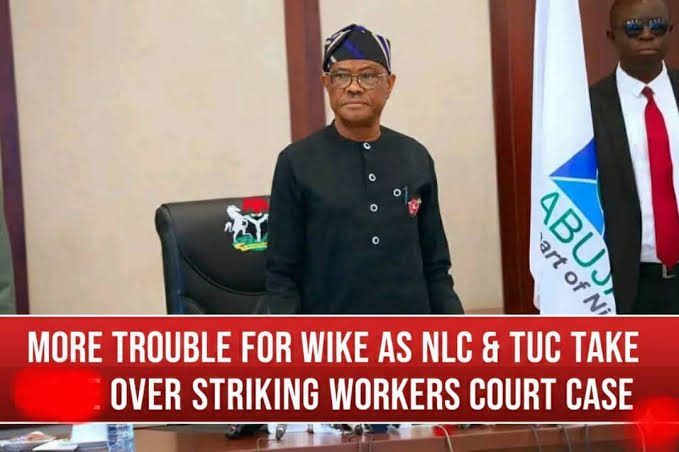

As industrial action by workers of the Federal Capital Territory Administration (FCTA) enters its second week, all eyes are on the National Industrial Court in Abuja, which is set to deliver a crucial judgment today, Tuesday, 27 January 2026, in a high-stakes labour dispute involving the FCTA and striking civil servants. The strike — which has paralyzed key government services in Nigeria’s capital — has escalated into a potent confrontation over workers’ welfare, institutional leadership and legal authority.
Strike Origins and Grievances
The walkout began after a seven-day ultimatum expired without a satisfactory response from the FCTA Administration to a list of long-standing demands presented by the Joint Unions Action Committee (JUAC). Workers cited unresolved issues including unpaid salaries stretching over several months, outstanding promotion arrears, poor working conditions, lack of essential working tools and perceived disrespect for civil-service rules by the FCTA leadership.
The unions insist these are not isolated concerns but indications of structural neglect. Speaking during previous hearings and protests, union leaders argued that repeated efforts at negotiation had been ineffective, leaving workers little choice but to escalate their actions. The Nigeria Labour Congress (NLC) has since thrown its weight behind the strike and directed affiliated unions to intensify the action, branding it a necessary response to sustained violations of workers’ rights.
From Workplace Grievances to Political Demand
What has distinguished this strike from typical welfare disputes is the explicit political element now on display: protesters at the National Industrial Court earlier this week carried placards demanding the removal of the Minister of the Federal Capital Territory, Nyesom Wike — a rare escalation that underscores deep frustration. Slogans such as “Wike must go!” and “Abuja no be Rivers” became symbols of broader discontent, blending administrative grievances with criticism of political leadership.
Workers from allied unions — including the Nigerian Union of Teachers, National Association of Nigeria Nurses and Midwives, National Union of Electricity Employees, and Nigeria Union of Journalists (FCT chapter) — have joined the strike, amplifying concerns over wage abuse, “intimidation of workers” and failure to meet statutory obligations.
Legal Battle at the National Industrial Court
In response to the strike, FCT Minister Nyesom Wike and the FCTA filed a lawsuit at the National Industrial Court (NICN/ABJ/17/2026), seeking a restraining order to halt the industrial action and compel workers to resume duties. The suit names the JUAC President, Rifkatu Iortyer, and Secretary, Abdullahi Umar Saleh, as defendants in their representative capacities.
Counsel for the FCTA argued that the strike has crippled essential public services and that the court should restrain further action. Lawyers for the unions countered that granting such relief would undermine substantive legal issues and urged the court to instead explore arbitration and compel the Minister to engage in meaningful dialogue. They also sought broader party joinder — but the court ruled that only the named respondents could be joined given the current suit structure.
After hearing submissions on procedural issues and the core injunction application, Justice Emmanuel Subilim adjourned the case to today — 27 January — for a ruling on whether to grant the restraining order sought by the FCT Administration. The interpretation and enforcement of labour law, especially in the context of essential public services, will be central to the decision.
Union Position and Public Support
Union leaders have rejected claims from the FCTA that many of their demands have been met — a position confirmed by JUAC statements dismissing earlier official assertions of partial compliance as “premature” and “misleading.” They maintain the strike remains lawful and justified, rooted in extensive unpaid obligations and alleged management intransigence.
The Nigeria Union of Local Government Employees (NULGE) has also directed its members in the FCT’s six area councils to join the indefinite strike from today (27 January), broadening worker solidarity and amplifying pressure on the administration.
Economic and Administrative Impact
Already, key FCTA operations — including the FCTA Secretariat and related parastatals — have been largely non-operational, resulting in service delays for residents and businesses in Abuja. Security deployments, including the Nigeria Security and Civil Defence Corps and police, have been deployed at strategic sites to prevent escalation or disruption during protests and court sittings.
The outcome of today’s court ruling will be pivotal: a decision to restrain the strike could legally compel workers back to duty — at least temporarily — and potentially defuse the political edge of the protests. Conversely, a refusal to intervene could embolden unions to sustain or escalate the action, deepen solidarity across public-sector workers, and sharpen the political critique of the FCTA leadership.
Wider Implications
Beyond immediate labour relations, the dispute touches on broader tensions in governance, workers’ rights and public administration in Nigeria’s capital. It raises questions about how welfare obligations, statutory compliance, negotiations and political accountability interact in the context of civil service operations. The unions’ demand for the removal of a minister — articulated publicly and legally — underscores a rare moment where industrial action overlaps explicitly with political leadership critique, amplifying national attention on the case.
Regardless of the court’s decision today, the FCT workers’ strike has already made clear that labour disputes in Nigeria’s public sector can rapidly evolve into complex legal, political and social contests — especially when long-standing grievances are perceived to remain unaddressed.