

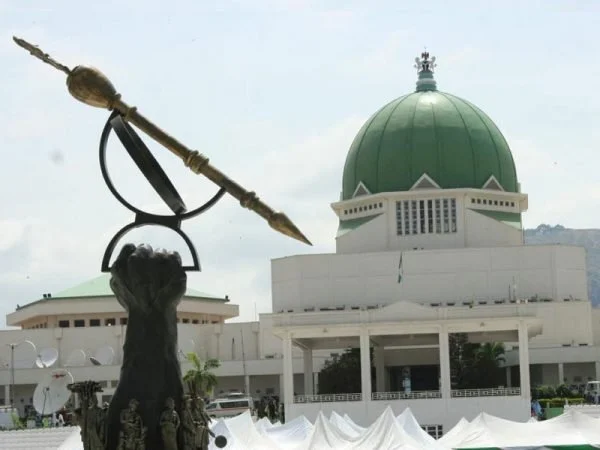

The National Assembly on Tuesday resumed plenary sessions with a packed legislative agenda led by the scrutiny of President Bola Tinubu’s ₦58.47 trillion 2026 Appropriation Bill, proposed amendments to Nigeria’s electoral laws, and the ongoing review of the 1999 Constitution. The priorities were outlined by the Leader of the Senate, Senator Opeyemi Bamidele, who said both chambers would devote significant time and legislative energy to measures considered critical to Nigeria’s economic stability, democratic integrity, and governance reforms.
In a statement issued in Abuja on Monday, Bamidele said committees in the Senate and the House of Representatives had already commenced detailed assessments of the revenue and expenditure estimates presented by President Tinubu to a joint session of the National Assembly on December 18, 2025. He explained that the resumption of plenary would now allow lawmakers to accelerate deliberations and move towards passage of the budget in good time.
“Now that we have resumed plenary, we will devote quality time to the scrutiny and passage of the 2026 Appropriation Bill valued at ₦58.47 trillion,” Bamidele said. “In both chambers, our committees are already looking deeply into the estimates of revenues and expenditures that President Bola Tinubu laid before the joint session of the National Assembly on December 18, 2025. The proposal is crucial to the growth, prosperity, and stability of our economy this year and even beyond.”
He noted that the size and structure of the budget reflect the administration’s intention to consolidate economic gains recorded in previous years while strengthening the foundations for sustained growth. According to him, when enacted, the budget would reinforce macroeconomic stability, improve Nigeria’s global competitiveness, and translate economic growth into tangible benefits for citizens in the form of jobs, higher incomes, and improved living standards.
Bamidele also stressed that one of the key objectives of the 2026 Appropriation Bill is the restoration and maintenance of the January-to-December budget cycle, which has faced disruptions in the past due to delays in passage and implementation. “This will help us restore and maintain a budget cycle that annually starts from January and ends in December,” he said, acknowledging that achieving this goal had been difficult in previous years due to institutional bottlenecks.
The Senate Leader linked improved prospects for funding the budget to recent fiscal reforms, particularly the enactment of the 2025 Tax Reform Act. He said the law had recalibrated Nigeria’s fiscal space to better reflect socio-economic realities by easing the tax burden on low-income earners while placing greater responsibility on high-income earners and improving revenue efficiency.
“Unlike previous years, we have significantly reformed our fiscal space to reflect our socio-economic realities,” Bamidele stated. “From the reforms of our fiscal space, we believe funding our budget will no longer be a challenge, and our budget deficit will definitely begin to shrink year by year.” He expressed optimism that these reforms would provide the financial backbone needed to implement the ambitious budget proposals.
Beyond the appropriation bill, Bamidele said the National Assembly would prioritise amendments to the Electoral Act ahead of the 2027 general elections. He described the review as essential to guaranteeing credible, transparent, and secure electoral processes that would strengthen public confidence in Nigeria’s democracy.
He revealed that the proposed Electoral Bill, 2025, contains more than 20 major innovations designed to improve electoral governance. These include provisions for voting rights for inmates, early release of election funds to the Independent National Electoral Commission (INEC), electronically generated voter identification, real-time transmission of polling unit results, standardised delegates for indirect primaries, stricter voter registration requirements, and tougher sanctions for electoral offences.
“Apart from the 2025 Appropriation Bill, we are prioritising the delivery of an electoral governance framework that will guarantee a credible and transparent process in the 2027 general elections,” Bamidele said. “We have started the review of the Electoral Act, 2022, clause by clause, to achieve this end. The Bill introduces a system of consequences to our nation’s electoral regime and forecloses the possibility of impunity when electoral offences are established.”
On constitutional matters, the Senate Leader said the review of the 1999 Constitution had reached an advanced stage following the completion of technical sessions and public hearings across the country. He explained that the report of the exercise would soon be presented before the Senate for further legislative action.
He disclosed that the Deputy Senate President and Chairman of the Senate Committee on the Review of the 1999 Constitution, Senator Barau I. Jibrin, would lay the report before the Senate before the end of the first quarter of 2026. This, he said, would mark a significant milestone in the constitutional amendment process.
Bamidele emphasized that the final phase of the constitutional review would require approval by at least two-thirds of the 36 State Houses of Assembly, highlighting the crucial role of sub-national legislatures in effecting constitutional changes. He noted that cooperation between federal and state lawmakers would be essential to the success of the process.
Reflecting on the tenure of the 10th National Assembly, Bamidele observed that only 16 months remained out of its constitutionally prescribed 48 months. He pledged that lawmakers would intensify efforts to deliver reforms that touch on governance, electoral integrity, and economic diversification within the remaining period.
“At this highly critical time, when what happens in other parts of the world now dictates the direction of our economy and polity, the onus rests much more upon us than at any time in history to reinforce our constituents’ trust in their representatives, in the National Assembly and in their fatherland,” he said.
The resumption of plenary, therefore, signals an intense legislative period in which lawmakers are expected to simultaneously address economic, electoral, and constitutional issues that could shape Nigeria’s political and developmental trajectory in the coming years. Observers say the pace and outcome of these deliberations will be closely watched by citizens and stakeholders alike.
As the chambers settle into deliberations, attention will remain on how swiftly the appropriation bill is passed, how comprehensively the electoral reforms address past challenges, and how effectively the constitutional review reflects the aspirations expressed during public consultations. Together, these efforts represent a broad attempt by the National Assembly to strengthen governance frameworks while supporting economic stability and democratic accountability.